
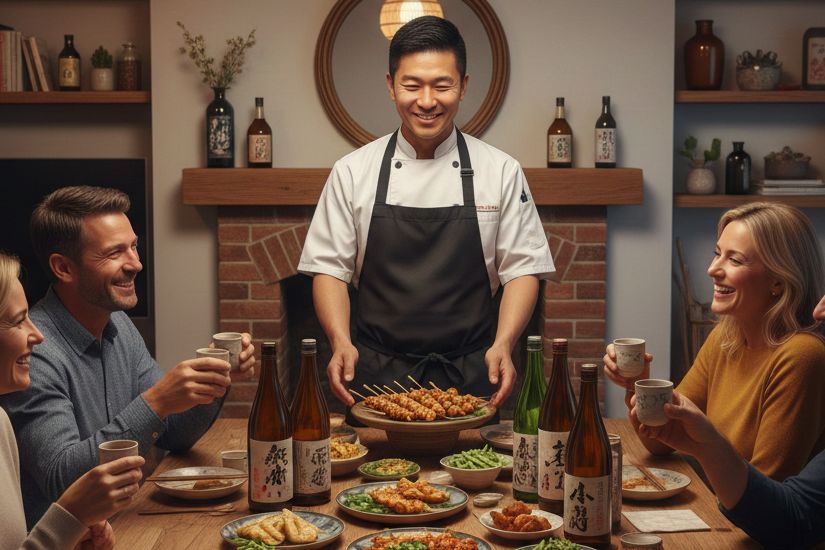
Picture this: your dining room transformed into an atmospheric Tokyo side street tavern, complete with the sizzle of yakitori on the grill and the clink of sake cups. Preparing gyoza while your guests gather around small plates of edamame and pickled vegetables. This is the magic of an izakaya night at home, where casual Japanese dining meets intimate gathering.
Creating this experience in your own space requires understanding three essential elements: the food that defines izakaya culture, the drinks that accompany it, and the atmosphere that brings everything together in harmony.
Table of Contents
Understanding izakaya culture and dining traditions
The word izakaya combines “i” meaning to stay, “saka” meaning sake, and “ya” meaning shop. These establishments evolved from Edo-period sake shops that began offering simple snacks alongside drinks. Today, they represent a cornerstone of Japanese social life, places where colleagues unwind after work and friends celebrate life’s moments together.
Unlike formal Japanese dining, izakaya meals follow no strict order. Dishes arrive as they’re prepared, encouraging a relaxed pace where eating and drinking interweave naturally. This communal style means ordering multiple small plates to share, creating a tapas-like experience.
Transform your culinary dreams into reality
From interactive cooking lessons to exotic cuisine adventures, our expert chefs transform your kitchen into a world-class culinary experience.
Essential izakaya dishes for your menu
Every izakaya dinner menu has some traditional plates and elements:
- Night begins with otoshi, the complimentary appetizer that arrives with your first drink. At home, this might be seasoned edamame tossed with sea salt, pickled cucumbers with toasted sesame, or a small portion of marinated tofu drizzled with soy sauce.
- Yakitori stands as the quintessential izakaya food, beloved across Japan. These grilled chicken skewers range from tender thigh meat to more adventurous options like chicken skin or tsukune meatballs.
- Gyoza dumplings offer another crowd-pleasing option that guests always enjoy. These pan-fried pockets of seasoned pork and vegetables achieve their signature crispy bottom through a steam-then-fry technique.
- Consider including karaage, Japanese fried chicken marinated in ginger and soy sauce, known for its incredibly juicy interior and shatteringly crisp coating.
- Agedashi tofu brings a lighter option, with silken tofu coated in potato starch and served in warm dashi broth topped with grated daikon.
- For something unexpected, try takoyaki if you have the special pan, or substitute with savory okonomiyaki pancakes loaded with cabbage and your choice of protein.
Japanese drinks to complement your izakaya spread
No izakaya experience begins without the ritual first beer. Japanese lagers like Asahi, Sapporo, and Kirin remain perennially popular choices, their clean crispness designed to refresh the palate between bites of rich, savory food.
Sake selection adds depth to your drinks menu and elevates the experience. Offer both chilled junmai for sipping alongside lighter dishes and warm honjozo that beautifully complements grilled items. Encourage guests to pour for each other, honoring the Japanese custom of never filling your own cup.
Shochu, Japan’s versatile distilled spirit, works wonderfully in highball cocktails when mixed with soda water and a squeeze of fresh citrus. Whisky highballs have become an izakaya staple, particularly made with Japanese whisky.
For non-alcoholic options, serve cold mugicha barley tea or ramune soda in its distinctive marble-sealed bottle that delights guests of all ages.
Creating authentic izakaya atmosphere at home
Lighting sets the mood for any izakaya gathering. Real izakayas feature warm, dim lighting that creates intimacy without straining eyes. String paper lanterns across your space or cluster tea lights on tables.
Red accents, whether in napkins, small decorative items, or lantern covers, evoke the traditional izakaya color palette that feels welcoming and festive.
Low tables with floor cushions recreate the most traditional setting, though counter-style seating along a kitchen island captures another authentic izakaya format. The goal is creating spaces where small groups can converse intimately while remaining connected to the larger gathering happening around them.
Music should remain background rather than foreground. Instrumental jazz, traditional shamisen recordings, or contemporary Japanese city pop at low volume creates ambiance without competing with conversation.
Planning and preparation tips
Successfully hosting an izakaya night requires significant preparation and careful timing. Many dishes demand last-minute cooking to achieve proper texture, meaning hosts often spend more time in the kitchen than with their guests.
Shopping for authentic ingredients adds another layer of complexity, with specialty items like dashi powder, mirin, and specific cuts of chicken requiring trips to Asian grocery stores.
This preparation challenge explains why many home entertainers turn to professional assistance for special occasions. Having a skilled chef handle the intricate timing of multiple dishes while you enjoy your own party transforms the experience entirely.
Bringing professional expertise to your izakaya night
Take a Chef connects you with professional chefs who specialize in Japanese cuisine, bringing authentic izakaya experiences directly to your home. As the world’s largest private chef platform with over a decade of experience, the service operates across major cities throughout the United Kingdom and internationally.
These culinary experts handle everything from ingredient sourcing at specialty markets to the precise timing that Japanese cooking demands. Each chef offers fully customizable menus that accommodate dietary restrictions and allergies, ensuring every guest enjoys the evening.
Your chef arrives with all necessary ingredients and equipment, transforms your kitchen into an izakaya station, and handles complete cleanup afterward. This full-service approach means your role shifts from stressed cook to relaxed host.
Your izakaya night awaits
Creating an authentic izakaya experience at home brings together food, drink, and atmosphere in a celebration of Japanese casual dining culture. Whether you tackle the preparation yourself or enlist professional help through Take a Chef, the result is an evening that transports guests to a Tokyo side street without leaving your neighbourhood.
Start planning your izakaya night today. Browse Take a Chef’s sushi chefs, customize your ideal menu, and prepare for an evening where the only thing you need to bring is your appetite for great food and even better company. Kanpai!