
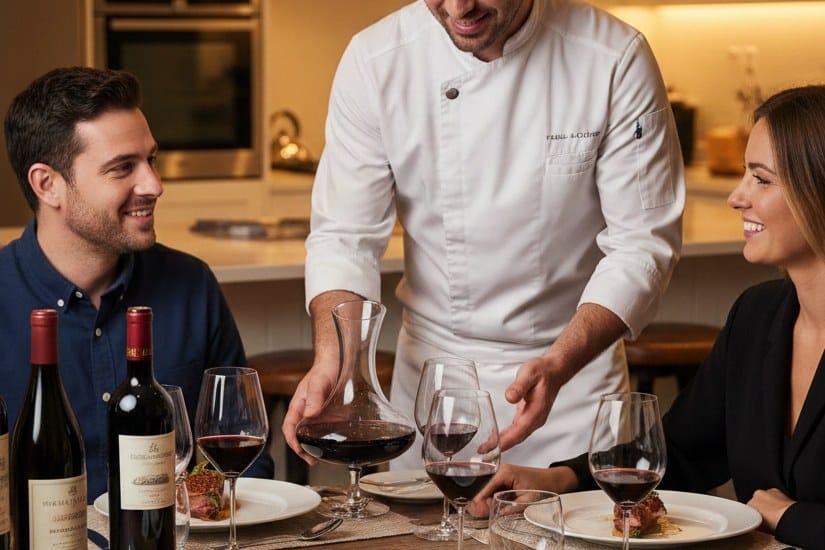
There’s something genuinely special about gathering your favourite people around a table where every sip complements every bite.
A wine pairing dinner at home transforms an ordinary evening into a memorable culinary journey, one that rivals the finest restaurant experiences without the hefty price tag or the need to book months in advance. Mastering the art of food and wine pairing opens doors to extraordinary entertaining.
The beauty of hosting at home lies in the intimacy and personalisation you simply cannot replicate at a restaurant. You control the atmosphere, the playlist, the pace of the evening. And when the wine flows perfectly alongside each dish, conversation deepens, laughter comes easier, and moments become memories worth cherishing.
Table of Contents
Transform your culinary dreams into reality
From interactive cooking lessons to exotic cuisine adventures, our expert chefs transform your kitchen into a world-class culinary experience.
Planning your wine pairing dinner menu
The foundation of any successful wine pairing dinner rests on thoughtful menu planning. Rather than selecting wines first and building dishes around them, experienced hosts recommend choosing your courses and then finding wines that enhance each flavour profile.
Start with four to five courses to create variety without overwhelming your guests. A typical progression might include a fresh starter, a seafood or light protein course, a rich main, and a decadent dessert.
Consider the season when selecting ingredients. Australian summers call for bright, fresh flavours like local prawns with citrus, whilst winter evenings warrant heartier options such as slow-braised lamb with root vegetables.
Balance is crucial across your menu. Alternate between rich and light dishes to prevent palate fatigue. If your main course features butter-rich sauces, ensure your starter offers brightness and acidity to cleanse the palate.
This rhythm keeps guests engaged and excited for what comes next, rather than feeling overwhelmed midway through the evening.
Consider including a cheese course before dessert, as this French tradition allows you to showcase additional wine pairings whilst giving guests a savoury pause before sweet finishes.
Essential wine selection principles
Understanding a few fundamental principles transforms wine pairing from guesswork into confident decision-making.
The classic guideline of matching wine weight to food weight remains remarkably reliable.
- Light dishes such as oysters or fresh salads pair beautifully with crisp whites like Riesling or Sauvignon Blanc.
- Heavier fare including red meats and rich stews demands fuller-bodied wines such as Shiraz or Cabernet Sauvignon.
Consider the dominant flavours in each dish and seek complementary or contrasting elements in your wine. A slightly sweet Gewürztraminer beautifully contrasts spicy Asian-inspired dishes, whilst an earthy Pinot Noir complements mushroom-based sauces.
Pour progression matters significantly throughout your dinner. Begin with lighter, drier wines and gradually move towards fuller, sweeter options. This natural escalation prevents delicate flavours from being overshadowed by robust predecessors.
For dessert, consider a late-harvest Riesling from the Clare Valley or a rich tawny port to provide a luxurious conclusion.
Mastering timing and logistics
Successful hosting requires impeccable timing, and this is where many ambitious home entertainers struggle. Coordinating multiple courses whilst maintaining conversation and ensuring wines reach optimal serving temperatures demands considerable multitasking.
The most common mistake hosts make involves spending too much time in the kitchen and missing the very connections they hoped to foster.
Prepare everything possible in advance. Mise en place, the professional kitchen practice of having all ingredients prepped before cooking begins, becomes essential for seamless execution.
- Sauces can be made days ahead and refrigerated.
- Desserts often benefit from overnight setting.
- Even some proteins can be partially prepared and finished quickly when guests arrive.
Wine temperature significantly impacts taste perception. White wines should chill between 7 and 13 degrees Celsius, whilst reds benefit from slightly cooler than room temperature, around 16 to 18 degrees.
Remove reds from storage approximately thirty minutes before serving and return whites to ice buckets between pours.
The private chef advantage for wine pairing dinners
For those who adore the concept of wine pairing dinners but feel daunted by the execution, professional private chef services offer the perfect solution. Take a Chef connects you with skilled culinary professionals who bring restaurant-quality experiences directly into your home, handling every aspect of meal preparation whilst you focus entirely on your guests.
Imagine greeting your guests at the door, wine glass in hand, knowing a professional is orchestrating each course in your kitchen. The chef manages timing flawlessly, plates beautifully, and even cleans as they go.
You remain present for every conversation, every toast, every shared laugh. The experience combines the intimacy of home entertaining with the polished execution of fine dining.
Menus are completely customisable, allowing you to specify wine pairing preferences, dietary requirements, and flavour profiles.
Many chefs specialise in wine-focused menus and can recommend specific bottles that complement their signature dishes perfectly.
Creating the perfect atmosphere
Beyond food and wine, atmosphere transforms a dinner into an event.
- Table setting deserves careful consideration. Use quality glassware appropriate for each wine variety, as different shapes genuinely enhance different wines.
- Lighting sets mood more powerfully than most hosts realise. Dim overhead lights and supplement with candles for warmth and intimacy.
- Music should remain present but never intrusive, creating ambience without competing with conversation.
- Fresh flowers on the table add elegance without overwhelming, and printed menus showing each course paired with its wine add a professional touch that guests genuinely appreciate.
Bringing it all together
Hosting a wine pairing dinner at home represents one of life’s great pleasures, combining culinary creativity with meaningful connection.
Whether you embrace the challenge of cooking yourself or enlist professional support through Take a Chef, the result remains the same: an evening your guests will remember and talk about for years.
Start planning your next wine pairing dinner today. Select a date, invite your favourite people, and begin exploring the wonderful world of food and wine harmony.
Book a private chef at Take a Chef to handle the culinary details whilst you focus on being the perfect host. The perfect pairing awaits, and it is closer than you think.