
Key Takeaways
TL;DR: Making hibachi at home means searing bite-sized proteins and vegetables on a very hot flat cast-iron surface, adding oil first, butter next, garlic just before the protein and soy sauce only at the end. A griddle, two metal spatulas and every ingredient prepped in bowls beforehand is the whole setup.
- What hibachi means in the US: In American restaurants hibachi describes teppanyaki cooking, done on a large flat iron griddle. In Japanese the word refers to a traditional charcoal heating device, which is why the home version is really teppanyaki.
- You do not need a commercial grill: A large cast-iron griddle or flat-top works, and a cast-iron skillet or well-seasoned wok covers smaller portions. The rest of the kit is two metal spatulas, a squeeze bottle for oil, sharp knives and small bowls for pre-measured ingredients. Gas gives better heat control than electric.
- Heat is the technique: Preheat the surface until a droplet of water dances and evaporates on contact. That heat creates the sear while the inside stays tender, and it is what separates hibachi from a crowded pan that steams instead of browning.
- Add flavors in order: Oil first, then butter for richness, garlic just before the proteins so it does not burn, and soy sauce only at the very end. Soy sauce added early scorches and turns bitter instead of building umami.
- The two sauces: Yum Yum sauce is 1 cup mayonnaise, 2 tbsp tomato paste, 1 tbsp melted butter, 1 tsp paprika, 1 tsp garlic powder and a splash of water. Ginger sauce is ½ cup chopped onion, ½ cup soy sauce, 3 tbsp rice vinegar, 2 tbsp ginger, 1 tbsp lemon juice and 1 tsp sesame oil.
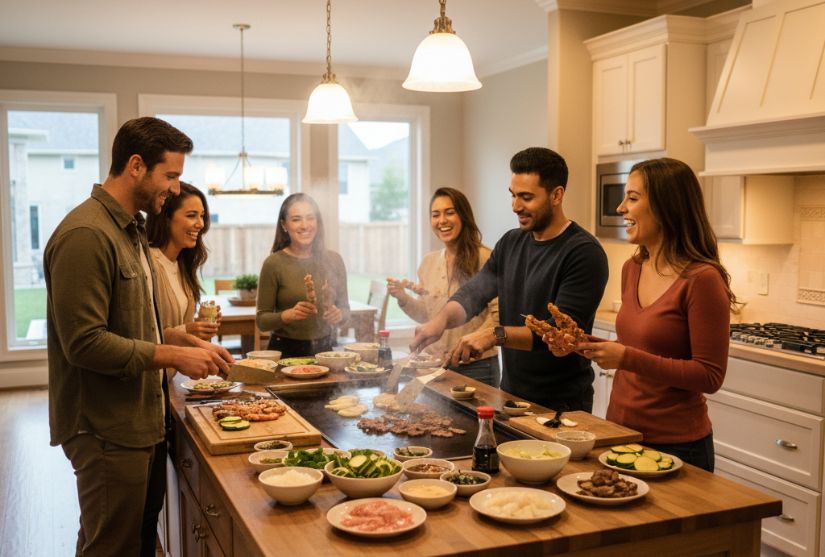
There’s something magical about the sizzle of a hibachi grill. The theatrical flames, the rhythmic clatter of spatulas, and the mouthwatering aroma of perfectly seared steak and vegetables create an unforgettable dining experience. But what if you could recreate that excitement in your own kitchen?
Learning how to make hibachi at home transforms your regular dinner into an interactive culinary event. Whether you’re planning a special celebration or simply craving that signature hibachi flavor, mastering this Japanese cooking style is more accessible than you might think.
This guide will walk you through everything you need to know, from essential equipment to authentic recipes. You’ll discover the techniques professional chefs use and learn how to prepare a complete hibachi meal that rivals your favorite restaurant.
Índice
What is hibachi cooking?
Before diving into the how-to, let’s clarify what hibachi actually means. In Japanese, “hibachi” refers to a traditional heating device. However, in American restaurants, hibachi cooking typically describes the teppanyaki style, cooking on a large, flat iron griddle.
This cooking method emphasizes:
- High-heat searing that locks in flavors and creates perfect caramelization
- Minimal seasoning that lets quality ingredients shine
- Interactive preparation that turns cooking into entertainment
- Quick cooking times that preserve texture and nutrients
The beauty of hibachi lies in its simplicity. Rather than complex sauces or elaborate techniques, you’re focusing on impeccable timing and heat control to transform fresh ingredients into something extraordinary.
Essential equipment for hibachi at home
You don’t need a commercial teppanyaki grill to achieve authentic results. Here’s what actually matters:
The cooking surface
A large cast-iron griddle or flat-top grill works perfectly for home hibachi. These retain heat exceptionally well and provide the even cooking surface you need. If you don’t have a griddle, a large cast-iron skillet or even a well-seasoned wok can work for smaller portions.
Gas stove tops offer better heat control than electric, but both can produce excellent results with proper technique.
The right tools
- Two metal spatulas for the signature flipping and chopping technique
- A squeeze bottle for oils and sauce
- Sharp knives for precise ingredient preparation
- Small bowls for organizing pre-measured ingredients
Professional organization makes all the difference. Having everything prepped and within reach lets you focus on cooking rather than scrambling for ingredients.
Transform your culinary dreams into reality
From interactive cooking lessons to exotic cuisine adventures, our expert chefs transform your kitchen into a world-class culinary experience.
Core ingredients for authentic hibachi
The foundation of great hibachi recipes starts with quality ingredients. Here’s your essential shopping list:
Proteins
- Ribeye or sirloin steak (1-inch thick cuts work best)
- Chicken breast or thighs (boneless and skinless)
- Large shrimp (peeled and deveined)
- Scallops (optional, for variety)
Vegetables
- Zucchini (sliced into half-moons)
- Onions (sliced into thick rings, then halved)
- Mushrooms (cremini or button, halved)
- Broccoli (florets only)
Flavor essentials
- Soy sauce (high-quality, low-sodium preferred)
- Butter (unsalted)
- Garlic (fresh, minced)
- Salt and pepper
- Vegetable or soybean oil (high smoke point)
For the fried rice
- Day-old cooked rice (crucial for proper texture)
- Eggs
- Green onions
- Frozen mixed vegetables
Mastering hibachi cooking techniques
Success with hibachi cooking techniques comes down to three principles: high heat, quick movements, and proper timing.
Heat management
Preheat your griddle or pan until water droplets dance and evaporate instantly. This extreme heat creates the characteristic sear while keeping interiors tender. For proteins, you’re aiming for that perfect brown crust without overcooking the center.
The cutting method
Bite-sized pieces are signature to hibachi. Cut vegetables uniformly so they cook evenly. Proteins should be diced into 1-inch cubes after cooking for beef and chicken, while shrimp can stay whole.
Layering flavors
Start with oil, then add butter for richness. Garlic goes in just before proteins to prevent burning. Soy sauce comes at the end, too early, and it burns, creating bitterness instead of that sought-after umami depth.
Signature hibachi sauces
No hibachi meal is complete without the right sauces.
Yum Yum sauce
Mix 1 cup mayonnaise, 2 tablespoons tomato paste, 1 tablespoon melted butter, 1 teaspoon paprika, 1 teaspoon garlic powder, and a splash of water until smooth. This creamy, slightly sweet sauce complements everything.
Ginger sauce
Blend ½ cup chopped onion, ½ cup soy sauce, 3 tablespoons rice vinegar, 2 tablespoons ginger, 1 tablespoon lemon juice, and 1 teaspoon sesame oil. The sharp ginger bite cuts through rich proteins beautifully.
Creating the full hibachi experience at home
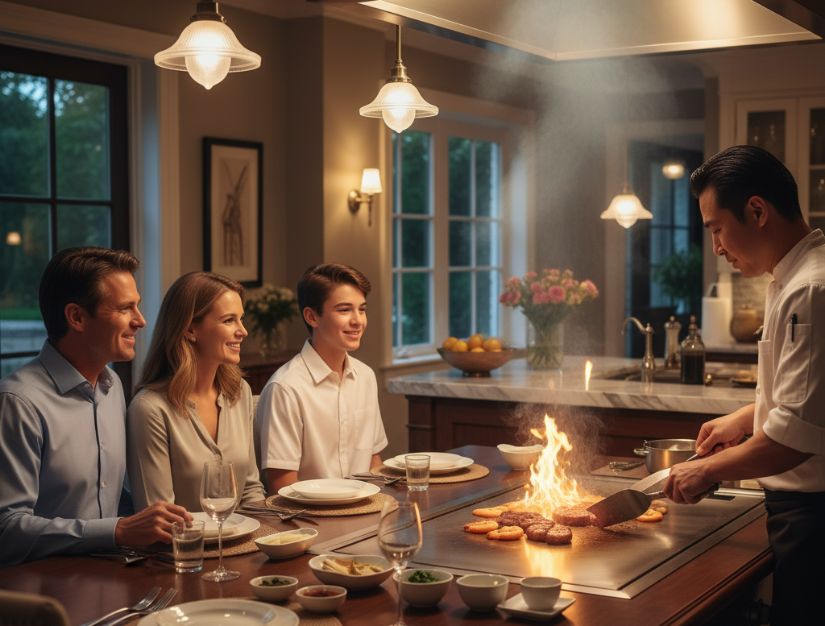
Presentation matters. Serve everything on a large platter, arranging proteins, vegetables, and rice in distinct sections. This visual separation mimics the restaurant experience.
Set the table with small individual sauce bowls. Consider playing soft instrumental music to set the mood. The goal is recreating not just the flavors but the entire sensory experience.
Of course, if you want the complete authentic experience without the work, hiring a private hibachi chef through Take a Chef brings professional hibachi directly to your home. You get the entertainment, the expertise, and zero cleanup, just pure enjoyment.
Pro tips for a successful hibachi at home
Prep everything in advance. Once you start cooking, there’s no time to chop vegetables or measure ingredients. Have proteins, vegetables, and seasonings organized in small bowls.
Work in batches. Unless you have a massive griddle, cooking smaller quantities ensures proper heat distribution. Better to serve in courses than crowd the pan and end up steaming instead of searing.
Invest in quality ingredients. Since hibachi uses minimal seasoning, the natural flavor of your proteins and produce takes center stage. Choosing well-marbled steak or fresh shrimp makes an enormous difference.
Practice your spatula skills. While the fancy tricks are optional, comfortable spatula handling improves your cooking control and makes the process more enjoyable.
Ready to prepare your hibachi at home?
Mastering how to make hibachi at home opens up exciting possibilities for your dinner routine. You’re not just cooking a meal, you’re creating an experience that brings people together around sizzling pans and shared flavors.
The techniques you’ve learned here form the foundation, but hibachi cooking rewards experimentation. Try different protein combinations, adjust seasonings to your taste, and develop your own signature style.
Remember, the journey from home cook to hibachi master is part of the fun. Each time you fire up that griddle, you’ll discover new techniques and flavor combinations.
Ready to experience restaurant-quality hibachi without lifting a spatula? Explore Take a Chef’s private chef services and let a professional bring the hibachi grill to your kitchen, complete with all the theatrical flair and none of the work.