
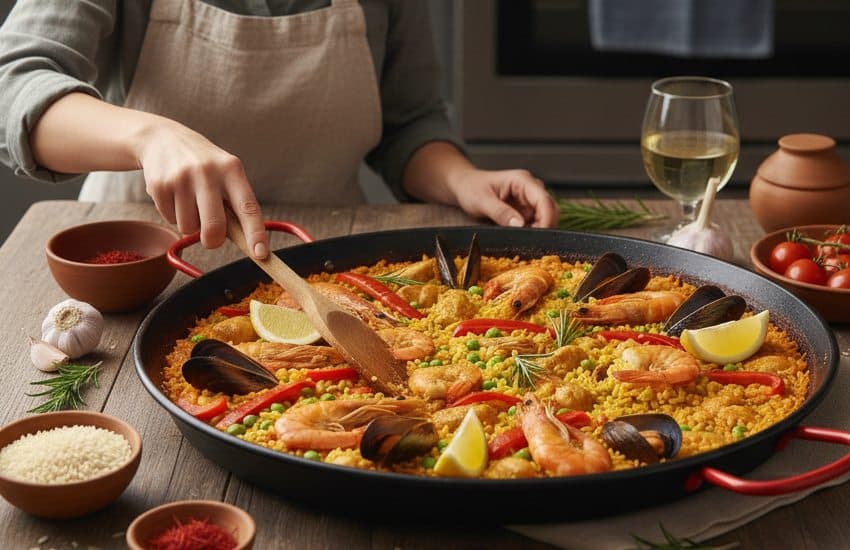
Few dishes capture the essence of Spanish cuisine quite like paella. This vibrant, saffron-scented rice dish has traveled from Valencia to kitchens worldwide, becoming a symbol of celebration and shared meals. But here’s what many home cooks discover: making authentic paella at home can be surprisingly tricky.
The rice sticks to the pan. The seafood overcooks while the chicken stays raw. The bottom burns instead of developing that coveted crispy layer. Sound familiar? Even experienced cooks struggle with paella’s unique demands.
Understanding how to make paella at home will deepen your appreciation for this extraordinary dish and give you confidence to tackle it. Mastering this dish transforms any gathering into something memorable.
Índice
Understanding paella: more than just rice
Paella originated in Valencia during the mid-19th century, though rice cultivation in Spain dates back to Moorish times around the 10th century. Valencian farmworkers would gather whatever ingredients they could find, cooking everything together in a wide, shallow pan over an open flame.
This humble origin explains why authentic paella is incredibly flexible. There’s no single “correct” recipe. Traditional paella Valenciana features chicken and rabbit with green beans and butter beans. Seafood paella, known as paella de mariscos, showcases the Mediterranean’s bounty.
The key isn’t rigid adherence to specific ingredients, but rather mastering the techniques that make paella special.
Essential ingredients for authentic paella at home
- Rice: Matters enormously. Spanish short-grain varieties like bomba or calasparra absorb three times as much liquid as regular rice without becoming mushy. If you can’t find Spanish rice, arborio makes an acceptable substitute, though long-grain varieties should be avoided entirely.
- Proteins: bring depth and character to your paella. Traditional Valencian paella features chicken thighs and rabbit, prized for their rich flavor. Seafood paella showcases shell-on shrimp, mussels, clams, and tender squid.
- Saffron: Provides paella’s distinctive golden color and subtle earthy flavor. Quality matters here. Cheap saffron often contains fillers or artificial coloring. Look for threads rather than powder, and toast them lightly before crushing to release their full aromatic potential.
- Sofrito: A slow-cooked base of tomatoes, onions, and garlic, provides the flavor foundation. Some cooks add pimentón, Spain’s famous smoked paprika, for depth. The technique remains consistent: sauté the vegetables over medium-low heat until softened completely and the tomato water evaporates.
- High-quality olive oil: You’ll need more than expected because the excess oil in the sofrito helps form the all-important socarrat, that crispy bottom layer that paella enthusiasts prize above all else.
Transform your culinary dreams into reality
From interactive cooking lessons to exotic cuisine adventures, our expert chefs transform your kitchen into a world-class culinary experience.
Step by step technique for perfect homemade paella
Success with paella at home requires understanding its unique cooking method. Unlike risotto, which demands constant stirring, paella insists on stillness once the rice goes in.
- Begin by browning your proteins. Whether using chicken, rabbit, seafood, or a combination, develop deep golden color on the meat before setting it aside. This caramelization adds complexity to the finished dish.
- Build your sofrito in the same pan, allowing the aromatics to absorb all those delicious fond bits. Add the rice next, toasting it briefly until the grains become slightly translucent at the edges. This step helps the rice hold its shape during cooking.
- Pour in hot stock, ensuring it covers the rice evenly. Here’s where discipline becomes essential: resist the urge to stir. The rice should cook undisturbed, allowing the bottom layer to develop the coveted socarrat. Experienced paella cooks learn to listen to the rice. As liquid evaporates, you’ll hear gentle crackling that signals the crust is forming.
- Add quick-cooking ingredients like shrimp and mussels partway through, nestling them into the rice. Cover briefly if needed to steam shellfish open.
- Finally, rest the finished paella under a clean kitchen towel for five to ten minutes before serving.
Common mistakes and how to avoid them
Stirring the rice ranks as the most frequent error. This releases starch and creates mushy, risotto-like results. Once your stock goes in, leave the rice alone.
Wrong liquid ratios cause either crunchy, undercooked rice or soggy disaster. Different rice varieties absorb different amounts, so follow your specific rice package guidelines rather than generic recipes.
Overcrowding the pan prevents proper socarrat formation. Paella should cook in a thin layer, no thicker than half an inch. If your pan can’t accommodate ingredients with room to spare, consider making two smaller batches.
Uneven heat distribution challenges home cooks on standard burners. Traditional paella pans are thin and wide, designed for outdoor burners or wood fires that heat the surface evenly. On a home stove, rotate the pan regularly throughout cooking.
Scaling paella for groups and special occasions
One of paella’s greatest strengths is feeding a crowd. Unlike plated dishes requiring individual attention, paella welcomes everyone to gather around and share directly from the pan. This communal aspect makes it perfect for celebrations of all sizes.
For larger groups, many hosts pair paella with tapas-style appetizers. Spanish appetizers, cheeses, and croquettes complement the main event while giving guests something to enjoy as the paella finishes.
When cooking at home becomes overwhelming, especially for groups larger than eight, Take a Chef offers the perfect solution. Private paella chefs bring expertise in scaling recipes properly, managing dietary restrictions like gluten-free or pork-free requirements, and creating kid-friendly options alongside adult menus.
Paella variations to explore
Once you’ve mastered the basics of making paella at home, consider exploring regional variations. Mixed paella combines seafood with chicken or pork. Vegetable paella showcases artichokes, peppers, and seasonal produce, perfect for guests who prefer plant-based options.
For groups with varied preferences, remember not everyone needs to eat from the same pan. Some guests may not enjoy fish, while others prefer vegetarian options. Planning two smaller paellas with different proteins often works better than one large compromise dish.
Bringing Spain to your home table
Paella represents more than a recipe. It embodies the Spanish philosophy of gathering around food, sharing experiences, and celebrating life’s moments. Whether hosting four friends for Spanish dinner or planning an anniversary celebration, mastering how to make paella at home connects you to centuries of culinary tradition.
Ready to experience authentic paella without stress? Explore Take a Chef and discover why food lovers trust private chefs for memorable dining experiences. Your perfect paella awaits.