
Key Takeaways
TL;DR: The best après-ski food is warm, salty, easy to eat standing up and ready the moment people walk in: a big board, a hot dip, soup in mugs, a few sliders and something sweet. Set it out when the lifts close, keep it simple, and save the plated dinner for later.
- Timing: Après starts when the lifts close, around 3:30 to 4:30 p.m. Have the food out before the first boots come off.
- The base: A charcuterie and cheese board, a warm dip and soup in mugs cover a crowd with little work.
- Something hearty: Sliders, fritters or a raclette station turn snacks into a real refuel.
- Something warm to drink: Hot chocolate, cider and tea, with a non-alcoholic option for everyone.
- Let someone else do it: A private chef can set up the après spread and cook dinner afterwards; ski-season dinners on Take a Chef cost a median of $157 a guest.
Après-ski, French for “after skiing”, is the hour when everyone comes off the mountain cold, hungry and in a very good mood. Whether you are hosting it at a rental house, a cabin or your own place, the food has one job: warm people up and keep them happy until dinner. Below are the ideas that work, many of them taken from real ski-season menus that our chefs cooked in Park City, Lake Tahoe, Breckenridge and Vail.
Índice
What makes good après-ski food
- Warm and comforting. Melted cheese, soup and anything out of the oven beat cold sandwiches.
- Easy to eat standing up. Bites, sliders, skewers and mugs, not dishes that need a knife and fork.
- Ready on arrival. Food that holds well on a board or in a slow cooker, so it is out when people walk in.
- Salty and filling. After a day in the cold, people want crunch, cheese and protein.
- Light enough for dinner. Après is a bridge, not the main meal.
Après-ski boards and dips
The big board
Cured meats, two or three cheeses, nuts, dried fruit, pickles, honey and crackers. It is a staple of the ski menus our chefs cook, from Park City to Breckenridge, and it can be ready before the group leaves for the mountain.
Baked brie
A wheel of brie baked until it runs, topped with jam, honey or, as one Lake Tahoe chef serves it, a maple whiskey bacon reduction. Serve with bread and apple slices.
Warm dips
Baked artichoke and cream cheese dip, queso, French onion dip or baba ganoush with pita chips. Keep them warm in a small slow cooker or a cast-iron pan.
Hearty bites for a hungry group
Sliders
Bison or beef sliders with caramelized onion and blue cheese, as served on Colorado ski menus, or pulled pork sliders with slaw.
Fritters and skewers
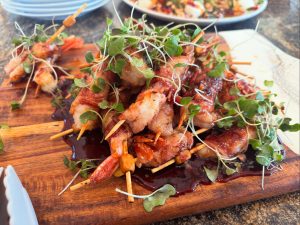
Sweet corn fritters with chile crema, zucchini fritters with lemon aioli, or grilled shrimp and chicken skewers. They hold well and disappear fast.
Raclette or fondue station
Melted raclette over potatoes with cornichons and charcuterie, or a cheese fondue with bread and vegetables. It is food and entertainment at the same time.
Crostini
Beef tenderloin crostini with chimichurri, tomato bruschetta or goat cheese with honey. Easy to prep in the morning.
Soups and warm drinks
Soup in mugs is the most underrated après food: French onion, tomato bisque, butternut squash or chili. Next to it, a pot of hot chocolate with marshmallows, mulled cider and tea, and a non-alcoholic option that feels as special as the drinks.
Something sweet
Brownies, cookies, churros with chocolate sauce or a tray of mini desserts. Keep it to one or two things: dinner is still coming.
Unforgettable moments with gourmet touches
From intimate dinners to special celebrations, our private chefs create memorable experiences that turn any event into something extraordinary.
How to set up an après-ski spread
- Prep before you ski. Boards, dips and soups can be made in the morning and warmed when you get back.
- Put it near the door. A spread close to where boots come off keeps the snow out of the kitchen.
- Use warmers. A slow cooker for the dip, a pot on low for the soup, a warm oven for the brie.
- Think about allergies. About 1 in 5 ski groups we book has an allergy or a diet; label what is gluten-free or vegetarian.
- Plan the dinner after. Après works best when everyone knows what time dinner is.
Let a private chef handle après and dinner
On a ski trip the hardest part is not the food, it is finding the energy to cook it after a full day on the mountain. A private chef can set out the après spread when you get back, cook dinner and clean up, for one night or the whole week.
Over the last two winters, ski-season dinners booked on Take a Chef in ten US ski destinations cost a median of $157 a guest, with a typical group of 8, and about 1 in 8 groups booked a chef for several days. See the full breakdown in how much a private chef costs for a ski trip, real menus and destinations in our ski trip private chef guide, and more meal ideas in our dinner ideas for a ski trip.
Planning a specific resort? Read our guides for Park City, Lake Tahoe, Breckenridge and Vail and Beaver Creek.
Frequently asked questions
What food is served at après-ski?
Warm, salty food that is easy to eat standing up: charcuterie and cheese boards, baked brie, warm dips, soup in mugs, sliders, fritters, raclette or fondue, and something sweet like brownies or churros.
What time is après-ski?
It starts when the lifts close, usually between 3:30 and 4:30 p.m., and runs until dinner.
How do I host an après-ski party at a rental?
Prep boards, dips and soup in the morning, keep them warm in a slow cooker or a low oven, and set the spread near the door. Or book a private chef to set it up and cook dinner afterwards.
How much does a private chef cost for après and dinner on a ski trip?
On Take a Chef, ski-season dinners in ten US ski destinations cost a median of $157 a guest over the last two winters, including groceries, service and cleanup. An après spread can be added to the dinner proposal.
What are good non-alcoholic après-ski drinks?
Hot chocolate, mulled cider, ginger tea or a spiced zero-proof punch. Serve them warm and in mugs, like the rest of the spread.