

Between back-to-back meetings, evening commitments, and a never-ending to-do list, eating well can feel like a luxury you simply haven’t earned yet. But here’s the truth: you don’t need hours in the kitchen to fuel your body properly.
With the right approach and a few reliable systems in place, healthy eating fits even the most demanding schedule without sacrificing quality or variety.
The key is not trying harder. It’s thinking smarter, from the foods you stock to the moments you choose to cook, and yes, occasionally delegating entirely. This guide walks you through practical, nutritionist-backed strategies that genuinely work for busy people, whether you commute daily, travel frequently, or simply have more on your plate than hours in the day.
Índice
Why busy schedules derail healthy eating
Most people don’t eat poorly because they lack willpower. They eat poorly because of decision fatigue, time pressure, and lack of preparation. When you’re exhausted after a long day, reaching for fast food or processed snacks is the path of least resistance. The habits that keep us eating well are the first ones to break under pressure.
Research published in the International Journal of Behavioral Nutrition found that time constraints are the most frequently cited barrier to healthy eating, ahead of cost and cooking skills. The solution, according to nutritionists, isn’t rigid meal plans. It’s reducing friction at every stage of the eating process.
Unforgettable moments with gourmet touches
From intimate dinners to special celebrations, our private chefs create memorable experiences that turn any event into something extraordinary.
Building a time-efficient kitchen foundation
Before you think about specific recipes, focus on what’s in your kitchen. A well-stocked pantry is the single biggest lever you can pull for quick, healthy meals.
Pantry staples that speed up cooking
- Proteins: canned lentils, chickpeas, tuna, frozen shrimp, eggs, and edamame, ready in under ten minutes
- Grains: microwaveable rice and quinoa pouches, whole wheat pasta, and oats
- Vegetables: frozen spinach, broccoli, peas, and stir-fry blends retain nearly the same nutrients as fresh
- Flavor builders: garlic paste, ginger paste, soy sauce, olive oil, and tahini turn basics into satisfying meals fast
With these on hand, a nutritious dinner comes together in 15 minutes without advance planning.
Quick meal ideas that actually work
Breakfasts under five minutes
Breakfast is where most busy people make the first compromise of the day. These options require minimal effort and deliver real nutritional value:
- Overnight oats (prepared the night before) with chia seeds, almond butter, and banana
- Greek yogurt with frozen berries and a handful of granola
- Whole grain toast with avocado and two soft-boiled eggs
- Smoothies blended in 90 seconds: spinach, frozen mango, protein powder, and oat milk
The overnight oat approach in particular aligns with research suggesting that eating a high-protein breakfast reduces caloric intake throughout the day by stabilizing blood sugar and reducing cravings.
Lunches that don’t need a microwave queue
For working professionals, lunch is often the most chaotic meal. Prioritize no-heat or quick-heat options:
- Mason jar salads with pre-cooked grains, roasted chickpeas, and a simple lemon-tahini dressing
- Whole wheat wraps with hummus, pre-sliced turkey, cucumber, and spinach
- Leftover grain bowls from dinner, topped with a poached egg
- Lentil soup from a Tetra Pak, paired with a whole grain roll
Dinners in 20 minutes or less
These are full meals, not workarounds:
- Sheet pan shrimp and broccoli: toss with olive oil, garlic, and chili flakes, roast at 425F for 12 minutes
- Soba noodles with edamame: cook noodles, toss with tamari, sesame oil, shredded carrots, and frozen edamame
- Black bean tacos: sauté canned black beans with cumin and smoked paprika, serve in corn tortillas with avocado and salsa
- Egg fried rice: use a pre-cooked rice pouch, scramble two eggs in a hot wok, add frozen peas and soy sauce
Meal-prep strategies that save the most time
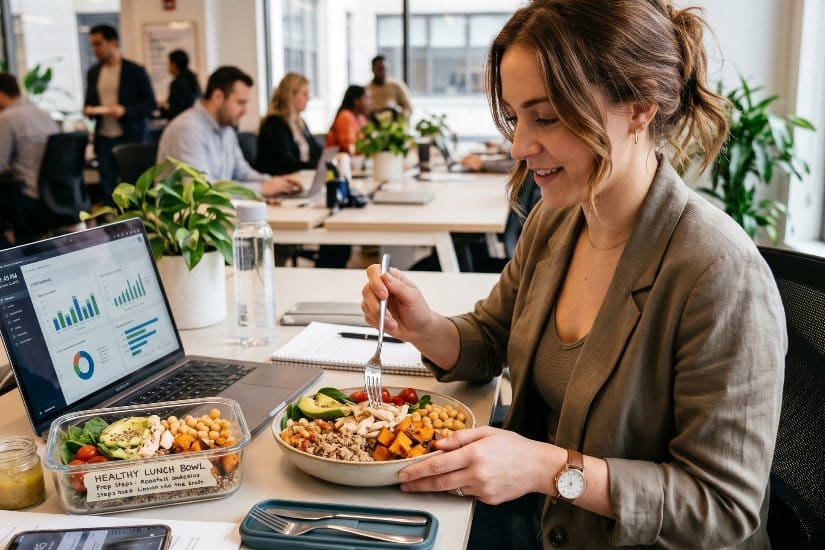
Instead of preparing complete meals, batch-cook foundational ingredients that can be repurposed across multiple meals throughout the week. For example:
- A large batch of cooked quinoa becomes a breakfast porridge, a lunch grain bowl base, and a dinner side
- Roasted vegetables serve as a pizza topping, a pasta mix-in, and a standalone side dish
- Baked chicken breast is sliced for a salad Monday, shredded for tacos Tuesday, and diced for a stir-fry Wednesday
Dedicate one hour on Sunday to this kind of batch cooking and you’ll have a week of components ready to assemble in minutes.
Most people who try this approach are surprised by how little time it actually requires once it becomes a habit and how much weekday stress it eliminates. If you would rather work from a repeatable weekly system than improvise every Sunday, our guide on how to plan dinners for the week walks through the planning side in detail.
Investing in the right tools
A handful of kitchen tools dramatically reduce prep time:
- Instant Pot or electric pressure cooker: cooks dried beans, grains, and tough cuts in a fraction of stovetop time
- Food processor: chops, slices, and shreds in seconds
- Silicone portioning containers: make batching and portioning lunch-ready meals effortless
- Pre-cut produce: slightly more expensive, but genuinely removes the most time-consuming part of vegetable-heavy cooking
Strategic outsourcing: when not to cook
Even with the best meal-prep system, there are weeks when everything falls apart. Recognizing when to outsource your nutrition is not a compromise; it’s a smart time-management decision.
For some people, the real bottleneck is not cooking time but mental bandwidth. Planning, shopping, and deciding what to eat consume more cognitive energy than the cooking itself, which behavioral economists call “food decision fatigue.” That’s where professional help becomes genuinely valuable.
Take a Chef: restaurant-quality nutrition on your schedule
For busy individuals who want home-cooked, nutritionally personalized meals without the prep time, Take a Chef offers a practical solution. It’s the world’s leading private chef booking platform, connecting clients with professional chefs who cook in your home, exactly to your specifications.
Unlike meal kits or generic delivery, a private chef from Take a Chef builds menus around your dietary goals, food preferences, allergies, and schedule. You arrive home to a refrigerator stocked with portioned, ready-to-heat meals prepared from fresh ingredients.
The service includes a private nutritionist chef for all occasions. Browse chefs in your city, read verified reviews, and book in minutes. Pricing scales with group size, making it accessible for solo professionals as much as families.
For people with genuinely scarce time, this is not an indulgence. It’s a structured approach to eating well without adding complexity to an already full calendar. Nutritious meals aligned with your goals, zero planning required.
Making it stick: small habits with big returns
Sustainable healthy eating for busy people isn’t about perfection. It’s about systems that require fewer daily decisions. Stock reliable pantry staples. Batch cook one or two foundational ingredients on the weekend. Keep emergency options like canned lentils and frozen vegetables available for low-energy evenings.
On weeks when your schedule leaves no margin, whether a project deadline or a stretch of travel, use services like Take a Chef to stay on track without falling back on fast food or skipping meals entirely. Eating well when you’re truly busy is a design problem, not a willpower problem. Design your environment right, reduce the friction points, and the healthy choice becomes the easy choice every single time.
Healthy eating for busy people: frequently asked questions
What are the best quick meals for busy people?
The best ones are built from components you already have rather than recipes you have to follow. Sheet pan shrimp and broccoli roasts in twelve minutes, soba noodles with edamame come together in the time the water boils, black bean tacos need one pan, and egg fried rice uses a pre-cooked rice pouch. All four are full meals, not compromises, and none of them require planning ahead.
How do you meal prep when you have no time?
Stop preparing complete meals and batch-cook foundational ingredients instead. One large batch of quinoa becomes breakfast porridge, a lunch grain bowl and a dinner side. Roasted vegetables work as a pizza topping, a pasta mix-in or a side. A baked chicken breast is sliced for salad on Monday, shredded for tacos on Tuesday and diced into a stir-fry on Wednesday. One hour on a Sunday is usually enough.
What pantry staples make fast, healthy meals possible?
Four categories cover almost everything. Quick proteins: canned lentils, chickpeas, tuna, frozen shrimp, eggs and edamame. Grains: microwaveable rice and quinoa pouches, whole wheat pasta and oats. Vegetables: frozen spinach, broccoli, peas and stir-fry blends. Flavour builders: garlic and ginger paste, soy sauce, olive oil and tahini. With those on hand a nutritious dinner takes about fifteen minutes with no advance planning.
Are frozen and pre-cut vegetables as healthy as fresh ones?
Frozen vegetables retain nearly the same nutrients as fresh, because they are frozen shortly after harvest. Pre-cut produce costs slightly more, but it removes the most time-consuming part of vegetable-heavy cooking, which for most busy people is the difference between cooking and ordering in. Both are legitimate tools, not shortcuts to apologise for.
What is the healthiest breakfast when you are in a hurry?
Anything with real protein in it. Overnight oats with chia seeds, almond butter and banana are made the night before; Greek yogurt with frozen berries and granola takes seconds; whole grain toast with avocado and soft-boiled eggs takes five minutes. A high-protein breakfast helps stabilise blood sugar and reduce cravings later in the day, which is why it tends to lower how much you eat overall.
Can a private chef do weekly meal prep for me?
Yes. Through Take a Chef you can book a professional private chef who cooks in your own kitchen and builds the menu around your dietary goals, food preferences, allergies and schedule. Instead of a fixed meal-kit menu, you end up with portioned, ready-to-heat meals made from fresh ingredients. For people whose real bottleneck is mental bandwidth rather than cooking time, it removes the planning and shopping entirely.
How much does it cost to have a private chef cook your weekly meals?
It depends on your city, how many people you are feeding and how many meals you want, and pricing scales with group size, so it is more accessible for solo professionals than most people assume. Our guide to what a private chef costs per month breaks down real price ranges by market, by number of guests and by frequency, including regular weekly arrangements.