Key Takeaways
TL;DR: Kosher food follows kashrut, the Jewish dietary laws that set out which foods are permitted and how they must be slaughtered, prepared and served. Two rules shape a menu more than any others: meat and dairy stay strictly separate, and every packaged ingredient must be kosher-certified, marked with a symbol such as OU, OK or Star-K.
- What makes food kosher: Land animals must both chew the cud and have split hooves, which is why beef and lamb qualify and pork does not. Among fish, only species with fins and scales are kosher. All of it must be slaughtered and prepared according to specific rules, and the blood must be drained.
- Every food falls into one of three categories: Meat, dairy or pareve (neither). Pareve foods such as eggs, fruit, vegetables and grains can be served with either, which makes them the most useful thing on a kosher menu. Fish is pareve too, but custom keeps it off the same plate as meat.
- Separation runs through the whole kitchen: Meat and dairy are kept apart not only on the plate but in cookware, utensils, dishes, sinks and storage, and observant households wait between eating meat and eating dairy.
- Kosher and halal are not interchangeable: Kosher meat is slaughtered by a trained shochet with a single cut to the throat, while halal requires a Muslim slaughterer invoking God’s name. Kosher strictly separates meat and dairy and halal does not. Kosher permits only finned and scaled fish, while halal allows all seafood except shellfish under some interpretations. Kosher wine must be certified, and alcohol is prohibited outright in halal.
- Five gourmet menus to build from: A Mediterranean kosher feast, a traditional Shabbat dinner, a modern plant-based menu, classic Ashkenazi comfort food, and an elegant kosher seafood dinner, each laid out as starter, main and dessert.
Kosher food follows dietary rules based on Jewish traditions, setting out which foods are allowed and how they should be prepared and served. Even though these rules matter above all for religious reasons, kosher meals have also become popular among people looking for high-quality, carefully sourced food.
But what are these rules? How can you tell whether what you are eating is kosher? In this guide we answer the essential questions about the kosher diet, and share five kosher menu ideas to build a great dinner around.
Índice
What is kosher?
Kosher food adheres to Jewish dietary laws, known as kashrut, which specify what can be eaten and how it must be processed and prepared. These laws primarily regulate:
- Meat: Only certain animals are kosher — land animals must both chew the cud and have completely split hooves, which covers cattle, sheep, goats and deer. Permitted birds follow tradition rather than a physical test, and in practice mean chicken, turkey, duck and goose. Every one of them must be slaughtered according to specific guidelines.
- Fish: Only species with both fins and scales qualify, such as salmon, tuna, cod and sea bass. Shellfish and smooth-skinned fish are excluded.
- Dairy: Milk, cheese and butter must come from a kosher animal and be produced under supervision. Most hard cheeses need certification because of the rennet used to make them.
- Pareve foods: Everything that is neither meat nor dairy — eggs, fish, fruit, vegetables, grains, nuts. These can be served alongside either category, which makes them the backbone of most kosher menus.
- The separation of meat and dairy: The two are never cooked or eaten together, and the rule extends to cookware, utensils and dishes.
- Certification: Packaged and processed products need a hechsher, the symbol of a certifying agency, because a single non-kosher additive is enough to disqualify the whole product.
What foods are not kosher?
If you’re new to the kosher diet, these are the foods that kashrut excludes:
- Pork, rabbit, camel and horse, along with any land animal that fails the cud-and-hooves test. The pig is the best-known case: it has split hooves but does not chew the cud.
- Shellfish and other seafood without fins and scales — shrimp, lobster, crab, clams, oysters, octopus, squid, and fish such as catfish, eel, shark and monkfish.
- Birds of prey and scavengers, including eagle, hawk, owl and vulture.
- Any mixture of meat and dairy, which rules out a cheeseburger, a cream sauce on beef, or butter on a steak, regardless of how kosher each ingredient is on its own.
- Blood, which is why kosher meat is drained and salted, and why eggs are checked for blood spots.
- Certain fats and the sciatic nerve of otherwise kosher animals, which is why some cuts of the hindquarter are not sold as kosher in many places.
- Insects, which is why leafy greens, broccoli and berries are washed and inspected carefully.
- Wine and grape juice without certification, including many vinegars and flavorings derived from them.
- Meat that is kosher by species but not slaughtered correctly. A cow is a kosher animal; a steak from that cow is only kosher if it went through the proper process.
Kosher vs. Halal
While both kosher and halal dietary laws come from religious traditions and share similarities, they also exhibit distinct differences:
| Aspect | Kosher (Jewish) | Halal (Islamic) |
|---|---|---|
| Meat | It must be slaughtered by a trained Jewish individual known as a shochet, with a single cut to the throat. | Must be slaughtered by a Muslim person while invoking God’s name. |
| Dairy and meat | They must be strictly separated. | No restrictions. |
| Seafood | Only fish with fins and scales are kosher. | All seafood is halal except for shellfish in some interpretations. |
| Alcohol | Wine must be supervised and certified kosher. | Strictly prohibited. |
How do you prepare a kosher meal?
Preparing a kosher meal involves more than choosing the right ingredients; it requires careful preparation, serving, and kitchen organization.
What is required for a kosher meal?
First of all, let’s see what it takes to put an authentically kosher meal on the table:
- Use only kosher-certified ingredients — look for symbols such as OU, OK, Star-K or Kof-K on anything packaged or processed.
- Buy meat and poultry from a kosher butcher, already slaughtered, drained and salted.
- Decide before you start whether the meal is meat, dairy or pareve. That one decision determines everything else on the menu, down to the dessert.
- Keep separate cookware, utensils, cutting boards and dish towels for meat and for dairy. Most kosher kitchens color-code them so nothing gets mixed up mid-service.
- Wash and inspect leafy greens, herbs, broccoli, cauliflower and berries for insects before they go anywhere near the pan.
- Check the wine. Wine and grape juice need their own certification, and a non-certified bottle on the table undoes the care taken with everything else.
- If you are cooking in a kitchen that is not normally kosher, be aware that ovens, pans and countertops that have held non-kosher food need proper koshering first. This is the point where most hosts call in help.
How should kosher meals be served?
When it comes to serving, kosher food rules state that:
- Meat and dairy must remain separated — not only on the plate, but across the whole table.
- Each category needs its own dishes, cutlery and serving pieces. A dairy dessert cannot be served on a plate that has held meat.
- There is a waiting period between eating meat and eating dairy. The length varies by community and custom, commonly from one to six hours, which is the practical reason meat meals end with a pareve dessert.
- Pareve dishes can go with either, but once a pareve dish is cooked in meat cookware it is treated as meat for the rest of the meal.
- Fish is pareve, but custom keeps it off the same plate as meat — which is why a fish starter is cleared before the main arrives.
- Bread served at a formal meal brings its own blessings and hand-washing, so it is worth asking your guests what they expect before the meal rather than during it.
These basic rules are essential for cooking and serving according to Jewish traditions. If you’re new to this diet or hosting a large gathering, hiring a private kosher chef is the simplest way to be sure every dish meets the standard your guests keep.

3 easy kosher dinner recipes
Ready to get started? Here are three simple but genuinely good dinners you can cook at home — one from each category, so you can see how meat, pareve and dairy each shape a dish.
1. Lemon Herb Chicken with Roasted Vegetables
This recipe is meat, so keep dairy off the table for this meal and finish with a pareve dessert.
Ingredients:
- 4 boneless, skinless kosher chicken breasts
- 3 tablespoons olive oil
- 3 cloves of garlic, minced
- Juice of 1 lemon, plus a few slices to roast alongside
- 1 teaspoon dried oregano
- 1 teaspoon paprika
- Salt and pepper to taste
- About 700 g (1½ lb) of vegetables for roasting — zucchini, bell peppers, red onion and carrots all work
Instructions:
- Preheat the oven to 400°F (200°C).
- In a bowl, mix olive oil, garlic, lemon juice, oregano, paprika, salt, and pepper.
- Toss the chicken and vegetables in the mixture.
- Arrange everything on a baking sheet and roast for 25 to 30 minutes, or until the chicken is cooked through.
2. Spaghetti with Garlic & Olive Oil
This recipe is pareve as written, which means it can follow either a meat or a dairy course. Adding the optional Parmesan makes it dairy.
Ingredients:
- 12 oz of spaghetti
- ¼ cup of olive oil
- 4 cloves of garlic, thinly sliced
- ½ teaspoon of red pepper flakes (optional)
- ¼ cup of chopped fresh parsley
- Salt, to taste
- Optional: Grated kosher-certified Parmesan (this makes the dish dairy)
Instructions:
- Cook spaghetti following the package instructions. Drain and set aside.
- In a pan, heat olive oil over medium heat and sauté the garlic until it turns golden.
- Add red pepper flakes, then toss in the cooked pasta.
- Stir in chopped parsley, season with salt, and serve warm.
3. Baked Salmon with Dill & Mustard Sauce
Salmon is pareve, and this sauce keeps it that way — so the dish works after a meat course as well as a dairy one. Swap the olive oil for butter and it becomes dairy.
Ingredients:
- 4 salmon fillets
- 2 tablespoons Dijon mustard
- 1 tablespoon honey
- 1 tablespoon olive oil
- 1 teaspoon dried dill (or 1 tablespoon fresh)
- Salt and pepper to taste
Instructions:
- Preheat the oven to 375°F (190°C).
- Mix mustard, honey, olive oil, dill, salt, and pepper in a small bowl.
- Spread the mixture over the salmon fillets.
- Bake for 12 to 15 minutes, or until the salmon flakes easily with a fork.
5 gourmet ideas for a curated kosher menu
Now that you know the essentials, let’s get to the gourmet menus. Each one is built as a single category from start to finish, so nothing on the table contradicts anything else.
1. Mediterranean Kosher Feast
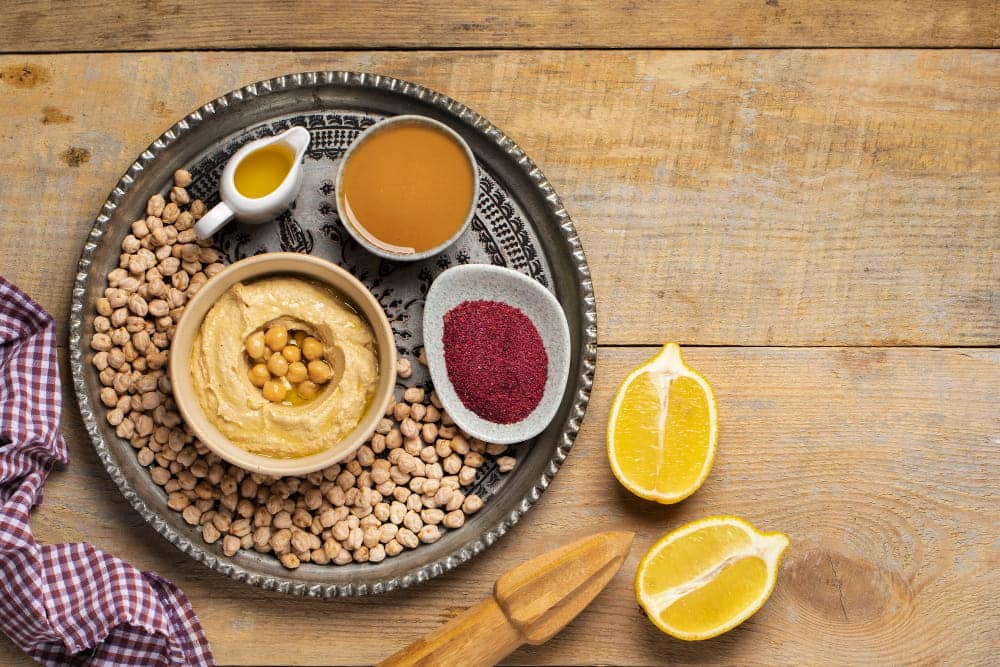
Ideal for a summer dinner party, a light yet elegant meal, or anyone who loves bright, citrusy flavors. Pareve throughout. Craving more inspiration? Discover the best Mediterranean dishes for every occasion.
- Starter: Hummus with warm pita and Israeli salad
- Main: Grilled salmon with tahini sauce and roasted eggplant
- Dessert: Dairy-free almond and date cookies
2. Traditional Shabbat Dinner
Perfect for Friday night gatherings, a cozy family meal, or an occasion where tradition matters as much as flavor. This is a meat menu, so the dessert is deliberately pareve. Planning another celebration? Get more festive meal ideas.
- Starter: Matzo ball soup
- Main: Slow-roasted brisket with roasted root vegetables
- Dessert: Flourless chocolate cake, made with oil rather than butter
3. Modern Plant-Based Kosher Menu
A wellness-focused meal, and the easiest kind of kosher menu to host: an all-vegetable menu is pareve by default, so it sidesteps the meat-and-dairy question entirely. Excellent for vegan and vegetarian guests.
- Starter: Roasted cauliflower with turmeric and tahini drizzle
- Main: Lentil and quinoa-stuffed peppers
- Dessert: Coconut macaroons
4. Classic Ashkenazi Comfort Food
A fall or winter meal that celebrates Jewish heritage, or simply satisfies anyone craving home-style comfort food that follows kosher rules. Meat menu, with a pareve dessert to close.
- Starter: Potato latkes with applesauce
- Main: Stuffed cabbage rolls
- Dessert: Rugelach (dairy-free version)
5. Elegant Kosher Seafood Dinner
Ideal for a romantic dinner, a special occasion, or impressing guests with sophisticated kosher food. Fish only — no shellfish appears on a kosher menu, which is what makes finned fish the centerpiece here.
- Starter: Smoked salmon with dill and capers on rye crackers
- Main: Grilled sea bass with herb-infused couscous
- Dessert: Poached pears with honey and cinnamon

Kosher food isn’t only about following dietary rules; it’s also a cooking tradition that combines values, ethics and creativity. Once you know the categories and the separation rule, most of kashrut stops feeling like a list of prohibitions and starts working like any other set of kitchen constraints — the kind that shape a menu rather than limit it.
Whether you’re exploring kosher cuisine for religious reasons or simply out of curiosity, these menus are a starting point. If you want help — especially with the gourmet end of it, or with a kitchen that isn’t already kosher — book a private kosher chef and let someone who does it every week handle the details.
Kosher food: frequently asked questions
What is a kosher meal?
A kosher meal is one where every ingredient is permitted under kashrut, the Jewish dietary laws, and everything has been prepared and served according to those rules. In practice that means three things: the ingredients are kosher by species and certification, meat and dairy never meet, and the cookware and dishes used have been kept separate. A meal can contain entirely kosher ingredients and still not be a kosher meal if it was cooked in the wrong pan.
What are the main kosher food rules?
Land animals must chew the cud and have split hooves, so beef and lamb are in and pork is out. Fish must have fins and scales, which excludes all shellfish. Meat must be slaughtered by a trained shochet and the blood drained. Meat and dairy are never cooked or eaten together, and each needs its own cookware, dishes and utensils. Packaged products need certification, and wine needs its own. Everything else — fruit, vegetables, grains, eggs — is pareve and can go with either.
What does pareve mean?
Pareve means neither meat nor dairy. Eggs, fish, fruit, vegetables, grains, nuts and most oils are pareve, and they can be served with a meat meal or a dairy one. It is the most useful category on any kosher menu, and it is why a meat dinner can still finish with dessert — the dessert is simply made without butter, milk or cream. Note that a pareve dish cooked in meat cookware is treated as meat for that meal.
Why can’t you mix meat and dairy?
The rule comes from the biblical instruction not to cook a young goat in its mother’s milk, which rabbinic law extended into a full separation of the two categories. In a kitchen it goes well beyond the plate: separate pots, pans, utensils, dishes, dish towels and often separate sinks, plus a waiting period after eating meat before eating dairy — commonly between one and six hours, depending on community custom.
Is all seafood kosher?
No. Only fish with both fins and scales are kosher — salmon, tuna, cod, sea bass, halibut, trout and similar species. Shellfish is excluded entirely: no shrimp, lobster, crab, clams, oysters, scallops, octopus or squid. Some fish are excluded too, including catfish, eel, shark, swordfish under some authorities, and monkfish. Kosher fish is pareve, though custom keeps it off the same plate as meat.
What do the OU, OK and Star-K symbols mean?
They are hechsherim — the marks of kosher certifying agencies, which inspect a product’s ingredients, facility and process and license the symbol when it passes. OU (Orthodox Union), OK, Star-K and Kof-K are among the most widely recognized. The symbol often carries a letter alongside it: D for dairy, M or Glatt for meat, Pareve for neither, and P for kosher for Passover. A plain word like “kosher” on a label, with no agency symbol, certifies nothing.
Is kosher the same as halal?
No, although they overlap. Both forbid pork and both require a specific method of slaughter, but the details differ: kosher slaughter is performed by a trained Jewish shochet, halal by a Muslim slaughterer invoking God’s name. Kosher separates meat from dairy and halal does not. Kosher permits only finned and scaled fish, while halal generally allows all seafood. And alcohol is prohibited in halal, while kosher wine is permitted as long as it is certified.
Can you make a kosher meal in a non-kosher kitchen?
It depends on how strictly your guests observe. For guests who keep kashrut fully, a kitchen that has cooked non-kosher food needs to be koshered first — ovens, cooktops, countertops and cookware each have their own process, and some items cannot be koshered at all. For a less strict setting, using fresh certified ingredients, new or dedicated cookware and disposable serving pieces is a common middle path. If you are unsure which applies, ask your guests directly; it is a normal question and they will be glad you asked.
Can a private chef cook a kosher meal at my home?
Yes. A private kosher chef sources certified ingredients, works to the level of observance your household or your guests keep, and handles the separation of meat and dairy through prep, cooking and serving. It is a common choice for Shabbat dinners, holidays and events where some guests keep kosher and others do not — the chef builds one menu that works for everyone rather than two that compete.