Key Takeaways
TL;DR: The Japanese food trends that keep showing up on menus are modern sushi built on wagyu, plant-based fillings and truffle, the four Japanese citrus fruits, the omakase and hibachi dining formats, izakaya-style small plates, matcha used well beyond drinks, and fusion styles such as Nikkei and Wafu Italian. Most of them can be recreated at home by hiring a sushi or hibachi chef.
- Modern sushi: Three variations are driving it. Wagyu beef brings a buttery richness to traditional sushi ingredients, plant-based rolls replace fish with vegetables, fruit and mushrooms for vegetarian and vegan diners, and truffle adds aroma and a distinctive flavor to classic rolls.
- The four Japanese citrus fruits to know: Yuzu, strongly sour and aromatic, is used as a lemon substitute. Sudachi is acidic and tangy, between lime and lemon. Kabosu is sweet and fragrant and works in place of vinegar. Satsuma mandarins are low in acidity and honey-sweet enough to eat on their own. Chefs use them in beverages, soups, meat dishes, salads and desserts.
- Omakase: Short for “omakase shimasu”, meaning “I trust you, chef”. It is a menu-less dinner in which the chef builds the courses around the freshest ingredients available that day and adapts the sequence to how diners react to the first dish.
- Hibachi: An interactive format where the chef cooks on a large grill in front of the guests, combining the meal with knife-skill demonstrations and conversation. It suits special occasions because the cooking itself is the entertainment.
- Fusion is where the innovation is: Wafu Italian puts natto, yuzu, nori and miso into Italian dishes such as natto pasta and tempura shrimp pizza. Chuka reworks Chinese dishes into cheese, squid ink and tom-yum ramen. Japanese-Mexican gives you taco rice, Nikkei blends Peruvian seafood with Japanese technique in dishes like ceviche Nikkei, and Japanese Indian cooking centers on sweet curry without the hot spices.
Japanese cuisine is known worldwide for its versatility, its savouriness, and its healthy approach. Through the years, ingredients and techniques from other countries have been folded into contemporary Japanese creations, producing what we now call Japanese food trends.
The list below is deliberately not a forecast for a particular season. These are the dishes and formats that have moved from Tokyo restaurants into everyday menus abroad and stayed there — and every one of them can be brought to your own table.
Índice
What modern Japanese cuisine actually means
Modern Japanese cuisine is not a rejection of the traditional kitchen. It is the same set of techniques and the same respect for the ingredient, applied to a much wider pantry. A contemporary Japanese chef still builds flavor around dashi, koji fermentation, rice and a handful of seasonings, but will reach for truffle, wagyu, chilli or citrus from elsewhere when it serves the dish.
Three things separate it from the classic version:
- An open pantry. Foreign ingredients are treated as legitimate rather than as a compromise, which is what makes styles such as Nikkei or Wafu Italian possible in the first place.
- The meal as an experience. Formats like omakase and hibachi turn the cooking itself into the event, instead of hiding it in a kitchen.
- Diet-driven versions. Plant-based sushi and vegetable-forward izakaya plates exist because demand for them exists, not because tradition asked for them.
The techniques underneath all of it
Japanese culinary techniques — knife precision, controlled heat, mindful preparation, the patient building of umami — have influenced chefs everywhere, and they are the reason contemporary Japanese food can absorb new ingredients without falling apart. Knife work decides the texture of sashimi. Rice seasoning decides whether a roll holds together. Dashi decides whether a broth tastes like anything at all. A chef who has those fundamentals can put truffle on nigiri and still have it taste Japanese.
7 Japanese food trends shaping menus right now
Even though contemporary Japanese food embraces innovation and creativity, tradition is very much part of the newest trends. Here is what is actually being cooked and ordered.
1. Modern sushi innovations
Sushi is the perfect blend of traditional and contemporary Japanese food, and it is where most of the experimenting happens. Three variations show up again and again:
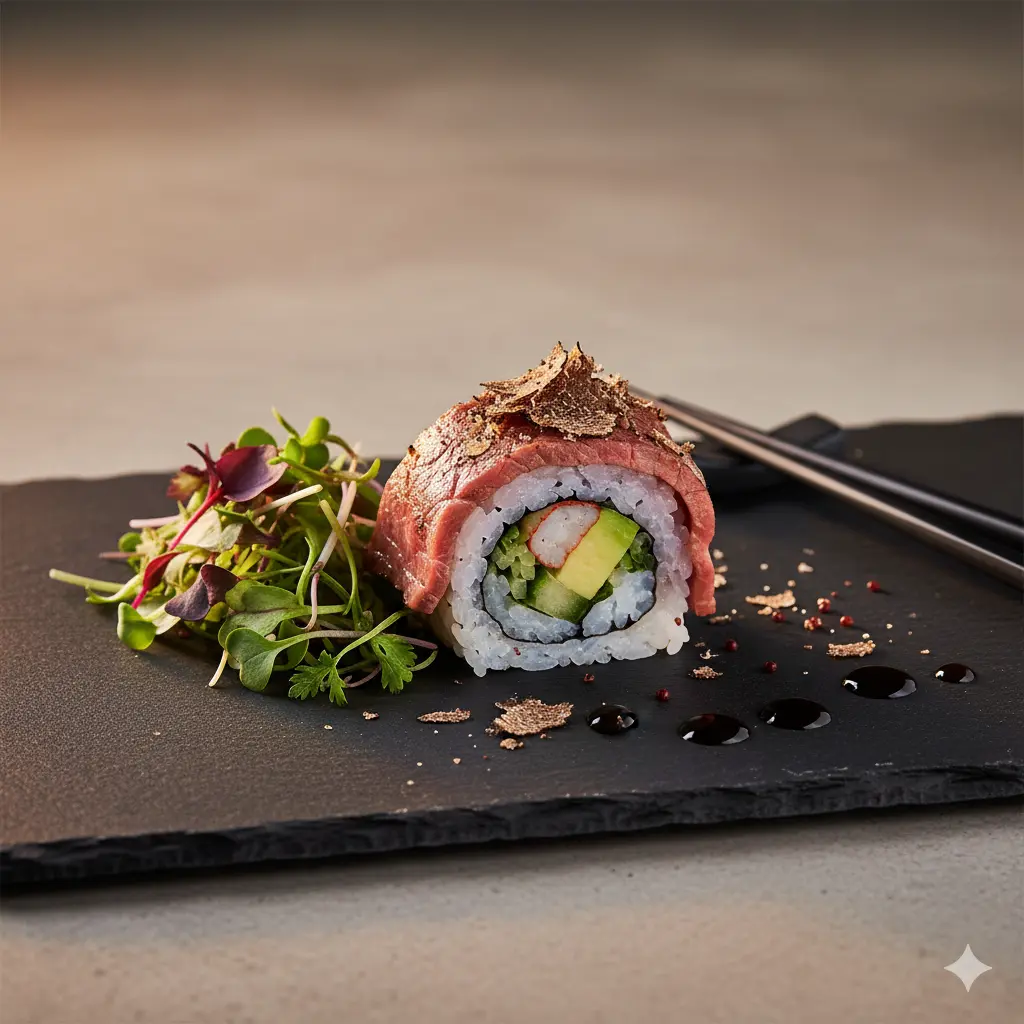
- Wagyu beef: the flavor and buttery texture of this meat, combined with traditional sushi ingredients, offers a unique tasting experience — usually lightly seared, so the fat melts against the rice.
- Plant-based alternatives: ideal for vegetarian and vegan diners who love Japanese cuisine. Plant-based sushi uses vegetables, fruits and mushrooms instead of fish — marinated tomato standing in for tuna, or roasted king oyster mushroom for scallop.
- Truffle: adds a strong aroma and a distinctive flavor to traditional sushi rolls, most often as shaved truffle or a few drops of truffle oil over nigiri.
If you want to build a whole evening around this rather than a single course, our guide to sushi dinner party ideas covers the menu and the logistics.
2. Japanese citrus flavors
Japanese citrus fruits shape the cuisine’s famous versatility, and they have become one of the clearest markers of a contemporary menu. These are the four to know:
| Fruit | Characteristics |
|---|---|
| Yuzu | One of the major citrus fruits in Japan. It is often used as a substitute for lemon, for its strong sour taste and aroma. |
| Sudachi | Known for its acidic and tangy taste, similar to a combination of lime and lemon. |
| Kabosu | Stands out for its unique sweet and fruity fragrance. Its fresh, sharp taste makes it an excellent substitute for vinegar. |
| Satsuma mandarins | Known for their low acidity and honey-like sweetness, this fruit can be eaten directly as a snack. |
Chefs use them mostly in beverages, soups, meat dishes, salads and desserts, for their texture and unique taste. Ponzu — soy sauce cut with citrus juice — is the most common way they reach a Western table without anyone noticing.
3. Omakase
Would you sit down to a menu-less dinner? “Omakase” is short for “omakase shimasu”, which translates as “I trust you, chef”. In this format the chef builds the courses around the fresh ingredients available that day, and diners’ reactions to the first bites shape what comes next.
Omakase is considered a premium interactive dining experience: chefs explain their procedure and their decisions, and diners can ask questions and learn about Japanese culinary techniques as the meal goes on. If you are weighing it up as a plan, we break down what it costs and how the sequence works in our guide to the omakase dinner experience.
4. Hibachi
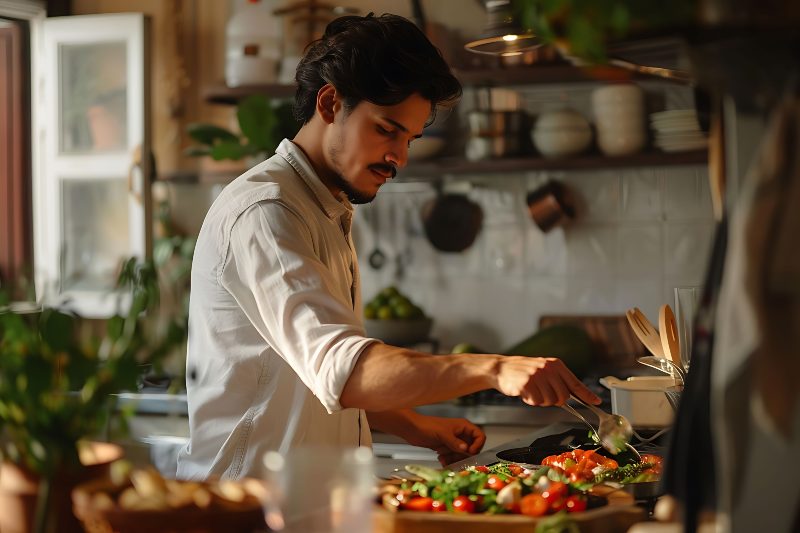
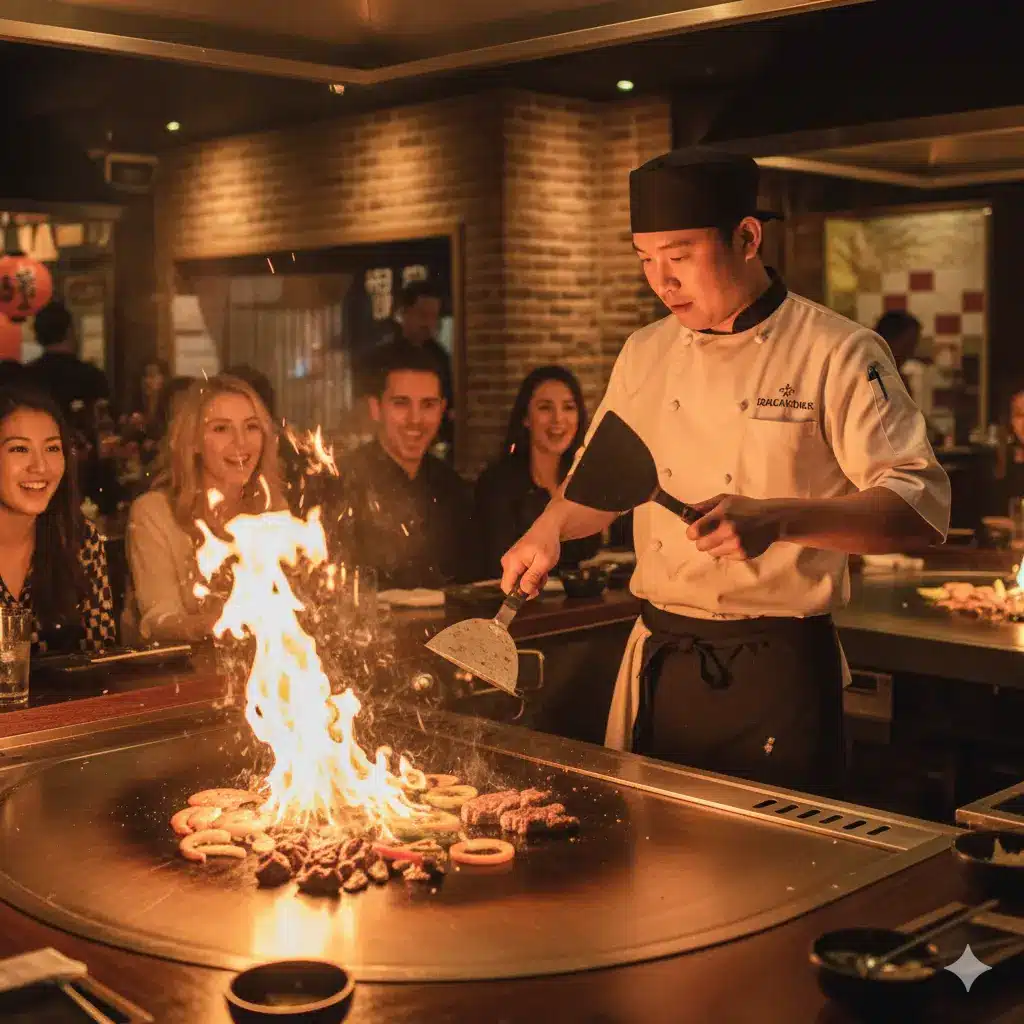
Hibachi cooking blends culinary expertise and entertainment. In this interactive dining experience the chef cooks in front of the guests on a large grill or flat-top, keeping up the conversation throughout. You can also recreate a version of it yourself: see how to make hibachi at home for the equipment, the cooking order and both restaurant sauces.
Besides the food, the chef guides you through a show of fiery cooking techniques and knife-skill demonstrations. It is one of the few dinners where nobody has to choose between cooking and being at the party, which is why it works so well for a celebration.
5. Izakaya-style small plates
An izakaya is a Japanese pub, and the way it serves food — many small plates, ordered as the evening goes and shared across the table, with drinks treated as part of the meal rather than an accompaniment — has travelled far beyond Japan. On a menu it looks like karaage, edamame, yakitori skewers, agedashi tofu, gyoza and grilled fish, arriving in waves instead of courses.
It has become popular at home for a practical reason: nothing depends on precise timing, so the host is never stuck at the stove. If you want to try it, here is how to host a Japanese izakaya night at home.
6. Matcha beyond the cup
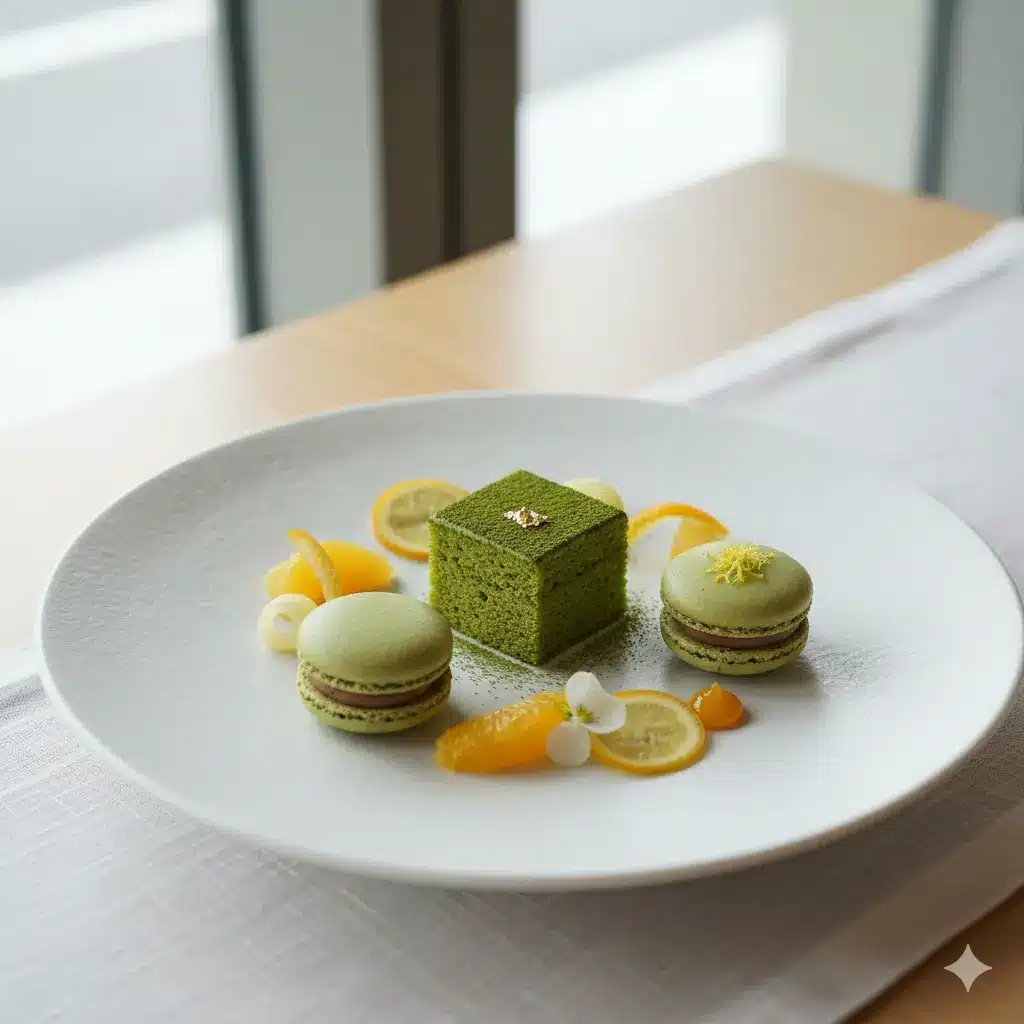
After taking an important share of the beverages market, matcha powder has spread into food: ice cream, bread, muffins, popcorn, pastries and even salad dressings. Its bitterness works as a counterweight to sugar, which is why it has ended up in so many desserts.
Grade matters more than most menus admit. Ceremonial-grade matcha is milled from the youngest leaves and is what you want whisked with water; culinary grade is stronger and more astringent, which is exactly what a dessert needs so the flavor survives the sugar and dairy around it.
7. Japanese fusion cuisine
Japanese cuisine is known for adapting ingredients and flavors from foreign cuisines into its own dishes. This practice — food fusion — is where most of the genuine invention is happening. The best-established styles are these:
| Cuisine | What to look for |
|---|---|
| Wafu Italian (or Japanese-style Italian food) | Popular Japanese ingredients such as natto, yuzu, nori, red miso and pickled wakame have found their way into traditional Italian dishes. Natto pasta and tempura shrimp pizza stand out. |
| Chuka (or Japanese Chinese cuisine) | Dishes such as ramen, which is originally Chinese, are constantly reworked. Cheese ramen, squid ink ramen and tom-yum ramen are among the versions you will find. |
| Japanese-Mexican | Besides sushi rolls with spicy sauce, avocado and nopales, taco rice is very popular. This fusion dish swaps corn for rice and is served as a salad. |
| Nikkei | A mix of Peruvian and Japanese cuisine, where seafood stands out alongside potatoes, corn and lime. Ceviche Nikkei and tiradito are the dishes to start with. |
| Japanese Indian cuisine | Sweet Japanese curry. Without the traditional hot spices, this dish has become more appealing to Japanese diners and to children. |
Bringing Japanese culinary trends to your table
At this point you are probably wondering where you can actually try these Japanese food trends. If your local restaurant hasn’t picked any of them up, remember you can enjoy all of them — and a lot more — by hiring a private chef.
Why hire a private sushi or hibachi chef?
Besides offering a unique and personalized dining experience, a hibachi or sushi chef is trained to execute each dish properly. They know how to source the ingredients that guarantee a high-quality meal, and they bring the culinary techniques the food depends on — knife skills, rice seasoning, and the handling of raw fish.
Remember that with hibachi-style cooking at home the chef also has to entertain the crowd, engaging in conversation with each diner and running the knife demonstrations. Having this interactive dinner at home makes it easier for everyone to socialize, ask questions, and simply listen to what the chef has to share.
What a Japanese menu at home actually looks like
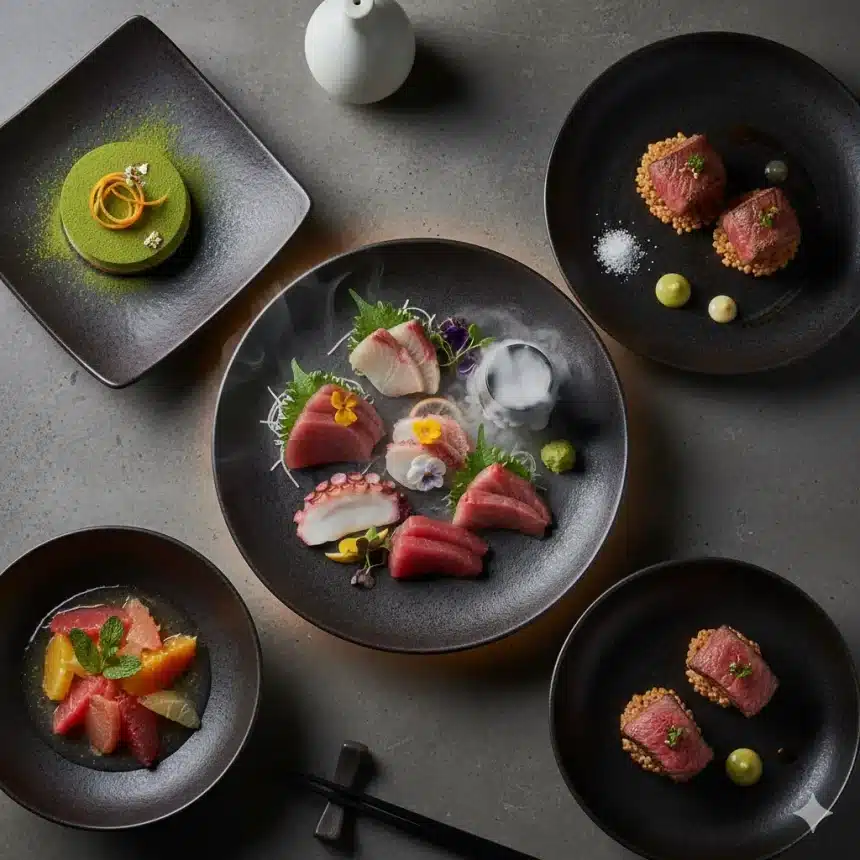
Trend lists are abstract until you see a real menu. This is one of the Japanese menus our chefs cook in guests’ homes — note how it sits exactly where this article has been pointing: sushi and sashimi alongside stir-fry and curry, citrus and ginger running through the sauces, and a dessert course that is unmistakably contemporary.
How to create a Japanese fine dining experience at home
When you work with a chef, all that is left to you is the atmosphere. In this particular case, we suggest you:
- Set the table accordingly: look for minimalist pieces and add Japanese touches with fabrics, mats, and ceramic bowls and plates.
- Get the lighting right: aim for light that creates a sense of calm and harmony in the room, natural or artificial.
- Plan the menu: whether you want sushi, ramen or an interactive experience such as hibachi, build the menu around your diners’ preferences and tell the chef about any allergies well in advance.
- Select the drinks: this is key to a Japanese fine dining experience. Sake (for seafood, grilled meats and sushi), shochu (for ramen or grilled skewers) and matcha tea (for sweet flavors) are the usual pairings.
- Mind the etiquette: proper use of chopsticks and basic table manners go a long way when hosting a Japanese dinner.
The future of Japanese home dining
Trending Japanese food keeps evolving and keeps appealing to a wider range of diners, and that is quietly reshaping home dining. More people are open to trying these dishes, and increasingly they think of them for a special occasion — because several of them are entertainment as much as they are dinner.
Japanese home dining means a gourmet feast enjoyed comfortably, away from noise and crowds, with no queue and no closing time. It is also a private, personalized moment — which is exactly what interactive formats such as hibachi and omakase are built around.
Japanese food trends: frequently asked questions
What are the biggest Japanese food trends right now?
Seven keep recurring: modern sushi built on wagyu, plant-based fillings and truffle; the Japanese citrus fruits yuzu, sudachi, kabosu and satsuma; the omakase format; hibachi cooking; izakaya-style small plates; matcha used in food rather than only in drinks; and fusion styles such as Nikkei, Wafu Italian, Chuka and Japanese-Mexican. What they have in common is that they are all techniques or formats rather than single dishes, which is why they have lasted instead of passing.
What is modern Japanese cuisine?
Modern or contemporary Japanese cuisine keeps the traditional techniques — knife precision, dashi, koji fermentation, careful rice seasoning — and applies them to a much wider pantry, including ingredients that are not Japanese at all. A modern Japanese menu might put truffle on nigiri, sear wagyu over rice or build a ceviche with Peruvian lime, and it will still taste Japanese because the underlying method has not changed. It is an expansion of the tradition, not a break with it.
What is the difference between omakase and a tasting menu?
A tasting menu is decided in advance and served the same way to everyone in the room. Omakase is decided by the chef on the day, around whatever is freshest, and then adjusted while you eat — how you react to the first pieces changes what comes next. The other difference is proximity: omakase is normally served directly by the chef, who explains each course, so the conversation is part of the meal rather than an extra.
Is hibachi the same as teppanyaki?
Strictly speaking, no. Traditional hibachi is grilling over an open charcoal brazier, while teppanyaki is cooking on a flat iron griddle — which is what actually happens at an American “hibachi” restaurant. The two names have blurred so completely outside Japan that they are now used interchangeably, and when someone books a hibachi chef they almost always mean the griddle show. Our guide to making hibachi at home covers both.
Which Japanese citrus fruits do chefs use?
Four, mainly. Yuzu is strongly sour and highly aromatic, and stands in for lemon. Sudachi is acidic and tangy, somewhere between lime and lemon, and is squeezed over grilled fish and noodles. Kabosu is sweeter and more fragrant, and works where you would otherwise use vinegar. Satsuma mandarins are low in acidity and honey-sweet enough to eat on their own. Most of them reach a Western table inside ponzu, which is simply soy sauce cut with citrus juice.
What is Nikkei cuisine?
Nikkei is the cooking of the Japanese community in Peru, and it is the oldest of the fusion styles on this list — it grew out of Japanese migration to Peru from the late nineteenth century, not out of a restaurant trend. Japanese technique meets Peruvian ingredients: raw fish handled the sashimi way but cured in lime and ají, with potatoes, corn and coriander alongside. Ceviche Nikkei and tiradito are the two dishes that best explain it.
Why is matcha in so many dishes now?
Because it solves a problem for pastry chefs: it is bitter and vegetal, so it cuts through sugar and dairy in a way few other flavors can, and it colors a dish without artificial dye. That is why it has moved from the teacup into ice cream, bread, muffins, popcorn and even salad dressings. If you are cooking with it, use culinary-grade matcha rather than ceremonial — it is stronger and more astringent, which is exactly what you need for the flavor to survive everything around it.
How much does a private Japanese chef cost at home?
Across Japanese menus booked through Take a Chef in the United States, the median works out at roughly $218 per person for a couple, $167 for 3 to 6 guests, $154 for 7 to 12, and $150 for 13 or more — the price per head falls as the group grows. Most bookings land somewhere between $130 and $250 per person depending on group size, the ingredients (wagyu and premium fish move it up) and the city. Our private chef pricing guide breaks the numbers down further.
Can a private chef make sushi at my house?
Yes, and it is one of the most requested Japanese services. A private sushi chef sources the fish, brings the knives and their own equipment, seasons and cooks the rice on site, and shapes each piece in front of you rather than plating something prepared hours earlier. That last point is the practical reason to hire one instead of ordering a platter: sushi is at its best minutes after it is made.