Food Experiences

How to make hibachi at home? Your complete guide

Take a Chef December 2, 2025
how to make hibachi at home

There’s something magical about the sizzle of a hibachi grill. The theatrical flames, the rhythmic clatter of spatulas, and the mouthwatering aroma of perfectly seared steak and vegetables create an unforgettable dining experience. But what if you could recreate that excitement in your own kitchen?

Learning how to make hibachi at home turns a regular dinner into an interactive event. Whether you’re planning a celebration or simply craving that signature flavor, this style of cooking is far more accessible than the restaurant theatrics suggest. You don’t need a commercial griddle, and you don’t need to know how to flip a shrimp tail into your hat.

This guide covers what hibachi actually is, the equipment and shopping list you need, the techniques that separate a proper sear from a sad grey steam, the two sauces that matter, and the full step-by-step cooking order. By the end you’ll be able to put a complete hibachi dinner on the table.

What is hibachi?

Before the how-to, it’s worth clearing up what the word means, because it means two different things depending on where you’re standing.

In Japan, a hibachi (火鉢, literally “fire bowl”) is a traditional open-topped charcoal brazier, originally used to heat a room and later to grill small portions over coals. In American restaurants, “hibachi” describes something else entirely: a chef cooking on a large flat iron griddle in front of you, complete with clattering spatulas, a stack of onion rings smoking like a volcano, and fried rice assembled to order.

That griddle style is technically teppanyaki. The two words have blurred so completely in the United States that arguing about it is a losing battle, and the griddle version is what almost everyone means. It’s what this guide teaches. (If you’ve seen it spelled habachi or hibatchi, that’s the same thing.)

Whichever name you use, the method comes down to four ideas:

  • High-heat searing that locks in flavors and creates proper caramelization
  • Minimal seasoning that lets quality ingredients carry the dish
  • Interactive preparation that turns cooking into the entertainment
  • Quick cooking times that preserve texture and bite

The beauty of hibachi is its simplicity. There are no complex sauces or long braises. You’re relying on timing and heat control to turn fresh ingredients into something better than the sum of its parts.

What do you need to make hibachi at home?

Here’s the short version, before we go into detail on any of it. This is the complete shopping and equipment list for a hibachi dinner for four.

WhatSpecificsWhy it matters
Cooking surfaceCast-iron griddle, flat-top, or large cast-iron skilletNeeds to hold heat when cold food hits it. Thin non-stick pans drop temperature and steam the food
SpatulasTwo metal ones, long-handledUsed for flipping, chopping and moving food between zones. Silicone won’t chop
ProteinRibeye or sirloin, chicken thighs, large shrimp (about 6 oz per person total)Well-marbled beef matters more than usual here, since seasoning is minimal
VegetablesZucchini, onion, mushrooms, broccoliCut to a uniform thickness so they finish together
RiceDay-old cooked rice, plus eggs and green onionsFresh rice is too wet and turns to mush on the griddle. This is not optional
Fats and seasoningNeutral high-smoke-point oil, unsalted butter, garlic, soy sauce, salt, pepperOil for searing, butter for finishing. Butter alone burns at hibachi temperatures
SaucesYum yum and ginger (recipes below)Make them the day before so the flavors settle
Squeeze bottleOne for oil, one for water if you have itLets you add fat precisely without stopping to measure

Total prep time is around 40 minutes, and actual cooking is under 20. The imbalance is the point: hibachi is almost entirely a prep game. Once the griddle is hot there is no time to go looking for the soy sauce.

Equipment: griddle, grill, or your kitchen stove

You don’t need a commercial teppanyaki grill to get authentic results. Here’s what actually matters, and what the realistic options cost you in performance.

The cooking surface

A large cast-iron griddle or flat-top grill is the ideal. Cast iron retains heat exceptionally well, which is the single most important property: when four ounces of cold steak hits the surface, a heavy pan barely flinches while a thin one drops fifty degrees and starts steaming your dinner instead of searing it.

If you don’t have a griddle, a large cast-iron skillet or a well-seasoned wok works for smaller portions. A two-burner griddle plate that straddles your stove is the best inexpensive upgrade, since it gives you the surface area to separate proteins from vegetables.

Can you do hibachi on a regular stove?

Yes, and most home hibachi happens exactly this way. The limitation isn’t heat, it’s surface area: a single home burner can’t heat a large griddle evenly, so you’ll get a hot center and cool edges. The fix is to work in batches and treat the cooler edge as a holding zone rather than a cooking zone.

Gas gives you faster heat response than electric, which helps when you need to back off quickly. Induction is excellent for raw power but the flat coil means the pan edges run cooler still. Both produce good results with proper technique.

Taking it outside

A flat-top attachment or a cast-iron plancha on a gas grill is the closest a home setup gets to the restaurant experience, mainly because outdoor burners put out far more heat than a kitchen range and you can seat people around it. It also keeps the smoke and the oil spatter out of your kitchen, which after one indoor session you’ll appreciate.

The right tools

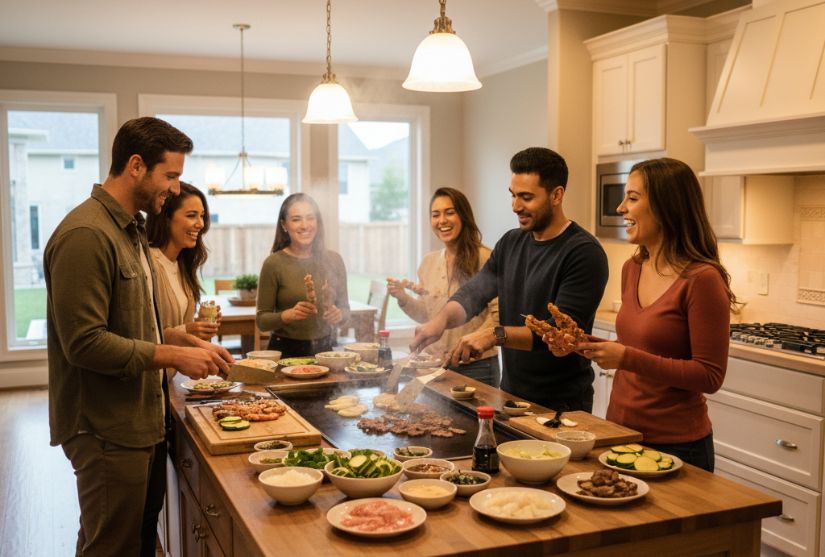
Beyond the surface itself, you want two metal spatulas for the signature flipping and chopping, a squeeze bottle for oils and sauce, sharp knives for precise prep, and small bowls to hold pre-measured ingredients within arm’s reach.

Professional organization makes all the difference. Having everything prepped and in reach lets you focus on cooking rather than scrambling for ingredients.

Food Experiences

Transform your culinary dreams into reality

From interactive cooking lessons to exotic cuisine adventures, our expert chefs transform your kitchen into a world-class culinary experience.

Core ingredients for authentic hibachi

The foundation of great hibachi starts with quality ingredients. Here’s your essential shopping list in detail.

Proteins

  • Ribeye or sirloin steak (1-inch thick cuts work best)
  • Chicken breast or thighs (boneless and skinless)
  • Large shrimp (peeled and deveined)
  • Scallops (optional, for variety)

Vegetables

  • Zucchini (sliced into half-moons)
  • Onions (sliced into thick rings, then halved)
  • Mushrooms (cremini or button, halved)
  • Broccoli (florets only)

Flavor essentials

  • Soy sauce (high-quality, low-sodium preferred)
  • Butter (unsalted)
  • Garlic (fresh, minced)
  • Salt and pepper
  • Vegetable or soybean oil (high smoke point)

For the fried rice

  • Day-old cooked rice (crucial for proper texture)
  • Eggs
  • Green onions
  • Frozen mixed vegetables

Mastering hibachi cooking techniques

Success with hibachi cooking techniques comes down to three principles: high heat, quick movements, and proper timing.

Heat management

Preheat your griddle or pan until a water droplet skitters across the surface and evaporates rather than sitting and boiling. That’s roughly 350 to 400 °F, and it’s the temperature that creates the characteristic sear while keeping interiors tender. For proteins, you’re aiming for a proper brown crust without overcooking the center.

If you have the surface area, keep a hot zone and a cooler zone. Restaurant chefs park finished items on the cool side while the next batch sears, which is how everything arrives at the table at once.

The cutting method

Bite-sized pieces are signature to hibachi. Cut vegetables uniformly so they cook evenly. Proteins should be diced into 1-inch cubes after cooking for beef and chicken, while shrimp can stay whole.

The order matters more than it looks. Searing a thicker piece and cubing it afterwards keeps the interior juicy, because you’re only exposing the cut faces to heat at the very end. Cubing first gives you six surfaces to overcook instead of two. This is exactly why the chopping happens in front of you at the restaurant rather than back in the kitchen.

Layering flavors

Start with oil, then add butter for richness. Garlic goes in just before proteins to prevent burning. Soy sauce comes at the end, too early, and it burns, creating bitterness instead of that sought-after umami depth.

How to make hibachi at home, step by step

Here is the full sequence for a dinner for four. The order is deliberate: rice first, vegetables second, proteins last, so the thing that suffers least from sitting goes on the griddle first.

  1. Prep everything and lay it out. Cut the vegetables, portion the proteins, mince the garlic, beat the eggs, and put each one in its own bowl beside the stove. Make the sauces now if you haven’t already.
  2. Preheat the surface over medium-high until a water droplet skitters and vanishes. Give cast iron a full five to eight minutes; it takes longer than you think.
  3. Make the fried rice. Oil the surface, scramble the eggs and push them aside, then add the cold rice and press it flat to make contact. Let it sit undisturbed for a minute at a time so it toasts rather than steams. Fold in the eggs, frozen vegetables and green onions, season with soy sauce and butter, then move it to a warm plate or the cool zone.
  4. Cook the vegetables. Oil, then onions and broccoli first since they take longest, followed by zucchini and mushrooms. You want browned edges and a remaining bite, not softness. Season lightly, then set aside.
  5. Sear the proteins, one type at a time. Re-oil, then chicken first, shrimp next, steak last so the beef is the freshest thing on the plate. Leave each piece alone long enough to build a crust before turning. Shrimp needs about 90 seconds a side and is done when it curls into a loose C.
  6. Cube, butter and finish. Chop the steak and chicken on the surface, add a knob of butter and the garlic, hit it with soy sauce, and toss for fifteen seconds. This is the last step before the plate, and it happens fast.
  7. Plate and serve immediately, with both sauces in small bowls alongside.

If you’re cooking for more than four, don’t scale the batches up. Run the same sequence twice and serve it in two rounds. A crowded griddle is the one mistake that can’t be recovered from.

Signature hibachi sauces

No hibachi meal is complete without the right sauces. Both of these are better made a day ahead.

Yum Yum sauce

Mix 1 cup mayonnaise, 2 tablespoons tomato paste, 1 tablespoon melted butter, 1 teaspoon paprika, 1 teaspoon garlic powder, and a splash of water until smooth. This creamy, slightly sweet sauce complements everything.

Ginger sauce

Blend ½ cup chopped onion, ½ cup soy sauce, 3 tablespoons rice vinegar, 2 tablespoons ginger, 1 tablespoon lemon juice, and 1 teaspoon sesame oil. The sharp ginger bite cuts through rich proteins beautifully.
how to make hibachi at home with a private chef

Creating the full hibachi experience at home

Presentation matters. Serve everything on a large platter, arranging proteins, vegetables, and rice in distinct sections. This visual separation mimics the restaurant experience.

Set the table with small individual sauce bowls. Consider playing soft instrumental music to set the mood. The goal is recreating not just the flavors but the entire sensory experience.

If the Japanese-dinner-at-home idea appeals to you beyond the griddle, a Japanese izakaya night at home works on the same principle of small plates and shared cooking, and sushi dinner party ideas cover the raw-fish end of the same evening.

Pro tips for a successful hibachi at home

Prep everything in advance. Once you start cooking, there’s no time to chop vegetables or measure ingredients. Have proteins, vegetables, and seasonings organized in small bowls.

Work in batches. Unless you have a massive griddle, cooking smaller quantities ensures proper heat distribution. Better to serve in courses than crowd the pan and end up steaming instead of searing.

Invest in quality ingredients. Since hibachi uses minimal seasoning, the natural flavor of your proteins and produce takes center stage. Choosing well-marbled steak or fresh shrimp makes an enormous difference.

Practice your spatula skills. While the fancy tricks are optional, comfortable spatula handling improves your cooking control and makes the process more enjoyable.

Open a window before you start. High-heat griddle cooking generates real smoke indoors, and it’s much easier to ventilate from the beginning than to deal with a screaming alarm mid-sear.

Rather have a hibachi chef cook it for you?

There’s one drawback to hosting hibachi yourself: the person cooking is standing at the griddle for the entire meal. That’s fine on a Tuesday, less so at a birthday or a graduation where you’d rather be at the table.

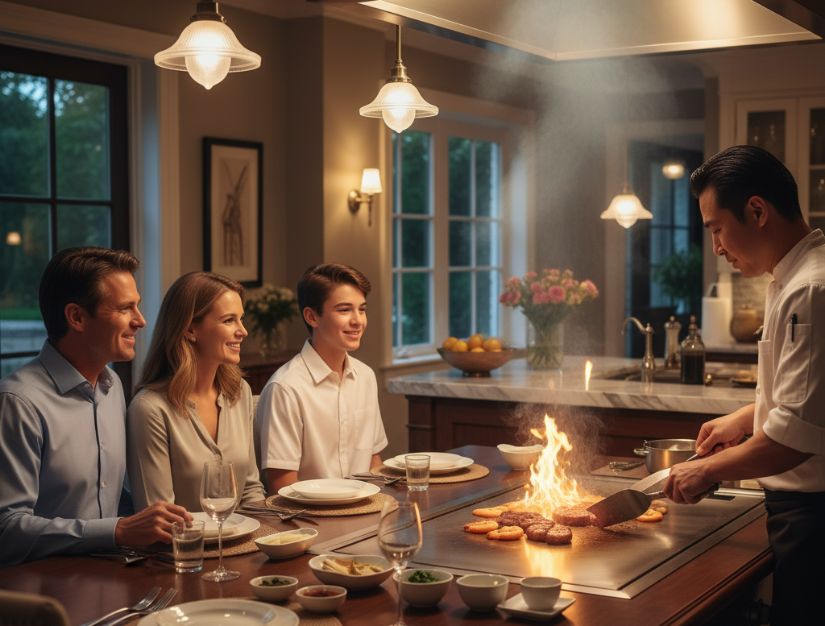
Hiring a private hibachi chef through Take a Chef solves that. The chef brings the portable griddle and the equipment, handles the shopping, cooks in front of your guests, and leaves the kitchen clean. Here’s the kind of menu that arrives, from a chef currently cooking hibachi in New York:

Chef featured menu · hibachi at home
Chef Henry Rivera
Private chef in New York · available via Take a Chef
To start
  • Miso soup with scallions, tofu
  • Hibachi vegetables, with mushrooms, peppers, broccoli, celery and carrots
Salad
  • Crisp green salad, red cabbage, carrots, grape tomato, house-made tangy ginger dressing
Main courses
  • Hibachi filet mignon and teriyaki chicken, side vegetables, mushrooms, zucchini
  • Hibachi Land N Sea — grilled lobster, filet mignon, lemon butter sauce
  • Hibachi scallops — tender Hokkaido scallops grilled with white wine butter sauce
Dessert
  • Balsamic berries with honey yogurt, coconut shavings
Want the griddle show without the cleanup?
Chef Henry brings the equipment, cooks in front of your guests & leaves the kitchen spotless.
Book Chef Henry →

If you’d rather eat hibachi out than cook it, our guide to the best hibachi in Toronto is a good place to see how the format varies from one restaurant to the next.

Hibachi at home: frequently asked questions

What is hibachi?

In Japan, a hibachi is a traditional open-topped charcoal brazier used for heating a room, and later for grilling small portions over coals. In American restaurants the word means something different: a chef cooking steak, seafood, vegetables and fried rice on a large flat iron griddle in front of you, with the knife work and the onion volcano included. That second version is what nearly everybody means by hibachi today, and it is the style this guide teaches.

What do you need to make hibachi at home?

Four things: a flat cooking surface that holds high heat (a cast-iron griddle, a flat-top, or a large skillet), two metal spatulas, a protein and vegetable mix cut into even bite-sized pieces, and day-old rice for the fried rice. For seasoning you need soy sauce, butter, garlic, a neutral high-smoke-point oil, salt and pepper. Everything else, including the sauces, is built from pantry staples.

Can you make hibachi on a regular stove?

Yes. A cast-iron skillet or a two-burner griddle plate on a home stove will produce a proper sear, which is most of what matters. The one real limitation is surface area: a home burner cannot heat a big griddle evenly, so cook in batches rather than crowding the pan. Gas gives you faster heat response than electric, but both work if you preheat properly and let the pan recover between batches.

What is the difference between hibachi and teppanyaki?

Teppanyaki is cooking on a flat iron griddle, which is exactly what happens at an American hibachi restaurant. Traditional hibachi is grilling over an open charcoal brazier, where food sits on a grate above the coals. So the food most people call hibachi is technically teppanyaki. The names have blurred so completely in the United States that restaurants use them interchangeably.

What do hibachi chefs use to cook?

A flat steel griddle held somewhere around 350 to 400 °F, two long metal spatulas, and squeeze bottles for oil, water and sauce. The spatulas do everything: flipping, chopping proteins into cubes on the surface, and moving food between hot and cooler zones. Most chefs also keep a scraper for clearing the griddle between courses so flavors do not carry over.

How do you cut meat for hibachi?

Cut steak and chicken into roughly one-inch cubes, and do it after searing rather than before. Searing a thicker piece first and then cubing it on the griddle keeps the inside juicy, which is why restaurant chefs chop the meat in front of you instead of in the kitchen. Vegetables should be cut to a uniform thickness so they finish at the same time, and shrimp stays whole.

What sauce is served with hibachi?

Two sauces do most of the work. Yum yum sauce is a creamy, slightly sweet mayonnaise base with tomato paste, butter, paprika and garlic powder. Ginger sauce is sharper and thinner, blended from onion, soy sauce, rice vinegar, fresh ginger and a little sesame oil. Both keep several days in the fridge, and both are better made the day before so the flavors settle.

Can you hire a hibachi chef to cook at your house?

Yes. Through Take a Chef you can book a professional hibachi chef who brings the portable griddle and the equipment, shops for the ingredients, cooks in front of your guests and cleans up afterwards. It is a common choice for birthdays, graduations and backyard parties, where the cooking is meant to be the entertainment rather than something one person misses out on while everyone else eats.

Ready to prepare your hibachi at home?

Making hibachi at home opens up exciting possibilities for your dinner routine. You’re not just cooking a meal, you’re creating an experience that brings people together around a sizzling griddle and shared flavors.

The techniques here form the foundation, but hibachi rewards experimentation. Try different protein combinations, adjust seasonings to your taste, and develop your own signature style. Each time you fire up that griddle you’ll find something to do differently.

And when you want restaurant-quality hibachi without lifting a spatula, explore Take a Chef’s private chef services and let a professional bring the griddle to your kitchen, complete with the theatrical flair and none of the work.