
Few dishes embody the soul of Italian home cooking quite like gnocchi. These delicate potato dumplings, when prepared correctly, offer a pillowy tenderness that simply cannot be replicated by shop-bought alternatives. The art of crafting gnocchi from scratch represents a culinary tradition passed down through generations of Italian families, and mastering this technique opens the door to countless flavourful possibilities.
Creating homemade gnocchi requires patience, quality ingredients, and careful attention to detail. This guide will walk you through each step, from selecting the perfect potatoes to achieving that coveted light, fluffy texture.
Índice
Essential ingredients for authentic potato gnocchi
The beauty of traditional gnocchi lies in its elegant simplicity. You require only four fundamental ingredients: floury potatoes, plain flour, egg, and fine salt. However, the quality of each individual component significantly impacts your final result.
Select starchy, floury potato varieties such as King Edward, Maris Piper, or Désirée. These cultivars contain less moisture than waxy varieties, producing lighter gnocchi that hold their shape beautifully during cooking. Avoid new potatoes or salad varieties entirely, as their high moisture content leads to dense, gummy dumplings.
For approximately 500 grams of potatoes, you shall need roughly 150 grams of type 00 flour or plain flour, one medium egg, and a generous pinch of fine salt. Some traditional recipes omit the egg entirely, though beginners often find that including it helps bind the dough more reliably.
The step-by-step technique for perfect homemade gnocchi
Preparing and cooking the potatoes
- Begin by washing your potatoes thoroughly, leaving the skins intact. Place them in a large saucepan of cold, salted water and bring to a gentle boil.
- Cook until completely tender when pierced with a knife, typically 40 to 50 minutes depending on size.
- Drain immediately and peel whilst still hot, using a clean tea towel to protect your hands.
- Pass the warm potatoes through a ricer or fine sieve directly onto a clean work surface. This process creates the light, fluffy texture essential for superior gnocchi.
Forming the dough
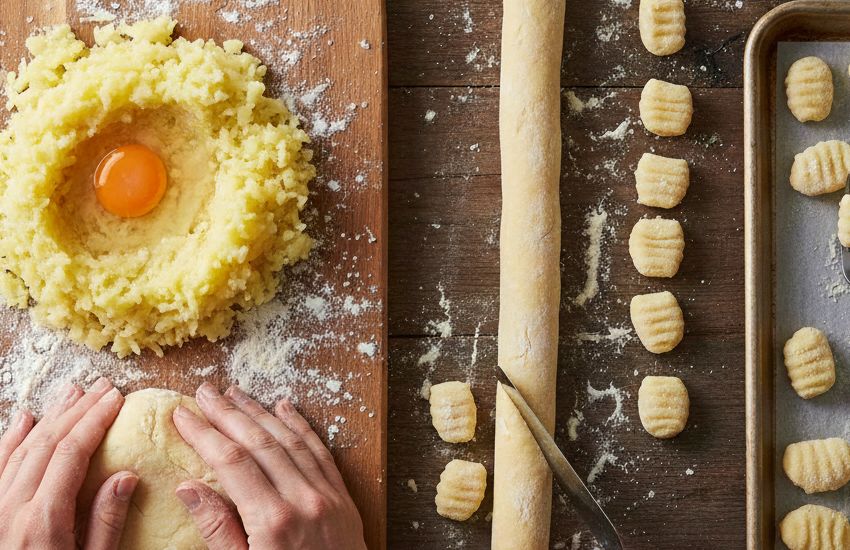
- Spread the riced potato into a thin layer and allow it to cool slightly until steam stops rising. Once cooled to warm rather than hot, create a well in the centre.
- Add the salt, beaten egg, and approximately two-thirds of your flour to the well. Using a fork initially, then your hands, gently incorporate the ingredients. Work the dough as minimally as possible, adding remaining flour only if necessary.
- The finished dough should feel soft, slightly tacky, but not sticky. Gather it together until uniform, then divide into portions for rolling.
Shaping and marking the gnocchi
Roll each portion into a rope approximately two centimetres in diameter. Using a sharp knife or bench scraper, cut the rope into pieces roughly two centimetres long. These pillows may be cooked as they are, though traditional preparation includes creating ridges.
To form classic ridged gnocchi, press each piece gently against the tines of a fork whilst simultaneously rolling it away from you with your thumb. This creates grooves on one side and a small indentation on the other, surfaces that help sauce adhere beautifully.
Transform your culinary dreams into reality
From interactive cooking lessons to exotic cuisine adventures, our expert chefs transform your kitchen into a world-class culinary experience.
Cooking and serving your gnocchi
Bring a large pot of well-salted water to a rolling boil. Add gnocchi in batches, being careful not to overcrowd the pot. Fresh gnocchi cook remarkably quickly. They sink initially, then float to the surface within two to three minutes. Allow them to bob for another thirty seconds before removing with a slotted spoon.
Transfer cooked gnocchi directly to your prepared sauce, tossing gently to coat. Classic accompaniments include sage brown butter, simple tomato sauce, pesto Genovese, or creamy Gorgonzola. The neutral flavour of potato gnocchi complements virtually any sauce you might prefer.
Common challenges and how to overcome them
Even experienced cooks occasionally encounter difficulties with homemade gnocchi.
- Dense or heavy results typically indicate either too much flour or overworking the dough.
- Gnocchi that fall apart during cooking suggest insufficient flour or eggs.
- Temperature matters considerably; working with warm rather than hot or cold potatoes yields optimal results.
Many home cooks find that their first several attempts, whilst edible, fall short of the light, delicate gnocchi served in fine Italian establishments.
When expertise makes all the difference
For those seeking to experience truly exceptional gnocchi without the trial and error of mastering the technique independently, engaging a professional chef offers an elegant solution. Take a Chef connects discerning clients with skilled culinary professionals who bring restaurant expertise directly to your home.
A private chef can prepare authentic Italian cuisine whilst you and your guests relax. Whether hosting an intimate dinner party or celebrating a special occasion, having a professional craft handmade gnocchi in your kitchen transforms an ordinary evening into something extraordinary.
The experience includes personalised menu consultation, ingredient sourcing, preparation, cooking, and complete kitchen clean up, allowing you to savour every moment as a guest in your own home.
Preserving and storing homemade gnocchi
Should you wish to prepare gnocchi in advance, arrange shaped dumplings in a single layer on a floured baking tray. Freeze until solid, then transfer to airtight containers. Frozen gnocchi keep well for up to three months and cook directly from frozen, requiring only an additional minute in boiling water.
Fresh, uncooked gnocchi may be refrigerated for up to 24 hours, though they tend to darken slightly. Cooked gnocchi do not store particularly well and always taste best enjoyed immediately after preparation.
Elevating your gnocchi experience
Making gnocchi at home connects you to centuries of Italian culinary tradition. The process rewards patience and practice, offering satisfaction that extends far beyond the dining table. Whether you choose to develop your skills through repeated experimentation or engage professional expertise for special occasions, authentic homemade gnocchi represents one of life’s genuine pleasures.
Consider your next gathering an opportunity to explore this beloved dish. Perhaps you shall roll up your sleeves and embrace the challenge yourself, or perhaps you shall invite a skilled chef to demonstrate the craft whilst you savour the anticipation. Either path leads to the same delightful destination: plates of tender, pillowy gnocchi dressed in your favourite sauce, shared with those you cherish most.