Key Takeaways
TL;DR: An impressive pasta dinner at home rests on matching the shape to the sauce, cooking one dish really well, salting the water generously, finishing the pasta in the sauce with reserved cooking water and serving it in warmed bowls.
- Match shape and sauce: Spaghetti and linguine suit olive oil, seafood and light tomato sauces, tagliatelle and pappardelle rich ragù or braised duck, rigatoni and paccheri chunky sauces, orecchiette broccoli rabe and sausage, and mezze maniche amatriciana or carbonara.
- Cacio e pepe: Toss tonnarelli or spaghetti off the heat with freshly grated Pecorino Romano, toasted black pepper and a splash of starchy pasta water until a glossy emulsion forms; the pasta water is non-negotiable.
- Ragù and vongole: Simmer a beef and pork ragù with soffritto, red wine and crushed tomatoes for three to four hours and finish it with Parmigiano-Reggiano and butter; for linguine alle vongole, cook the clams in garlic, chili, olive oil and white wine only until they open.
- Technique: Cook the pasta al dente and finish it in the sauce for the last minute, reserve pasta water before draining, never rinse cooked pasta and use a wide pan so the sauce reduces faster.
- Plating: Twirl long pasta into a nest in a bowl warmed for 10 minutes in a low oven, spoon extra sauce around it and finish with grated cheese, cracked pepper, olive oil and fresh herbs or lemon zest.
There’s something wonderfully comforting about a pasta dinner at home. The smell of garlic hitting a hot pan, the gentle simmer of a sauce you’ve been coaxing along. It’s one of life’s great pleasures.
And yet, when you’re hoping to genuinely impress, that same comfort can tip into anxiety. Are you doing the sauce justice?
The good news is that a spectacular pasta dinner is well within reach. With the right ingredients, a little technique, and a few professional secrets, you can create something genuinely extraordinary in your own kitchen.
Índice
Why pasta is the ultimate dinner party dish
Pasta occupies a unique place in Australian dining culture. We’ve long moved past tinned tomato bolognese. Today’s home cooks are reaching for bronze-die pasta, finishing dishes with starchy cooking water, and exploring regional Italian traditions that go far beyond the classics.
What makes pasta ideal for a dinner party is its versatility and scalability. Cacio e pepe serves two as elegantly as it serves eight, and it rewards technique over complexity. Just a handful of quality components treated with care. For pairing ideas to round out the evening, see our Gourmet pasta night tips.
The challenge is that pasta’s simplicity is also its trap. There’s nowhere to hide a watery sauce or gummy noodle.
Transform your culinary dreams into reality
From interactive cooking lessons to exotic cuisine adventures, our expert chefs transform your kitchen into a world-class culinary experience.
Choosing the right pasta for the occasion
If you’re cooking yourself, the foundation of a great pasta dinner is choosing the right shape. This isn’t just an aesthetic choice. Different shapes are designed to hold specific sauces, and pairing them well makes a real difference. New to it all? Start with our step-by-step Italian pasta recipe.
Long Pasta
- Spaghetti and linguine work beautifully with olive oil-based sauces, seafood, and light tomato preparations
- Tagliatelle and pappardelle are ideal for richer, meat-based sauces like ragù or slow-braised duck
- Tonnarelli is the traditional choice for cacio e pepe
Short Pasta
- Rigatoni and paccheri trap chunky, robust sauces in their ridges and hollow centres
- Orecchiette is traditionally served with broccoli rabe and sausage, a combination worth recreating
- Mezze maniche pairs brilliantly with amatriciana or carbonara
For dinner parties, opt for a single, beautifully executed pasta rather than several mediocre ones. Depth of flavour always wins over variety.
Three elevated pasta dinner recipes to try at home
1. Cacio e Pepe
Rome’s most deceptively simple dish requires just three ingredients: tonnarelli or spaghetti, Pecorino Romano, and black pepper. Toast the pepper in a dry pan until fragrant. Cook the pasta in well-salted water and reserve a cup of starchy cooking water before draining.
Off the heat, combine the pasta with freshly grated Pecorino and a splash of pasta water, tossing vigorously until a glossy emulsion forms. Add the toasted pepper. The pasta water is non-negotiable: it’s the emulsifier that binds everything together.
2. Tagliatelle al Ragù
A proper ragù takes time, ideally three to four hours of low, slow simmering. Use a mixture of beef and pork mince, a soffritto of onion, celery and carrot, a glass of red wine, and crushed tomatoes.
Finish with Parmigiano-Reggiano and a knob of butter stirred through at the last moment.
3. Linguine alle Vongole
Australia’s coastline gives us extraordinary access to fresh clams and pipis, making vongole a dish that genuinely sings here. Sauté garlic and chilli in good olive oil, add white wine, then tip in scrubbed clams and cover. They’ll open within a few minutes. Toss through cooked linguine and flat-leaf parsley.
The key is not overcooking the clams, just barely opened and tender. Discard any that remain closed.
Technique tips that make the difference
Even the finest recipe can be undone by a few common mistakes. These are the principles professional chefs apply every time:
- Salt your pasta water generously. It should taste pleasantly seasoned, far saltier than you’d expect
- Cook pasta al dente and finish it in the sauce for the final minute so it absorbs flavour and sauce clings
- Reserve pasta water before draining: it’s your best tool for adjusting consistency and emulsifying sauces
- Never rinse cooked pasta, which strips away the starch that helps sauce adhere
- Use a wide pan for finishing: more surface area means faster evaporation and better reduction
When you’d rather leave it to the professionals
Sometimes the occasion calls for something beyond a home cook’s remit. An engagement dinner, a milestone birthday, a long-overdue catch-up with people who deserve more than a rushed weeknight meal. For those moments, Take a Chef offers a private dining experience that brings a professional chef directly to your home.
The process is straightforward. You browse a curated selection of professional chefs in your area, share your preferences, dietary requirements, and the style of meal you have in mind, and the chef handles everything from there.
They arrive with all the ingredients, cook in your kitchen, and leave it spotless. You stay at the table.
Menus are fully customised for every booking, which means a pasta dinner can be as intimate or as elaborate as the occasion demands. A romantic dinner for two might centre on a single stunning hand-rolled tagliatelle with a slow ragù. A dinner party for ten might span three pasta courses, each showcasing a different regional Italian tradition.
Presentation and the art of plating
A restaurant-quality pasta dish doesn’t just taste better: it looks the part too. Presentation signals care and intention to your guests, and it’s often the final flourish that makes a home-cooked dish feel truly special.
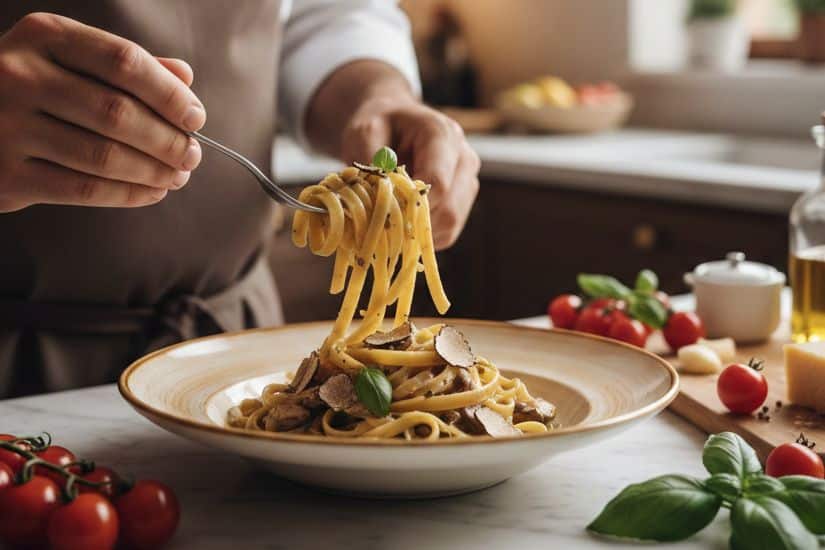
Twirl long pasta into a nest using tongs, then place it in the centre of a warmed bowl. Spoon a little extra sauce around the outside. Finish with freshly grated cheese, cracked pepper, and a drizzle of good extra virgin olive oil.
Short pasta can be spooned into the bowl with sauce pooled at the base and the remainder ladled over. Garnish with fresh herbs: basil, parsley, or lemon zest to brighten richer dishes.
Warm your bowls in a low oven for 10 minutes before serving. It’s a small step every restaurant takes and home cooks often skip, but it makes a real difference to how long the pasta stays at the right temperature.
Take your pasta dinner to the next level
Pasta has endured for centuries not because it’s complicated, but because it’s honest. It rewards attention, respects good ingredients, and has an almost miraculous ability to turn a handful of simple components into something that feels like a proper occasion.
Whether you’re rolling fresh tagliatelle on a Sunday afternoon, perfecting your cacio e pepe technique, or handing the kitchen over to someone who does this for a living, the goal is the same: a table worth sitting at, food worth talking about, and an evening that lingers long after the plates are cleared.