Key Takeaways
TL;DR: Punta Cana’s local food is Dominican Creole cooking, built on rice, beans, plantains, root vegetables and slow-cooked meats from Taíno, Spanish and African traditions, and the dishes to try are La Bandera, mangú with los tres golpes, sancocho, mofongo and fresh seafood.
- La Bandera: The Dominican national dish and the everyday lunch: white rice, stewed red beans, a protein such as braised chicken or beef, and a simple salad, often with fried green plantains or avocado. Local comedores serve it daily.
- Mangú and los tres golpes: The Dominican breakfast is mangú, boiled green plantains mashed with butter and topped with sautéed red onions. Served with fried cheese, fried salami and a fried egg, it becomes los tres golpes, “the three hits”.
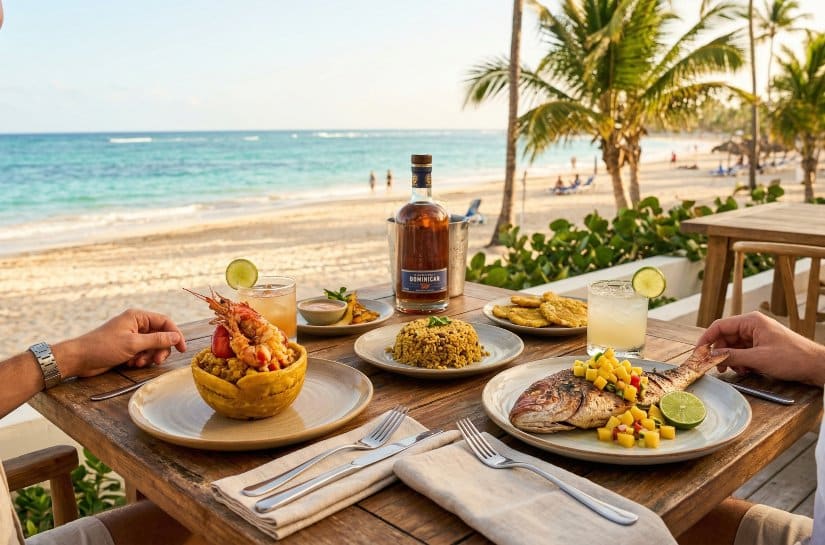
- Sancocho and mofongo: Sancocho is the celebration stew, with up to seven meats, cassava, yam, green plantain and corn, served with white rice and avocado. Mofongo, originally from Puerto Rico, is fried green plantain pounded in a wooden mortar with garlic, olive oil and chicharrones, and Punta Cana restaurants top it with shrimp, lobster or Creole sauce.
- Seafood and local drinks: Pescado frito, whole fried fish with tostones and lime, grilled Caribbean spiny lobster with garlic butter, and Dominican-style shrimp ceviche. To drink, morir soñando, orange juice blended with evaporated milk and sugar over ice, and mamajuana, rum, red wine and honey macerated with local bark and herbs.
- Where to eat like a local: The comedores in Bávaro serve generous plates for a few dollars, and street vendors sell empanadas and yaniqueques. For a sit-down meal, La Casita de Yeya near the airport is known for sancocho, Jellyfish on Bávaro Beach and La Yola at the Puntacana Resort marina for seafood, and Playa Blanca for chivo guisado on the sand.
Picture yourself on a sun-drenched Caribbean shoreline, the scent of slow-roasted pork and fried plantains drifting from a roadside kitchen. In Punta Cana, food is far more than fuel; it is a living record of the cultures that shaped the Dominican Republic.
From Taino root vegetables to Spanish stews and African spice traditions, every plate tells a centuries-old story.
This Punta Cana local food guide takes you beyond the hotel buffet and into the heart of Dominican gastronomy. You will learn which dishes define the local table, where to find them, and how the region’s star ingredients create unforgettable flavors.
Índice
A culinary heritage shaped by three continents
Dominican cuisine is often described as Creole cooking, a term that reflects its layered origins. The Taino people contributed cassava, sweet potatoes and tropical fruits. Spanish colonizers brought wheat flour, olive oil and livestock, while African communities introduced pigeon peas, peanuts and bold seasoning techniques.
Over time, these traditions merged into a kitchen built on rice, beans, root vegetables and slow-cooked proteins. Punta Cana sits at the eastern tip of the island, where the Caribbean Sea meets the Atlantic, giving the region exceptional access to fresh seafood alongside the agricultural traditions of the interior.
Bring local flavors to your kitchen
From market-fresh ingredients to traditional recipes, a private chef turns your home into a true local experience.
Traditional dishes you need to try
La Bandera Dominicana
Often called simply “the flag,” La Bandera is the national dish and a fixture of lunchtime across the country. It pairs white rice with stewed red beans, a protein such as braised chicken or beef, and a simple salad.
Fried green plantains or slices of ripe avocado round out the plate. Local comedores serve it daily, and no visit to Punta Cana is complete without tasting this satisfying staple.
Mangu and los tres golpes
Breakfast in the Dominican Republic revolves around mangú, a creamy puree of boiled green plantains mashed with butter and finished with tangy sautéed red onions. Served alongside fried cheese, fried salami and a fried egg, the combination is known as los tres golpes, or “the three hits.” It is filling, flavorful, and the perfect way to start a day of exploration.
Sancocho
When Dominican families gather for a celebration, sancocho is almost certainly on the table. This rich stew combines up to seven different meats with cassava, yam, green plantain, corn and an aromatic base of garlic, coriander and oregano. The result is a deeply layered broth that warms the soul. Locals serve it with white rice and a wedge of avocado to balance the richness.
Mofongo
Originally from Puerto Rico but fully embraced across the Dominican Republic, mofongo is made by frying green plantains and pounding them in a wooden mortar with garlic, olive oil and crispy chicharrones (pork cracklings).
Restaurants in Punta Cana offer creative variations topped with shrimp, lobster or a tomato-based Creole sauce. The contrast of crunchy plantain and succulent seafood makes it a must-order dish.
Seafood specialities
Punta Cana’s coastline supplies an abundance of fresh catches. Pescado frito, or whole fried fish, is a beloved beachside staple enjoyed with tostones (twice-fried plantain slices) and a squeeze of lime.
Grilled Caribbean spiny lobster is another highlight, seasoned simply with garlic butter to let the natural sweetness shine. For something lighter, try a Dominican-style ceviche with shrimp, red onion, cilantro and zesty lime juice.
Local ingredients that define Dominican cooking
Understanding Dominican food starts with its pantry. Plantains appear at virtually every meal, whether green, ripe, fried, boiled or mashed. Cassava (yuca) serves as both a starchy side and the base for traditional flatbreads.
Rice and red beans form the backbone of daily nutrition, while sofrito, a fragrant blend of garlic, onion, peppers and herbs, provides the flavor foundation for countless recipes.
Tropical fruits are equally central. Chinola (passion fruit) appears in juices, desserts and cocktails, while coconut enriches everything from rice dishes to sweet puddings.
Do not leave without trying morir sonando, a refreshing drink that blends orange juice with evaporated milk and sugar over crushed ice. For the adventurous, mamajuana is the island’s iconic herbal liqueur, made by macerating rum, red wine and honey with local bark and herbs.
Where to eat like a local in Punta Cana
Punta Cana’s dining scene stretches from casual roadside stalls to elegant waterfront restaurants. For a genuinely local experience, seek out the comedores in Bavaro, where generous plates of La Bandera or sancocho cost only a few dollars. Street vendors selling empanadas and yaniqueques (crispy fried dough) offer satisfying bites that capture the soul of Dominican street food.
When you want a more polished setting, several restaurants stand out. La Casita de Yeya, near the international airport, is celebrated for its traditional sancocho and home-style cooking.
Jellyfish Restaurant on Bavaro Beach pairs fresh seafood with ocean views, while La Yola at the Puntacana Resort marina combines Caribbean and Mediterranean influences in an atmosphere inspired by a traditional fishing boat.
For an upscale take on local ingredients, Playa Blanca serves grilled meats, seafood and Dominican favorites like chivo guisado (goat stew) right on the sand.
The most memorable meals happen when you follow the locals, order what they order and let the island’s flavors guide you through this Punta Cana local food guide. Before you go, our guide to Exploring Punta Cana covers everything beyond the plate.
Taking Dominican flavours into your holiday home
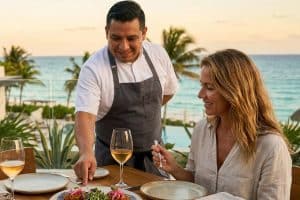
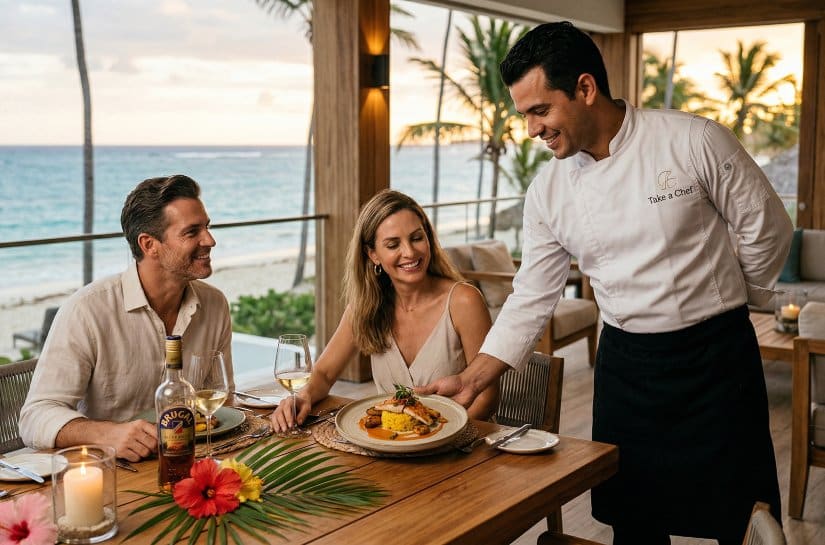
Exploring Punta Cana’s restaurants is a wonderful experience, but imagine combining that culinary adventure with the privacy and comfort of your own villa or rental. A private chef can source the freshest local ingredients from nearby markets, prepare authentic Dominican dishes tailored to your group’s tastes, and introduce you to recipes you might never encounter in a restaurant.
This approach removes common traveler challenges: navigating unfamiliar menus, language barriers, dietary restrictions and group logistics. Instead of coordinating reservations for a large party, you can relax by the pool while a professional handles shopping, plating and cleanup.
If the idea of a private culinary experience appeals to you, Take a Chef connects you with talented local chefs in Punta Cana who specialize in Dominican and international cuisine. Share your preferences, dietary needs and occasion, and a vetted chef proposes a custom menu. On the day, they purchase the freshest ingredients, cook and serve in your accommodation, and leave the kitchen spotless.
Your Punta Cana food adventure starts here
Punta Cana offers far more than turquoise waters and white sand. Its culinary landscape is a vibrant tapestry woven from Taino, Spanish and African influences, best experienced through dishes like mangu, sancocho, mofongo and the iconic La Bandera.
Whether you eat at a humble comedor, a celebrated waterfront restaurant, or in the privacy of your villa with a chef from Take a Chef, every bite brings you closer to the true spirit of the Dominican Republic.
Pack your appetite and let this Punta Cana local food guide surprise you. You should savor the flavors of this Caribbean gem slowly and remember them long after you get home. Continuing through the region? Sample Authentic Mexican food in our Cancun guide.