Key Takeaways
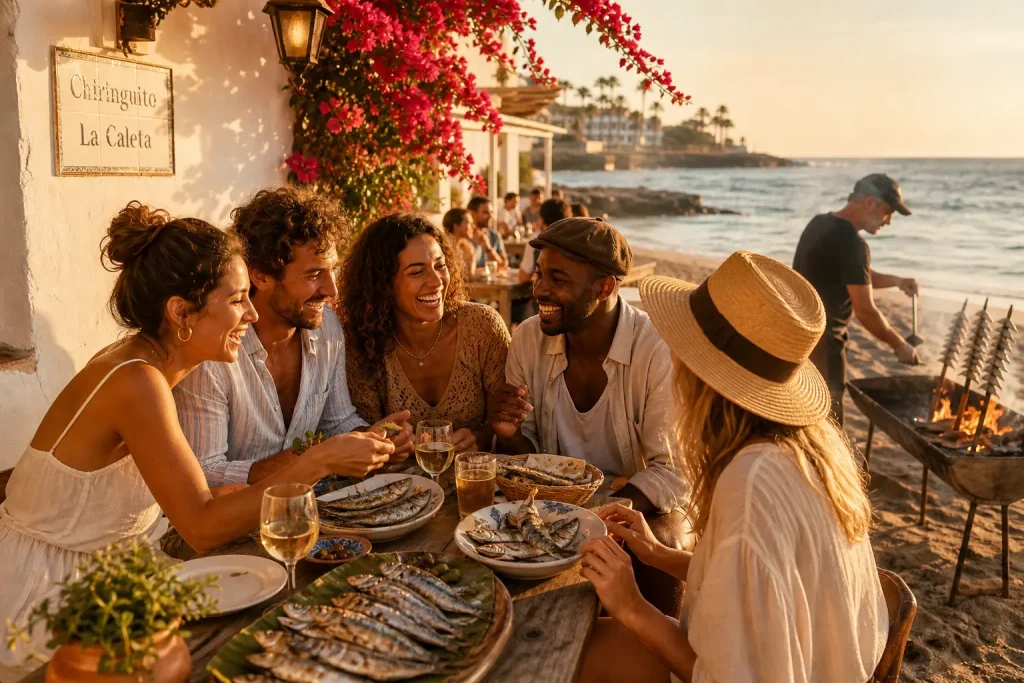
TL;DR: The Costa del Sol’s signature dish is espetos de sardinas, grilled on cane skewers on the beach from April to October, alongside gazpachuelo, migas and fritura malagueña. Lunch starts around 2 p.m., dinner at 9:30 or 10, and lunch with drinks costs 15 to 25 euros.
- Dishes to try: Espetos are six sardines on a cane skewer roasted over coals on the sand, gazpachuelo is a warm soup of fish stock, mayonnaise and egg yolk with white fish and potatoes, and migas are fried breadcrumbs topped with sardines, chorizo, peppers or a fried egg. For tapas, order boquerones en vinagre, gambas al pil-pil and pimientos asados.
- Where to eat in Malaga: El Palo, east of the center, is where locals go for fritura malagueña in a paper cone, neighborhood bars in Pedregalejo and El Palo serve gazpachuelo, and Atarazanas Market, inside a 14th-century Moorish gate, sells produce, seafood and cured meats and serves breakfast tapas.
- Marbella and Estepona: Plaza de los Naranjos in Marbella’s old town has small restaurants serving grilled fish without the marina markup, and Estepona has a Sunday market with producers from the Genal valley and tapas bars that still give a free tapa with each drink.
- Eat like a local: Lunch rarely starts before 2 p.m. and dinner begins at 9:30 or 10. Order three or four dishes for the table to share, and expect some restaurants to charge a small cover for bread and olives.
- Budget and booking: Lunch with drinks costs 15 to 25 euros per person and tapas 8 to 15 euros, tipping isn’t expected beyond rounding up or 5 to 10%, and reservations are rarely needed outside August and Semana Santa. Markets close by 2 p.m. and don’t open on Sundays, except in Estepona.
Costa del Sol is famous for its fresh seafood, especially espetos de sardinas grilled over open flames on the beach, and for traditional Andalusian dishes like gazpachuelo and migas. Beyond restaurants, the region’s food markets, late-night tapas culture, and neighborhood chiringuitos offer a deep connection to best mediterranean food traditions. This guide covers the dishes you should not miss, the neighborhoods worth wandering on an empty stomach, and practical tips on eating like a local.
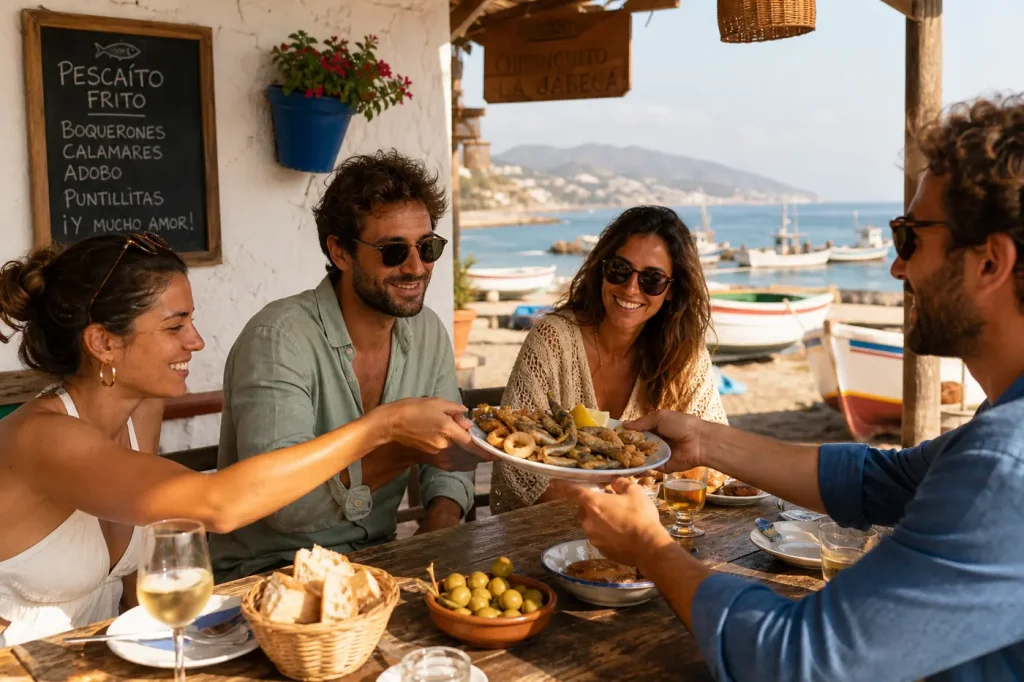
The coastline from Malaga to Estepona packs more culinary variety into 150 kilometers than most travelers expect. Fishing villages still land their catch at dawn. Inland hill towns cure jamones that rival anything from Jabugo. And a generation of young chefs is reworking Andalusian classics with sharper technique. Whether you are planning a week in a Marbella villa or a long weekend in Malaga’s old town, eating well here does not require a reservation at the fanciest restaurant. It requires knowing what to order. If your Spanish travels continue to the islands, our guide to Ibiza dining experiences is worth a read.
Índice
Local dishes you have to try in Costa del Sol
Start with espetos de sardinas. Six sardines skewered on a cane stick and roasted over coals right on the sand. Every chiringuito along the coast serves them from April through October, when the sardines are fattest. They cost a few euros per skewer and taste like nothing you have had before: smoky, briny, almost sweet from the charcoal. Eat them with your hands and squeeze a lemon.
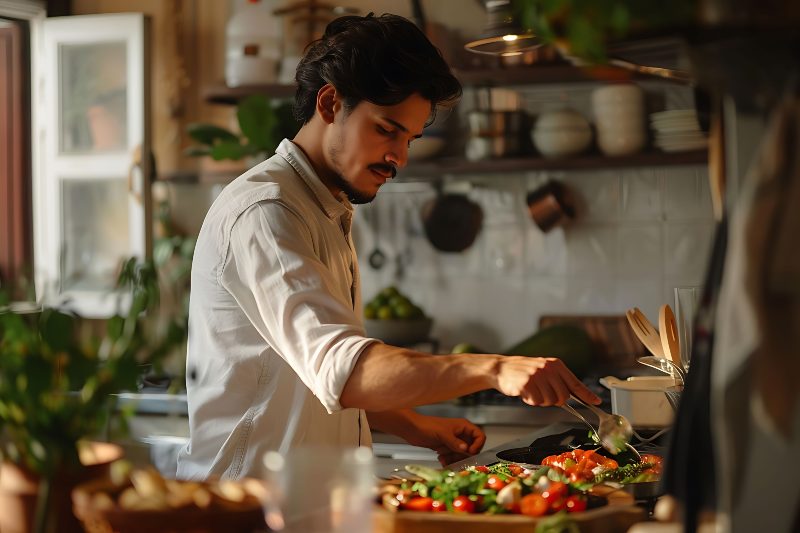
Bring the world's flavors to your table, wherever you are Discover local cuisine and culinary traditions through a private chef experience. The best way to taste a destination — no restaurant required.
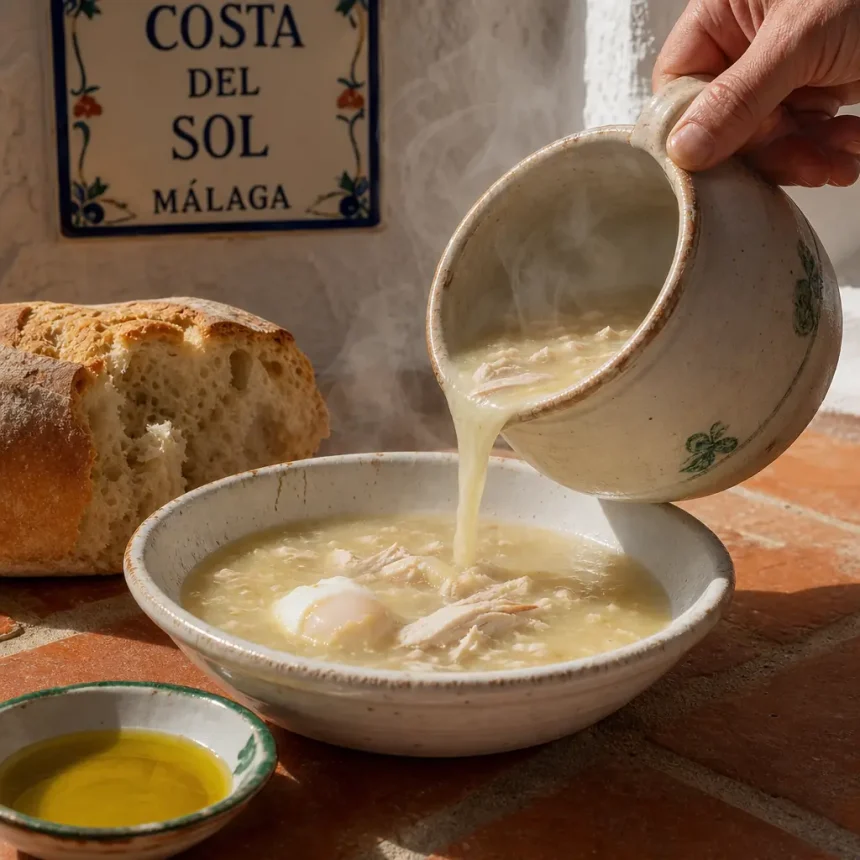
Gazpachuelo is less famous but arguably more interesting. It is a warm soup built on a mayonnaise-and-fish-stock base, thickened with egg yolk, and studded with flaked white fish and potatoes. Fishermen invented it to use their smallest catch. It tastes nothing like gazpacho despite the similar name.
Order it at a neighborhood bar in Pedregalejo or El Palo.
Migas, originally a shepherds’ breakfast of fried breadcrumbs with garlic and olive oil, now arrives topped with sardines, chorizo, peppers, or a fried egg. Inland towns like Torrox and Frigiliana are the heartland. For tapas, skip the tourist strips and ask for boquerones en vinagre, gambas al pil-pil, and pimientos asados. These small plates define the rhythm here: stand at the bar, order two or three, and move to the next spot.
Many travelers now bring the local flavors to their rental instead, booking a private chef in Malaga to cook these traditional dishes at a private table. For groups or family stays, it turns a meal into the highlight of the trip.
A real Costa del Sol menu you can book tonight
Chef Fernando cooks along the coast out of Estepona, and his Origen menu reads like a tour of the region: cold salmorejo and a slow Spanish omelette to start, two takes on paella, and a Padrón-pepper entrecote, all built for sharing around one table.
Best neighborhoods and food markets to explore
Malaga’s historic center hosts a mix of traditional bars and modern gastrobars, but the real finds hide just outside the tourist core. Head to El Palo, east of the center, where malagueños go for fried fish. Order the fritura malagueña at one of the beachfront chiringuitos — you get a paper cone of tiny fried fish and squid, hot and crispy.
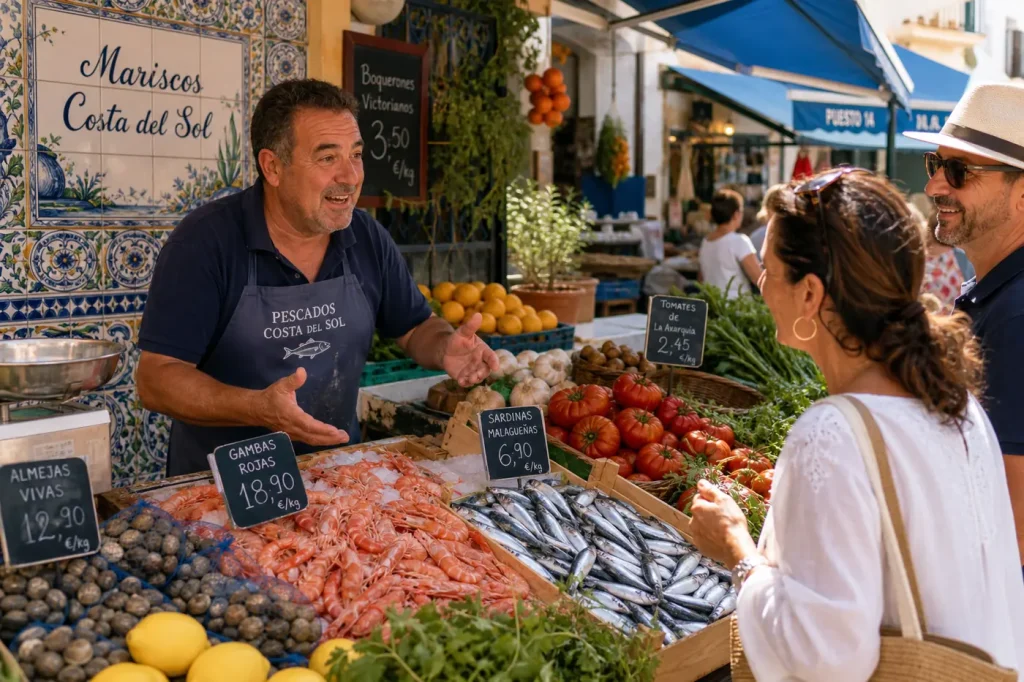
Atarazanas Market deserves a full morning. Built inside a 14th-century Moorish gate, it sells fresh produce, seafood, olives, and cured meats, and the stalls are packed before noon while local cooks do their shopping. A few counters inside serve breakfast tapas and fresh-squeezed orange juice — grab a stool if you can find one.
Marbella’s old town, tucked behind the flashier marina district, rewards patience. Plaza de los Naranjos anchors a cluster of small restaurants where you can eat grilled fish without the marina markup. If you are staying nearby, a private chef in Marbella can source ingredients from local markets and cook a multi-course meal at your villa.
Estepona, further west, has quietly built one of the coast’s best food scenes. The Sunday market draws producers from the Genal valley, and the town’s pedestrianized center still has tapas bars on the old system: order a drink, get a free tapa.
The dining experience locals do that tourists often miss
The biggest adjustment is the schedule. Lunch rarely starts before 2 p.m. Dinner begins at 9:30 or 10.
Sit down at 7 p.m. and you will eat alone in an empty room.
Sharing is not optional. Locals order for the table, not for themselves. Three or four dishes arrive at once and everyone picks from every plate. Ordering “your own” main course is fine at tourist spots, but at a proper tapas bar it marks you as a newcomer. Just go with it. Order too much.
The most overlooked local habit is eating at home with guests. Andalusians treat a home-cooked meal as a higher form of hospitality than any restaurant. If you are staying in a rented villa, hiring a private chef through Take a Chef recreates that spirit: someone who knows the local ingredients, cooks in your kitchen, and stays to serve while you sit with your group.
Practical tips: budget, etiquette, and best times to eat
| Aspect | Details |
| Meal budget | EUR 15-25 per person for lunch with drinks; tapas runs EUR 8-15 |
| Tipping | Not expected; round up the bill or leave 5-10% for good service |
| Dining hours | Lunch 2-4 p.m., dinner 9:30 p.m.-midnight; chiringuitos open earlier in summer |
| Seasonal highlights | Espetos April-October; wild mushrooms and game in autumn; Semana Santa brings torrijas |
Reservations are rarely needed outside August and Semana Santa. If you visit in high summer, book Saturday dinner by Thursday. Markets close by 2 p.m. most days and do not open on Sundays except in Estepona.
One note that catches visitors off guard: bread is not always free. Some restaurants charge a small cover that includes bread and olives. It is not a scam. It is standard.
Frequently asked questions about Costa del Sol food
What food is Costa del Sol most famous for?
Espetos de sardinas, sardines grilled on a cane skewer over open coals on the beach, are the signature dish. The region is also known for fritura malagueña, gazpachuelo, and a tapas culture built on fresh seafood and local olive oil.
Is Costa del Sol expensive to eat out?
Not by Western European standards. A full lunch with drinks costs EUR 15-25 per person at a mid-range spot. Tapas at a neighborhood bar runs EUR 8-15. Beachfront chiringuitos and Marbella’s marina are pricier, but you can still eat well on a moderate budget.
What is the difference between gazpacho and gazpachuelo?
They share a name root but almost nothing else. Gazpacho is a cold tomato-based soup. Gazpachuelo is a warm, creamy soup from Malaga province made with fish stock, egg yolk, mayonnaise, and white fish. It is closer to a chowder than a cold soup.
When is the best time to visit Costa del Sol for food?
Spring and early autumn offer the best combination of weather, seasonal produce, and fewer crowds. Espeto season runs April through October. Autumn brings wild mushrooms, game, and new-harvest olive oil.
Can you hire a private chef in Costa del Sol?
Yes. Travelers in villas and vacation rentals book private chefs who source local ingredients, cook on-site, and handle setup and cleanup. It is popular for groups, family vacations, and celebrations where dining out with a large party feels complicated.
Ready to bring Costa del Sol’s flavors to your table? Explore private chef options along the coast and let someone who knows these ingredients cook them fresh in your rental while you enjoy the evening with your group.