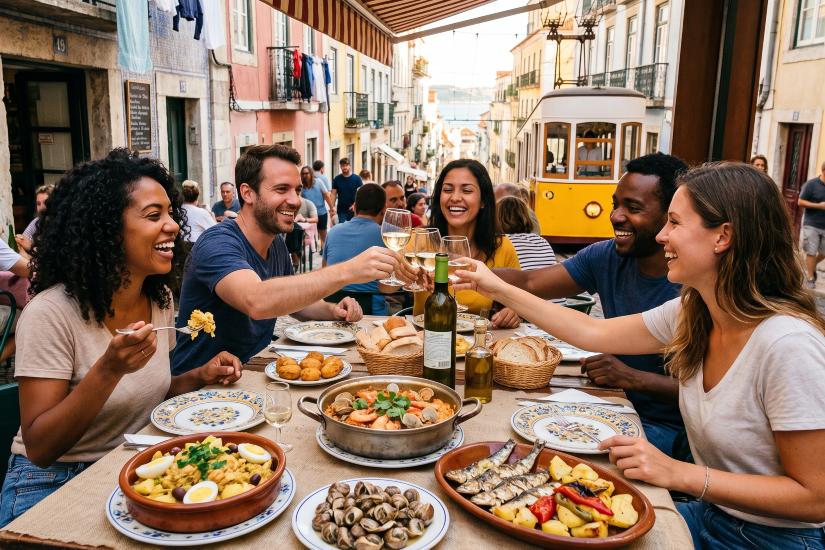
Key Takeaways
TL;DR: A food trip through Portugal covers four regions: Lisbon for pastéis de nata and petiscos, Porto and the Douro Valley for francesinha and port wine, the Alentejo for black pig and olive oil, and the Algarve for seafood and cataplana, ideally over seven to ten days.
- Lisbon: Start at Mercado da Ribeira (Time Out Market), eat caldo verde and petiscos in Alfama’s tascas, and have pastéis de nata warm at Pastéis de Belém, whose recipe dates to 1837.
- Porto and the Douro: Porto’s signature francesinha layers cured meats and cheese under a tomato-and-beer sauce, the restored Bolhão Market sells queijo da Serra and smoked sausages, and the UNESCO-listed Douro Valley vineyards offer port tastings at historic quintas.
- The Alentejo: Free-roaming porco preto, the Iberian black pig, gives prized cured hams and loins, cold-pressed olive oil flavors everything, migas are made with day-old bread, oil and garlic, and Évora is the region’s culinary hub.
- The Algarve: The coast serves percebes, clams, razor clams and grilled dourada, cataplana steams clams, shrimp, sausage, tomato and white wine in a sealed copper pot in towns like Portimão and Lagos, and almond-paste sweets shaped like fruit are a local tradition.
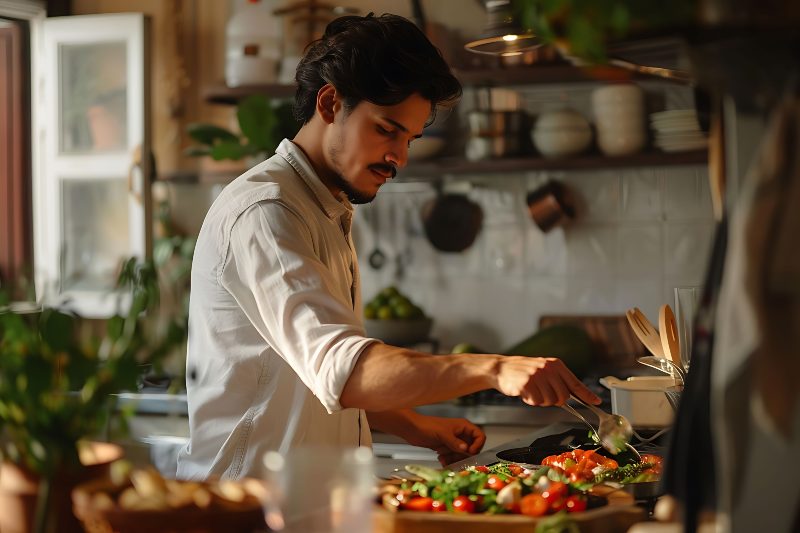
- Planning and private chefs: Allow seven to ten days for the main regions, and book a private chef two to four weeks ahead, earlier for summer in the Algarve. Chef Joao Dias in Portimão, for example, cooks Algarve menus with clams à Bulhão Pato, sea bream and pastel de nata.
Portugal punches far above its weight in the culinary world. Long celebrated for bacalhau and port wine, the country has quietly built one of the most diverse and exciting food cultures in Europe.
A food trip through Portugal is not just about what ends up on your plate; it’s about the stories woven into every dish, the fishermen at dawn, and the harvest festivals that have shaped recipes over centuries.
From the fog-draped Atlantic coast to the sun-scorched plains of the interior, each Portuguese region guards its own gastronomic identity with fierce pride. Understanding those identities transforms a holiday into a genuine culinary pilgrimage.
Índice
Lisbon: the city where tradition meets modernism
No food trip to Portugal begins anywhere other than Lisbon. The capital is a living archive of Portuguese cooking, where markets, tascas, and fine-dining rooms exist in productive tension.
Start at Mercado da Ribeira, better known as Time Out Market, where the full sweep of Portuguese cuisine is on display under one roof. From flame-grilled piri-piri chicken to pristine oysters from the Sado estuary, it is the ideal orientation for first-time visitors.
The soul of Lisbon lives in its older neighborhoods. In Alfama, tiny tascas serve caldo verde (kale and potato soup with smoky chouriço) and petiscos, Portugal’s answer to tapas, on cobbled streets. The city’s most iconic treat, the “pastéis de nata“, is best eaten warm at Pastéis de Belém, the original bakery whose recipe dates to 1837.
Lisbon also rewards food-lovers who want to cook. Several schools teach traditional bread-baking, salt cod preparation, and the art of the cataplana, the copper pot that arrived via Moorish influence and now defines coastal cooking across the country.
Bring the world's flavors to your table, wherever you are
Discover local cuisine and culinary traditions through a private chef experience. The best way to taste a destination — no restaurant required.
Porto and the Douro Valley: wine, bread, and the tripeiro spirit
Three hours north of Lisbon, Porto is Portugal’s second city and arguably its most passionate eating destination. Portuenses are nicknamed “tripeiros,” or tripe eaters, tracing the label back to a medieval sacrifice made to feed departing sailors.
The city’s signature dish, francesinha, is a layered sandwich of cured meats and melted cheese submerged in a thick tomato-and-beer sauce, served with fries. Heavy, baroque, and utterly delicious, it is defended with fierce loyalty by Portuenses.
Beyond this, Porto’s food scene rewards patience. The restored Bolhão Market is one of the finest covered markets in Iberia, full of queijo da Serra (mountain cheese), smoked sausages, and vendors who have traded from the same stalls for generations.
A short drive east, the Douro Valley opens into UNESCO-listed terraced vineyards plunging toward the river. This is port wine country, and guided tasting tours through the valley include visits to historic quintas where winemakers explain the difference between vintage, tawny, and white port over long, unhurried meals.
Alentejo: olive oil, black pig, and slow food philosophy
If Porto is exuberant, the Alentejo is contemplative. This vast region, with rolling plains, cork oaks, and whitewashed villages, produces some of the country’s most celebrated ingredients.
The porco preto, or Iberian black pig, roams free across the oak forests, fattening on acorns like the Spanish pata negra. Its cured hams and loins are prized across Europe, and visiting a local estate for a tasting paired with Alentejo DOC wines ranks among the most memorable experiences on a food trip through Portugal.
Alentejo olive oil, cold-pressed and grassy, flavors everything here. The region’s most iconic dish, migas, uses day-old bread soaked in oil and garlic and often finished with pork belly or clams in a preparation called carne de porco à alentejana. It is peasant food elevated to poetry.
The medieval walled city of Évora serves as the region’s culinary hub, where restaurants source produce from nearby farms and list provenance on the menu.
The Algarve: seafood, citrus, and cataplana on the coast
In Portugal’s sunny southern tip, the Algarve seduces visitors with beaches, but its food culture deserves equal billing.
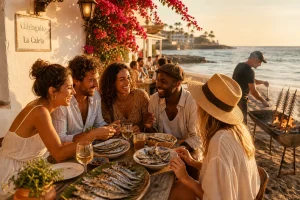
The coastline produces exceptional shellfish: percebes (barnacles prised from Atlantic rocks), clams, razor clams, and grilled dourada (sea bream) anchor a serious seafood lunch.
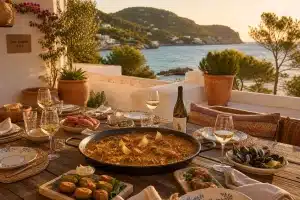
The cataplana reaches its highest expression here. Sealed tight and steamed over low heat, it concentrates clams, shrimp, sausage, tomato, and white wine into something greater than the sum of its parts. In Portimão and Lagos, fishing families have been cooking this dish for generations.
The Algarve also produces exceptional carob, figs, and almonds. Confectionery made from marzipan-style almond paste shaped into fruits and animals is a regional tradition, and fig-and-chocolate combinations unique to the south appear in specialty shops across the territory. Ready to build a trip around it? Our guide to Planning a trip to the Algarve maps out the region, and just across the border the Costa del Sol cuisine of southern Spain makes an easy add-on.
Planning a food trip through Portugal: what makes it work
A well-planned food trip through Portugal is not simply a list of restaurants. It requires understanding how Portuguese food culture works: meal times skew later than northern Europe expects, small producers are rarely findable without local knowledge, and the best meals usually happen far from tourist trails.
The challenge is that genuine gastronomic immersion demands preparation. Which market in Porto sells the best queijo da Serra? Which quinta near Évora opens to private tastings? Which Algarve fishing village serves cataplana from the boat that morning?
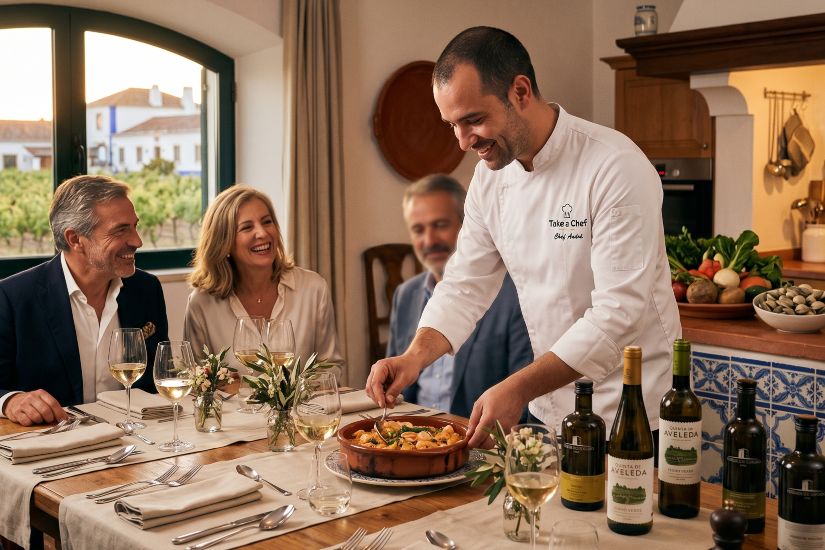
The answer, increasingly, is to engage a private chef who brings those local connections directly to your table. A chef who sources from neighborhood producers, adapts menus to seasonal availability, and cooks in the language of the region turns a food trip into a fully lived experience.
Private chef experiences work particularly well for group travel, a villa in the Alentejo, a holiday apartment in Porto, or a rented house in the Algarve becomes a far more intimate setting than any restaurant. The menu is shaped around you: dietary needs, preferred ingredients, the pace of the evening.
Book a private chef in Portugal with Take a Chef
For travelers who want to make every meal on their Portugal food trip count, Take a Chef is the world’s leading private chef booking platform, connecting clients across Lisbon, Porto and the Algarve with professional chefs who specialize in regional Portuguese cuisine.
Founded in 2012, Take a Chef has built the world’s largest community of professional chefs. Every chef is vetted, and the booking process is straightforward: choose your location, share your group size, and describe your preferences to receive a personalized menu proposal.
A private chef handles market shopping, preparation, cooking, and service. Whether celebrating in a Lisbon apartment, hosting dinner at a Douro quinta, or ending a beach day with a seafood feast in the Algarve, the platform makes it accessible.
Food trip through Portugal: frequently asked questions
What food is Portugal famous for?
Portugal is best known for bacalhau (salt cod, prepared hundreds of ways), fresh Atlantic seafood, pastéis de nata custard tarts, port wine from the Douro Valley, and cured meats from the Iberian black pig of the Alentejo. Each region guards its own specialities, so the country eats very differently from north to south.
Which region is best for a food trip in Portugal?
There is no single answer, and that is the point. Lisbon offers markets, tascas and fine dining side by side; Porto and the Douro Valley pair hearty dishes with port wine; the Alentejo is the home of olive oil, black pig and slow food; and the Algarve delivers exceptional seafood and cataplana on the coast. The ideal trip strings several of them together.
What is a must-try dish in the Algarve?
Cataplana. Named after the sealed copper pot it is cooked in, it steams clams, shrimp, sausage, tomato and white wine into something greater than the sum of its parts. In towns like Portimão and Lagos, fishing families have been cooking it for generations, often with shellfish landed that morning.
What are pastéis de nata?
Pastéis de nata are Portugal’s iconic custard tarts: crisp, flaky pastry filled with warm egg custard and finished with a scorched top. They are best eaten warm, and the original recipe traces back to Pastéis de Belém in Lisbon, a bakery whose recipe dates to 1837.
How many days do you need for a food trip through Portugal?
Around seven to ten days lets you experience the main culinary regions without rushing: a couple of days in Lisbon, two in Porto and the Douro, and time for either the Alentejo or the Algarve. The best meals usually happen far from the tourist trails, so leave room to slow down and follow local recommendations.
Can I hire a private chef during my trip to Portugal?
Yes. Through Take a Chef you can book a professional private chef in Lisbon, Porto, the Algarve and across Portugal. The chef sources from neighbourhood producers, adapts the menu to seasonal availability, and cooks and serves in your villa or apartment, turning a rented house into a far more intimate setting than any restaurant.
How far in advance should I book a private chef in Portugal?
Booking two to four weeks ahead is a safe rule, and earlier for peak summer months in the Algarve or for larger groups. You choose your location, share your group size and preferences, and receive a personalised menu proposal before you confirm.
Your Portugal food trip starts with the right table
A food trip through Portugal rewards curiosity at every turn. From the custard tarts of Belém to the barnacles of the Algarve, from the Douro wine cellars to the black pig farms of the Alentejo, the country’s culinary map is vast, layered, and endlessly surprising.
Navigating it well takes more than a guide. It takes local knowledge, seasonal awareness, and the kind of access that only comes from someone who shops where locals shop and cooks what the region grows. That is what a private chef through Take a Chef can bring to your journey.