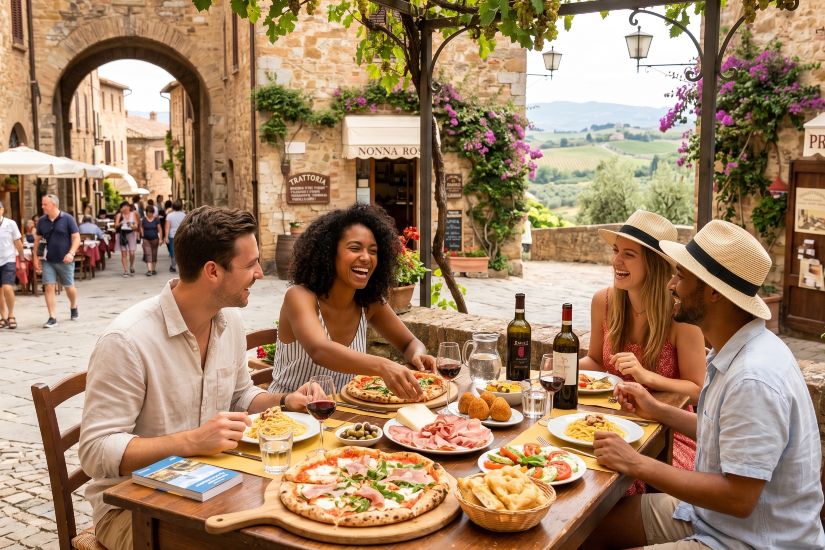
Key Takeaways
TL;DR: A food trip to Italy is best planned region by region: Rome for cucina povera classics, Tuscany for bistecca alla Fiorentina, Lombardy for risotto and ossobuco, the Amalfi Coast for lemons and seafood, and Sicily for Palermo’s street food.
- Why it’s regional: Italy was split for centuries into city-states and duchies, so each region kept its own cuisine after unification in 1861, and DOP and IGP products such as Parmigiano-Reggiano, Prosciutto di Parma and San Marzano tomatoes are at their best where they come from.
- Rome and Tuscany: In Rome, cacio e pepe, gricia, carbonara and amatriciana, plus supplì in Testaccio; in Florence, Mercato Centrale and lampredotto sandwiches, with Chianti and the Val d’Orcia a short drive away.
- North and south: Milan brings risotto alla Milanese, cotoletta, ossobuco and its aperitivo culture; the Amalfi Coast, sfusato amalfitano lemons, spaghetti alle vongole and Cetara’s colatura di alici; Palermo, arancini, panelle, sfincione and cannoli filled with fresh ricotta.
- Markets: Porta Palazzo in Turin, Rialto in Venice, Ballarò in Palermo, Mercato Centrale in Florence and Campo de’ Fiori in Rome, which is best before 9 a.m.
- Itinerary: Two weeks works best north to south, with at least three nights per region. Book key restaurants in Florence and on the Amalfi Coast ahead in high season, and a private chef at least a week ahead so they can source seasonal produce.
Italy does not simply feed you. It tells you where you are, who shaped the land, and what seasons mean. Every region guards its own pantry with quiet pride, and every meal carries centuries of habit, invention, and argument.
A food trip to Italy is not a checklist of famous dishes. It is a conversation with a country that takes eating seriously.
This guide is for travelers who want to eat the way Italians do: by region, by season, with full attention to the plate. From Rome’s trattorias to the Amalfi Coast’s citrus terraces, these are the flavors that define one of the world’s great gastronomic civilizations.
Índice
Why Italy is the world’s greatest food destination
Food in Italy is fundamentally local. The country fragmented for centuries into city-states and duchies, each developing a cuisine that reflected its soil, climate, and history. Unification came in 1861; the recipes stayed regional.
That localism is what makes a food trip to Italy endlessly rewarding. You are not exploring one cuisine but twenty. Emilian pasta stuffed with pork and nutmeg shares almost nothing with the olive-oil-rich dishes of Puglia or the bean soups of Tuscany. That cooking travels far beyond Italy too, as our guide to the Best Italian food in Australia shows.
Italy also has one of the world’s most robust food authenticity systems. Over 800 products carry DOP (Protected Designation of Origin) or IGP status, including Parmigiano-Reggiano, Prosciutto di Parma, and San Marzano tomatoes. Eating them in their native regions is an entirely different experience.
Bring the world's flavors to your table, wherever you are
Discover local cuisine and culinary traditions through a private chef experience. The best way to taste a destination — no restaurant required.
Planning your food trip to Italy: regional breakdown
Rome and Lazio: the working-class table
Rome’s food culture is rooted in la cucina povera, which turned offal, lard, and dried pasta into some of Italy’s most celebrated dishes. Cacio e pepe, gricia, carbonara, and amatriciana all come from this tradition, made with very few ingredients where every element matters.
The city’s markets are essential. Campo de’ Fiori and Testaccio Market overflow with produce, aged cheeses, and street food. In Testaccio, the former slaughterhouse district, supplì (fried rice balls) and offal-based dishes date back generations.
Pair your market visit with a long lunch at a neighborhood trattoria, where paper tablecloths and handwritten menus are still the norm. Order house wine by the carafe. Do not rush.
Florence and Tuscany: the art of restraint
Tuscan cuisine is built on restraint. The bread is unsalted, the pasta fresh and egg-rich, the method slow. Bistecca alla Fiorentina, a thick-cut T-bone from Chianina cattle grilled over wood and served rare, is one of the great culinary experiences in Europe.
Florence’s Mercato Centrale is a landmark: a two-story covered market with raw ingredients on the ground floor and artisan stalls above. Find lampredotto, the local tripe sandwich, at stands outside.
Beyond Florence, Chianti and the Val d’Orcia offer wine tourism layered with food. Pecorino di Pienza and lardo di Colonnata are within a half-day drive.
Lombardy and the north: cream, rice, and saffron
Lombardy produces some of Italy’s most internationally recognized dishes: risotto alla Milanese, cotoletta (the original Wiener Schnitzel), and ossobuco. The region’s proximity to the Alps and its dairy farming tradition mean butter and cream feature more prominently here than olive oil.
Milan itself has a dynamic food scene that goes beyond tradition. The city’s aperitivo culture, where a drink comes with a spread of food, is its own institution. Serious food travelers also head north to Lake Como and Lake Maggiore, where villages offer lake fish, polenta, and a slower pace.
Amalfi Coast: lemon, seafood and elevation
The Amalfi Coast is one of Italy’s most dramatic food landscapes. Lemon groves cascade down terraced cliffs, and the sfusato amalfitano lemon, sweeter and larger than most varieties, flavors everything from limoncello to pasta.
Seafood dominates: spaghetti alle vongole, grilled octopus, anchovies. Cetara is famous for colatura di alici, a fermented anchovy sauce descended from Roman garum. A single teaspoon transforms a pasta dish.
Ravello, Positano, and Praiano each have their own restaurant culture. Travel early or late to avoid crowds, and look for restaurants off the main promenades.
Sicily: Africa, Greece and Spain on a plate
Sicily’s food reflects every civilization that has ever ruled the island. Arab influence brought almonds, citrus, saffron, and couscous. Greeks introduced olives and wine. Spanish colonizers brought tomatoes and chocolate. The result is Italy’s most complex regional cuisine.
Palermo’s street food scene is extraordinary: arancini, panelle (chickpea fritters), sfincione (thick Sicilian pizza), and stigghiola (grilled offal wrapped in spring onion). The island’s cannoli, filled with fresh ricotta, are nothing like the versions exported to the rest of the world.
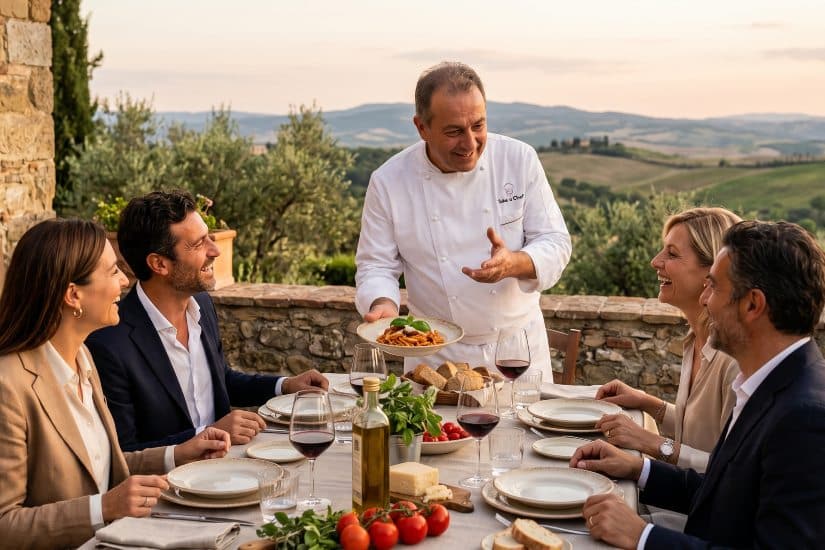
Where private chefs make your food trip to Italy unforgettable
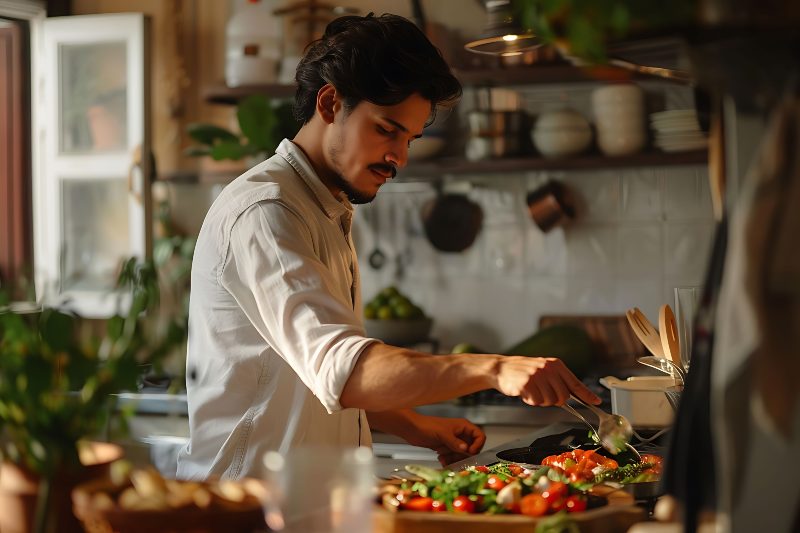
A food trip to Italy can only take you so far through restaurants alone. The greatest Italian cooking happens in private kitchens, where ingredients are sourced that morning and technique is inseparable from tradition.
This is where Take a Chef transforms the experience. Take a Chef is the world’s leading private chef booking platform, connecting travelers with professional local chefs who cook in your home, apartment, or villa.
A private chef does not simply cook for you. They bring insider knowledge of the local food system: which farmers they trust, which market stalls have the best seasonal produce that week, and which dishes represent the true character of the region. That knowledge is the difference between a good meal and a genuine culinary experience.
You can book a private chef in Rome, Florence, the Amalfi Coast, Milan and throughout Sicily. Menus are fully customizable, accommodating dietary restrictions and any occasion without compromise.
Groups from two to twenty are accommodated. Prices cover shopping, preparation, cooking, service, and cleanup.
Local markets you should not miss
No food trip to Italy is complete without its markets. These are living institutions:
- Mercato di Porta Palazzo, Turin: Europe’s largest open-air market, serving the city that arguably perfected Italian food culture
- Mercato di Rialto, Venice: centuries-old fish and produce market beside the Grand Canal
- Mercato di Ballarò, Palermo: one of Italy’s most chaotic and rewarding street markets, with North African influences throughout
- Mercato Centrale, Florence: the definitive introduction to Tuscan ingredients and street food
- Campo de’ Fiori, Rome: Rome’s most famous market square, best visited before 9am when it still belongs to locals
How to plan your itinerary
A two-week food trip to Italy works best following a north-to-south route, spending at least three nights in each region to allow for day trips and slower meals.
Do not overplan. The best food experiences in Italy are rarely scheduled. They happen when you follow a local into a place with no sign or accept a second glass from a winemaker. Build in time to be surprised.
Book essential restaurants in advance, particularly in Florence and along the Amalfi Coast during high season, and book your private chef experience at least a week ahead to allow time for seasonal sourcing.
A food trip to Italy rewards the curious and punishes the rushed. Slow down and eat. Planning where to eat next? Discover our pick of Gourmet experiences in Paris.
Ready to bring a professional local chef into your Italian kitchen? Explore the full range of experiences at Take a Chef Italy and find your perfect gastronomic match before you travel.