Key Takeaways
TL;DR: A food trip to Barcelona means eating Catalan, not generic Spanish: start at the markets, take the menú del día at lunch, and work through the Gothic Quarter, El Born, Barceloneta, Eixample, Gràcia and Poblenou one neighborhood at a time.
- Catalan cuisine: It’s built on sofregit, a slow-caramelized onion and tomato base, on mar i muntanya pairings of seafood with pork or game, and on pa amb tomàquet at every table; look for fideuà, salt cod croquetes and crema catalana.
- The markets: Walk past La Boqueria’s touristy entrance to the back stalls, visit the Mercat de Santa Caterina in El Born, with its mosaic roof by Enric Miralles, and arrive before 9 a.m.; the Mercat de l’Abaceria in Gràcia is worth adding on a longer stay.
- Old town and the sea: Breakfast on a cortado and a butter croissant in the Gothic Quarter, have the three-course menú del día with wine in El Born, then head to Barceloneta for seafood and rice dishes such as arròs caldós and arròs a la cassola.
- Eixample, Gràcia and Poblenou: Around noon, the vermut ritual in the Esquerra de l’Eixample pairs house vermouth with anchovies and fuet; Gràcia has natural wine bars and family restaurants, and on the Rambla del Poblenou chefs from starred kitchens cook without fine-dining prices.
- Eating well: Barcelona receives more than 12 million visitors a year, so seek out back-street bars that serve locals, or book a private chef who shops at La Boqueria or Santa Caterina that morning and cooks Catalan dishes in your rental.
Barcelona is one of those rare cities where eating is not just sustenance but a way of experiencing an entire culture. From the salt-tinged breeze of the waterfront to the narrow medieval lanes of the Gothic Quarter, every neighborhood tells a story through its food.
Planning a food trip to Barcelona means immersing yourself in centuries of culinary tradition, a fiercely proud regional identity, and a market culture that beats at the heart of daily life.
Without a plan, it is easy to spend your visit in tourist-facing restaurants serving mediocre paella beside famous monuments. With one, you unlock a city of extraordinary gastronomic depth most visitors never reach.
Índice
Understanding Catalan cuisine
Catalan cuisine is not Spanish food in the generic sense. Catalonia has its own culinary tradition, shaped by its geography between the Pyrenees, the Mediterranean, and fertile inland plains.
The result is a cuisine built on contrasts: mar i muntanya (sea and mountain) combinations that pair seafood with game or pork and the sweet intensity of slow-roasted vegetables.
The foundation is the sofregit, a deeply caramelized base of onion and tomato that underpins stews, rice dishes, and sauces. Pa amb tomaquet, bread rubbed with ripe tomato and drizzled with olive oil, appears on virtually every table before any meal begins.
Key dishes to seek out: fideuà (noodle paella in seafood stock), croquetes de bacallà (salt cod croquettes), and crema catalana, the original custard that predates the French version by centuries.
Transform your culinary dreams into reality
From interactive cooking lessons to exotic cuisine adventures, our expert chefs transform your kitchen into a world-class culinary experience.
La Boqueria and Barcelona’s market culture
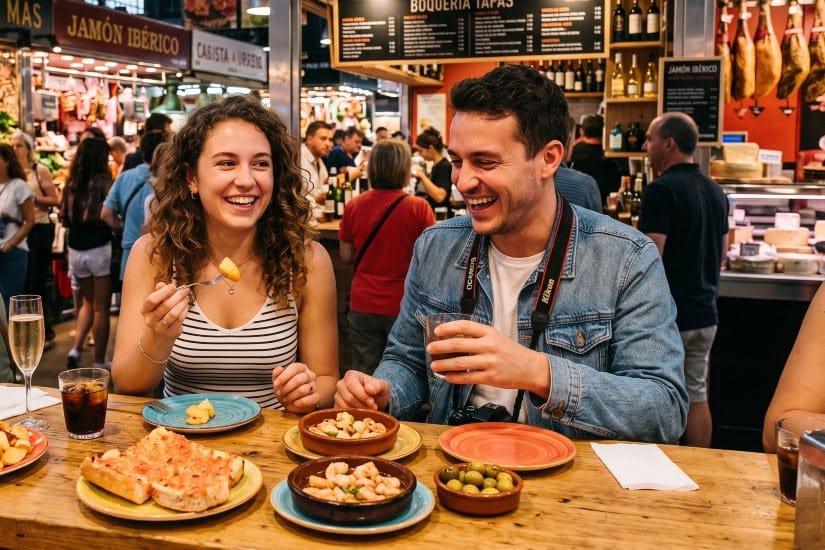
No food trip to Barcelona is complete without time in the city’s markets. La Boqueria, the iconic covered market on La Rambla, is a sensory landmark: rows of fish on crushed ice, Catalan cheeses, jamón ibérico, and pyramids of fruit catching the light from the vaulted roof.
Much of its entrance caters to tourists, though. Walk deeper toward the back stalls, where fishmongers and vegetable vendors serve the city’s restaurants from seven each morning.
For a less theatrical but equally rewarding experience, visit the Mercat de Santa Caterina in El Born. Designed by Enric Miralles with a breathtaking mosaic roof, it serves the surrounding neighborhood and attracts far fewer crowds than its famous neighbor.
Both markets open early, and arriving before nine gives you the city at its most alive. The Mercat de l’Abaceria in Gràcia is worth adding for anyone spending more than a few days in the city.
A neighborhood-by-neighborhood food itinerary
Day 1: Gothic Quarter and El Born
Begin your food trip in Barcelona at the city’s oldest core. Breakfast in the Gothic Quarter means a cortado and a croissant de mantequilla at a marble bar.
By mid-morning, walk northeast into El Born, where an exceptional concentration of quality bars and restaurants lines the medieval streets. Seek out pintxos bars and counter spaces where you can watch cooks work over fire.
Lunch here means the Catalan menú del día, a three-course set lunch with wine that remains among the best-value eating experiences in Europe. For around 12 to 15 euros: a first course, a main, dessert, bread, and a glass of house wine.
Day 2: Barceloneta and the waterfront
Barceloneta, the old fishermen’s quarter jutting into the Mediterranean, has been feeding Barcelona since the eighteenth century. Its tight grid of streets is lined with seafood restaurants and traditional tapas bars that remain genuinely local.
Arrive early at the Mercat de la Barceloneta, where the catch comes directly from the Lonja fish exchange and the quality is extraordinary.
Lunch here means rice: the soupy arròs caldós or the dry-cooked arròs a la cassola are the neighborhood’s signature preparations. Look for restaurants where local families are eating, particularly those that open only for lunch service and close once the food runs out.
Day 3: Eixample and Gràcia
The Eixample’s Esquerra side contains some of the city’s best traditional taverns and finest vermouth bars: a mid-morning institution pairing house vermouth with anchoas, boquerones, and sliced fuet sausage.
This ritual, known as el vermut, begins around noon and is one of the great small pleasures of Barcelona street life. Gràcia, the village within the city to the north, offers natural wine bars, small family-run restaurants, and a genuinely local weekly market on Carrer de l’Abaceria.
Day 4: Poblenou
Poblenou has become Barcelona’s most dynamic food neighborhood over the past decade. The Rambla del Poblenou is lined with restaurants serving local families rather than tourists, where chefs who trained in starred kitchens now cook excellent food without fine-dining pricing. The surrounding streets hold a rewarding concentration of breweries, natural wine shops, and artisan food producers.
The challenge of eating well in a tourist city
Barcelona receives more than 12 million visitors per year. That pressure has pushed much of its restaurant landscape toward tourist convenience at the expense of quality. The challenge for any food trip to Barcelona is navigation: knowing which establishments are genuinely excellent and which are trading on location or visual appeal alone.
The best meals are often invisible to the casual visitor. They happen in back streets without an Instagram presence, in bars that have served the same neighborhood for fifty years.
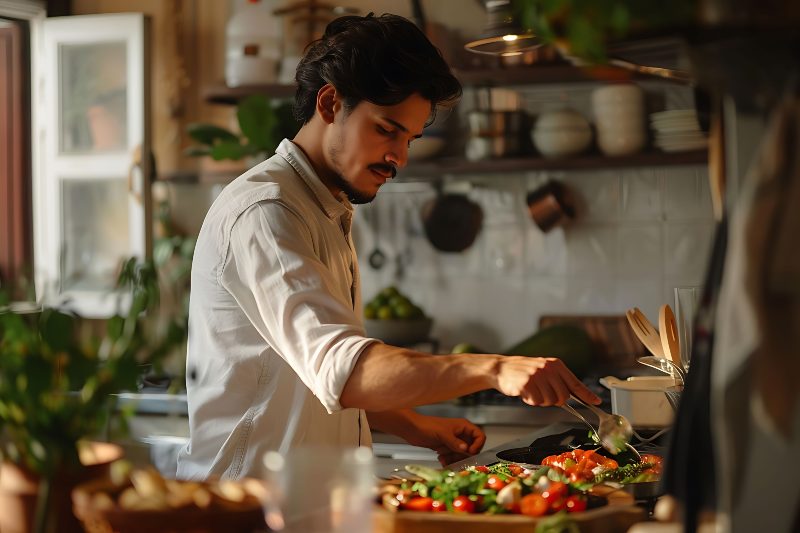
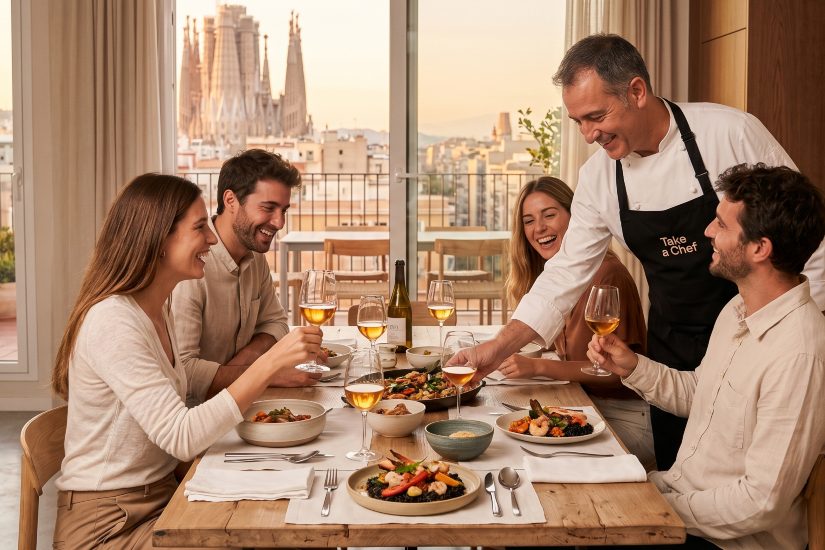
A private chef experience addresses this gap directly. Rather than navigating that market alone, you bring professional expertise into your own space. Your chef sources from the city’s best suppliers, visiting La Boqueria or the Mercat de Santa Caterina early each morning, then designs a menu around what is genuinely at its peak that day.
Take a Chef: bringing Barcelona’s food culture to your table
For those who want to go beyond restaurant dining, Take a Chef connects travelers and residents with professional private chefs across Barcelona and worldwide. Founded in 2012, it is the world’s leading private chef booking platform, with experienced chefs who bring restaurant-level cooking directly to your kitchen.
The process is entirely customized. You describe your group, your preferences, and the occasion. Your chef proposes a menu, sources the finest seasonal ingredients, prepares everything in your space, and handles all cleaning afterward.
What you receive is a personal expression of Catalan cuisine cooked by a professional who has spent years in Barcelona’s kitchens and knows which stalls at La Boqueria carry the best bacallà, which spring months bring the finest razor clams, and how to build a menu that reflects Barcelona’s real gastronomic identity.
Making the most of your food trip to Barcelona
A food trip to Barcelona rewards those who move slowly and eat with intention. Spend mornings in markets. Take the menú del día seriously at least once. Explore the neighborhoods this itinerary covers rather than staying anchored to the Gothic Quarter. If Mediterranean flavours leave you craving more, our Food travel in Italy guide is a natural next stop.
The city has one of the richest food cultures in Europe, built on exceptional raw ingredients, a fiercely proud regional identity, and generations of cooks who have treated eating as one of life’s central pleasures. For another European capital worth building a trip around, see our Paris food trip guide.
Stay curious, eat where locals really eat, and give yourself enough time to discover the meals that no guidebook has found yet. Barcelona will always reward the effort.