

Key Takeaways
TL;DR: To land your first private chef clients, define a niche, put the legal and insurance basics in place, price for all the time a booking takes, market yourself online, through your network and through partners, and use a platform like Take a Chef for visibility and reviews.
- Pick a niche: Plant-based and allergen-specific menus, special-occasion dinners, weekly meal prep for busy executives or families, and cooking for vacation rentals are common profitable niches, and a clear focus makes marketing and pricing easier.
- Legal basics: Register as an LLC or sole proprietorship, get a food handler’s certification and, if you cook off-site, possibly a cottage food license, carry general liability insurance, and use written contracts with a 50% deposit upfront and the balance due on the day.
- Pricing: Factor in ingredients, travel, prep and cleanup, not just cooking time, consider tiers based on group size and service complexity, and raise your rates as your reputation grows.
- Marketing: A simple one-page site with strong photos, sample menus and testimonials, Instagram and Pinterest with location hashtags and short videos, word of mouth from your own network, and referral partnerships with event planners, florists, vacation rental managers and wine consultants.
- Keeping clients: Follow up after each booking, note dietary details such as a gluten-free client or a child’s nut allergy, and offer seasonal menus, such as a winter holiday dinner to someone who booked a summer birthday.
You graduated from culinary school. You can execute a flawless tasting menu without breaking a sweat. But building a client base from scratch can feel like cooking a dish without a recipe.
The private chef industry is growing fast. Demand for personalized, at-home dining experiences has risen steadily, driven by busy professionals and a cultural shift toward meaningful home gatherings. Landing your first high-value clients requires more than talent. It requires strategy.
This guide walks you through the essential steps to start a personal chef business and shows you how to get your first private chef clients, from defining your niche to building an online presence that attracts premium clients.
Índice
Define your niche before you do anything else
One of the most common mistakes aspiring private chefs make is trying to please everyone. A clearly defined niche makes your marketing more focused, your pricing more justifiable, and your reputation easier to build.
Ask yourself a few foundational questions. What cuisine do you do best? Who is your ideal client? Are you drawn to weekly meal prep for health-conscious families, intimate dinner parties, or high-end corporate events? Each audience has different expectations, budgets, and communication styles.
Common profitable niches in the private chef space include:
- Plant-based and allergen-specific menus for clients with dietary requirements.
- Special occasion dining such as anniversaries, birthdays, and proposals.
- Weekly meal preparation for busy executives or young families.
- Destination and vacation cooking for vacation rentals and travel clients.
Your niche is not a cage. It is a launchpad. Once you build credibility in one area, expanding is far easier.
Discover the convenience of private chef service
From flexible pricing and villa visits to vacation benefits and celebrity-style experiences, learn how our private chef service can transform your dining lifestyle.
Get the legal and logistical foundations right
Before your first booking, handle the business infrastructure. Skipping this step can cost you clients and reputation. For a full walkthrough of certification, licensing, insurance, and pricing, see our guide on how to start a personal chef business from home.
Business registration and licensing
Register your business as an LLC or sole proprietorship depending on your liability preferences. In most countries, operating as a personal chef requires a food handler’s certification and sometimes a cottage food license if you prepare food off-site.
Insurance
General liability insurance is non-negotiable. Many high-net-worth clients ask for proof of coverage before hiring. Policies typically cover property damage, personal injury, and food-related illness claims.
Contracts and payment terms
Every engagement should have a written contract covering scope of services, cancellation policy, and payment schedule. Require a 50% deposit upfront with the balance due on the day of service.
Build a pricing strategy that reflects your value
Pricing is where many new private chefs undermine themselves. Rates set too low signal inexperience. Rates set strategically signal professionalism and filter out clients who value quality.
When you start a personal chef business, consider a tiered model based on group size and service complexity
Always factor in ingredient costs, travel time, prep time, and post-service cleanup. Many new chefs forget that the actual cooking is only a portion of the time invested in each booking.
Do not be afraid to raise rates as your reputation grows. Your first few clients are an investment in building your portfolio. Thereafter, pricing should reflect demonstrated results.
Personal chef marketing strategies that actually work
Marketing is where culinary talent meets business reality. As a private chef, you have one of the most visually compelling products imaginable. Beautiful food and joyful clients tell your story better than any advertisement.
Build a professional online presence
Start with a clean, simple website that includes your niche, a short bio, sample menus, client testimonials, and a clear way to get in touch. A one-page site with strong photography will outperform a complex site with poor visuals every time.
Instagram and Pinterest are natural channels for private chefs. Post consistently, focus on plating and ambiance photography, and use location-based hashtags. Short-form video showing prep work or the dining experience can dramatically expand your reach.
Leverage your existing network
When you are figuring out how to find private chef jobs, your warmest leads are closer than you think. Former restaurant colleagues, culinary school classmates, and family friends are all potential referral sources. Tell everyone you know that you have launched your business. Word of mouth remains the highest-converting channel in this industry. If you are making the move from a restaurant kitchen, our Career guide for chefs maps out the whole transition.
Consider offering a discounted introductory experience to someone in your network in exchange for honest testimonials and the right to use photos. A single glowing review from a credible source can outperform months of cold outreach.
Partner with complementary businesses
Event planners, florists, luxury vacation rental managers, and wine consultants all serve the same high-net-worth clients you are targeting. Building referral partnerships with these professionals can produce a steady stream of qualified leads without advertising spend.
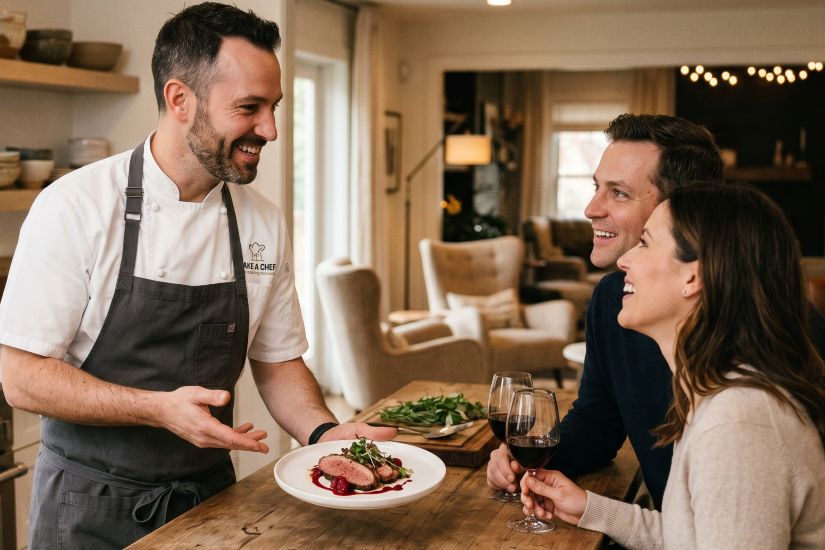
How Take a Chef can help you land your first high-end clients
One of the most effective ways to accelerate your early career is to join an established platform that already has the clients you want. Take a Chef is the world’s leading private chef booking platform, connecting professional chefs with clients seeking personalized gastronomic experiences at home.
For chefs just starting out, the platform solves the hardest problem: visibility. Instead of spending months building an audience, you get immediate access to a global community of clients actively searching for private dining.
Take a Chef provides verified chef profiles that lend instant credibility even before you have an extensive independent portfolio. Client reviews accumulate with every booking, building the social proof that converts new inquiries into confirmed reservations. That trust infrastructure is exactly what you need when you are unknown in the market.
Joining also gives you real-world data fast. You will discover which menus resonate, which clients you enjoy most, and what price points the market supports.
You can learn more and create your chef profile at Take a Chef
Turn first-time clients into long-term relationships
Acquiring a client is expensive in time and energy. Retaining one costs almost nothing. Every positive experience is an opportunity to build something lasting.
After each booking, follow up with a brief note thanking the client and asking for feedback. Note dietary preferences carefully. When they rebook, remembering that a client is gluten-free or has a child with a nut allergy sends a powerful message: you were paying attention.
Introduce seasonal menus to existing clients. Someone who booked you for a summer birthday is a natural prospect for a winter holiday dinner. Proactive outreach tied to seasonal occasions keeps you top of mind without feeling pushy.
Your first client is closer than you think
Learning how to get your first private chef clients means combining culinary excellence with business fundamentals. Define your niche, get your legal structure in place, price strategically, and invest in personal chef marketing strategies that showcase what makes your food unforgettable.
Platforms like Take a Chef give you a powerful head start by connecting you with motivated clients and lending your new business the credibility it needs to grow.
Your first booking is not just a meal. It is the beginning of your reputation. Make it count.