
Key Takeaways
TL;DR: Moving from a restaurant to private service means cooking for one client or a small group in their home, with no standard menu and no brigade, so success depends as much on menu design, client communication, logistics and business skills as on technique.
- From brigade to solo: You handle the shopping, prep, cooking, plating and clean-down yourself on every job, so lean, efficient solo systems are essential, and clients may change guest counts the morning of the dinner.
- Menus and diets: Menus are built for a specific person and occasion, from an anniversary tasting menu to a week of family meals, and you’ll regularly cook around celiac disease, allergies, religious food laws and performance nutrition, so certifications in nutrition and allergen management pay off.
- Working in home kitchens: Equipment varies from induction cooktops to limited storage, so check what’s available before each job, carry a kit with your knives, thermometer, mandoline and a few trusted pans, and build relationships with butchers, fishmongers and specialty importers.
- Rates and reputation: Price in shopping, prep, travel, cooking, clean-down and ingredients, don’t undercharge to build loyalty, and rely on word of mouth, the main channel, backed by a portfolio website, active social media and client testimonials.
- Contracts and client access: Put every job in a contract covering scope, payment terms, cancellations and ingredient liability, carry liability insurance and income protection, and consider Take a Chef, founded in 2012, which handles client discovery, bookings and payments.
You have spent years mastering a professional kitchen: coordinating brigades, coaxing maximum flavor from tight prep windows, and delivering dishes that thrill a dining room night after night.
Yet somewhere between the heat and the noise, a question surfaces: what would it look like to cook differently? The transition from restaurant chef to private chef is one of the most significant pivots in the culinary world. Not simply a change of venue, but a reorientation of your relationship with food, clients, and professional identity.
This guide covers the mindset shifts, skills, logistics, and business strategies that separate thriving private chef careers from those that stall.
Índice
Understanding the shift: what changes when you go private
Restaurant kitchens run on standardization and speed. Every dish is tested, portioned, and refined for reproducibility at volume.
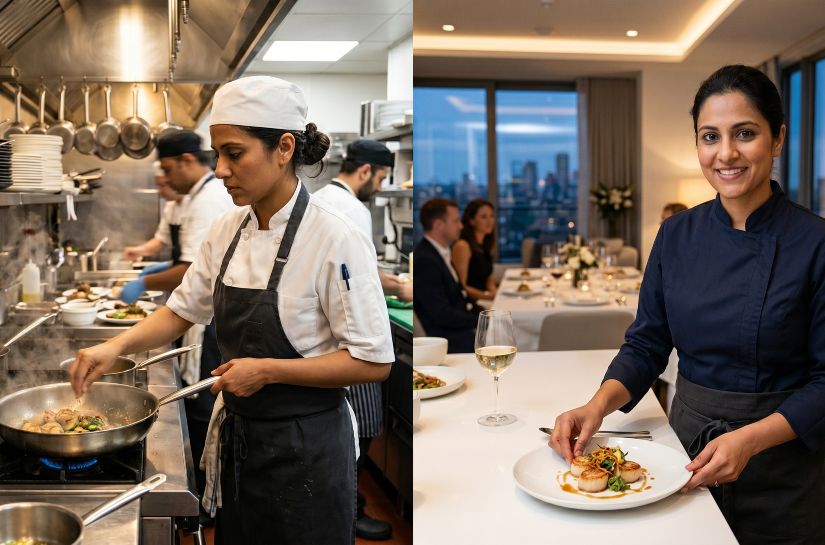
Private chef work requires something entirely different. You cook for an individual or small group inside their home, with no standard menu, no fixed brigade, and no wall between you and your audience. Clients request adjustments you never anticipated, change guest counts the morning of the dinner, and form opinions about your style, your presence, and the condition in which you leave their kitchens.
This intimacy is both the greatest challenge and most rewarding aspect of private service. It demands excellence rooted in personalization, flexibility, and emotional intelligence as much as technical skill.
From brigade to solo operation
Most chefs underestimate what it means to work alone. In a restaurant, responsibility is distributed across sous chefs, pastry sections, and kitchen porters. As a private chef, you are all of those people at once. You handle shopping, prep, cooking, plating, and clean-down all in a single engagement. Building lean, efficient solo systems is not optional; it is survival.
The skills that matter most in a private chef career
Private service assumes technical skill. What differentiates successful professionals is a set of capabilities the restaurant world rarely teaches directly.
Menu design and dietary literacy
You will regularly cook for clients with specific dietary needs: celiac disease, allergies, religious food laws, performance nutrition. Developing genuine competence is essential. Pursue certifications in nutrition and allergen management and treat dietary knowledge as a continuous education.
Menu creation for private service differs fundamentally from restaurant development. You design for a specific person on a specific occasion: a progressive tasting menu for an anniversary or a week of balanced family meals. Both demand thoughtfulness of very different kinds.
Client communication and emotional intelligence
Private clients interact with you directly, not front-of-house staff. Your ability to listen carefully, set expectations clearly, and handle feedback gracefully determines the longevity of every relationship.
Some clients want to chat throughout the evening; others prefer you to work quietly in the background. Adapting your interpersonal style to each individual is a core skill in personal chef services.
Logistics and home kitchen management
Domestic kitchens present challenges no restaurant training fully prepares you for. Equipment varies enormously: induction hobs, shared oven space, limited storage.
Conduct pre-engagement reconnaissance to confirm what is available and what you need to bring. A professional kit bag with your core knives, thermometer, mandoline, and a few trusted pans provides a consistent foundation anywhere.
Sourcing is another discipline. Without supplier relationships, you purchase ingredients personally, balancing quality, cost, and proximity. Building connections with trusted butchers, fishmongers, and specialty importers pays across every booking.
The lifestyle shift: freedom, creativity, and a different kind of pressure
One of the most frequently cited reasons to move from restaurant chef to private chef is creative freedom. Consistency, cost of goods, and market positioning constrain restaurant menus.
Private engagements can be whatever you and the client decide: a tasting menu built around a single heritage breed, a regional deep-dive into food encountered on holiday, a birthday dinner designed around the guest’s childhood memories. This latitude reconnects you with the reason you fell in love with cooking.
Reclaiming your schedule through culinary entrepreneurship
Late nights, split shifts, and missed weekends define restaurant life. Private chef work does not eliminate unsociable hours, but it returns agency over your schedule. As a freelance culinary entrepreneur, you choose which bookings to accept, set your rates, and decide whether to specialise in weekly family meal prep, one-off dining experiences, corporate events, or residential placements. If the intensity of restaurant life has worn you down, our guide to Managing kitchen burnout is worth reading first.
The pressure transforms rather than disappears. Instead of relentless service, you face building a client base and managing your finances. For many chefs, this challenge is far more satisfying.
Building a successful freelance culinary business
The business side is where many talented chefs face their greatest challenges. Technical brilliance is necessary but not sufficient. You also need clarity on positioning, pricing, and how you present yourself to potential clients. If you are building your operation from home, our step-by-step guide on how to start a personal chef business from home covers the legal setup, pricing, and finding your first clients.
Setting your rates
Rates should reflect total time investment: shopping, prep, travel, cooking, clean-down, and ingredient costs. Do not undercharge to build loyalty; it creates resentment on your side and a low-rate expectation on the client’s side. Research comparable professionals and price them accordingly.
Building your reputation
Word of mouth is the dominant channel for building a private chef clientele. Every engagement is a potential referral, built not just on the food you cook but on punctuality, communication, discretion, and the kitchen you leave behind.
A professional online presence matters alongside personal referrals: a portfolio website with strong photography, active social media, and clear client testimonials all help convert inquiries into bookings.
Contracts, insurance, and professional foundations
Formalise every engagement with contracts covering scope, payment terms, cancellation policy, and ingredient liability. Public liability insurance and income protection are not extras; they are the baseline infrastructure of a professional culinary business.

How Take a Chef supports private chef careers
One of the structural challenges of moving from restaurant chef to private chef is client access. Finding bookings consistently, especially early in your career, requires either an existing network or a platform that bridges the gap. Take a Chef was built precisely for this.
Founded in 2012, Take a Chef is the world’s leading private chef booking platform, connecting professional chefs with clients seeking personalized gastronomic experiences at home. Joining gives chefs immediate access to a global client base without years of independent marketing effort.
The platform handles client discovery, booking management, and payment processing, leaving you to focus on what matters most: the cooking, the creativity, and the client relationship. That division of labor can make the difference between a slow start and a career that builds real momentum from the first booking.
Explore how it works and create your chef profile.
Making the leap: a career worth building
The move from restaurant chef to private chef is not a step back. It is a step forward into a more autonomous, creative, and sustainable culinary career. The challenges are real: solo operation, client management, no institutional safety net. But so are the rewards.
Chefs who succeed share clear qualities: curiosity about the people they cook for, commitment to continuous learning, and the discipline to treat every engagement as creative expression and business transaction alike.
The market is growing, the tools exist, and platforms connecting professional chefs with clients who value personal chef services are more accessible than ever. The kitchen is yours to define.