

Key Takeaways
TL;DR: Plan a Bali trip around the April-to-October dry season, a base that suits you (Ubud for culture, Seminyak and Canggu for cafés and beaches, Uluwatu for surf and sunsets, Nusa Dua or Sanur for calm), respect for temple etiquette, and food from warungs to a private chef at your villa.
- When to go: Temperatures sit between 27 and 32 °C all year; May, June and September balance good weather and manageable crowds, while the November-to-March wet season brings short, heavy showers, fewer tourists and lower rates.
- Before you fly: Your passport should be valid for at least six months from arrival, most visitors qualify for a 30-day Visa on Arrival that can usually be extended once, and an eSIM or local SIM helps with ride-hailing, maps and bookings.
- Must-sees: Ubud’s Sacred Monkey Forest and the Tirta Empul purification ritual, the Kecak Fire Dance at sunset at Uluwatu Temple, a 45-minute fast boat from Sanur to Nusa Penida, and Pura Besakih, the Mother Temple, in the east.
- Etiquette: Wear a sarong and sash in temples with shoulders and knees covered, never step over canang sari offerings, use your right hand to give and receive, and remember that on Nyepi the whole island, airport included, shuts down for 24 hours.
- Food and getting around: Try nasi campur at a warung for a couple of dollars, babi guling and ayam betutu, or book a private chef for your villa; hire a driver for day trips and use Gojek, Grab or Blue Bird taxis for shorter journeys.
Bali has earned its reputation as one of the most captivating destinations in Southeast Asia. With its volcanic peaks, emerald rice terraces, sacred temples, and world-class surf breaks, the island offers an extraordinary range of experiences. Yet the sheer variety can make planning feel overwhelming, especially for first-time visitors.
This guide covers the logistics, regions, customs, and dining options you need to plan a trip to Bali.
Índice
When to visit and what to prepare
Bali enjoys a tropical climate with temperatures hovering between 27 and 32 degrees Celsius year-round. The dry season, from April through October, is the most popular window for travelers, offering clear skies and lower humidity.
May, June, and September strike the best balance between pleasant weather and manageable crowd levels.
The wet season, from November to March, brings short but heavy afternoon showers. It is still a viable time to visit, particularly if you prefer fewer tourists and lower accommodation rates. Surfers often favor this period for its powerful swells along the western and southern coasts.
Before departure, confirm that your passport is valid for at least six months from the date of arrival. Most international visitors are eligible for a Visa on Arrival, which is valid for 30 days and can typically be extended once.
An eSIM or local SIM card is strongly recommended, as ride-hailing apps, navigation, and restaurant bookings all rely on mobile connectivity.
Where to stay: choosing the right region
Bali is a collection of distinct regions, each with its own personality. Choosing where to base yourself shapes your entire experience, so match your accommodation to your priorities.
Ubud, nestled in the island’s interior, is the cultural and artistic heartland. It suits travellers drawn to temples, wellness retreats, art galleries, and the famous Tegallalang rice terraces.
Seminyak and Canggu are popular with those who want trendy cafes, boutique shopping, and effortless beach access.
Uluwatu, on the southern Bukit Peninsula, is ideal for surfers and sunset seekers, with dramatic clifftop views and some of the island’s finest beach clubs.
Nusa Dua offers a more structured resort experience, while the quieter Sanur provides a calm, walkable beachfront that is often overlooked by first-time visitors. Staying close to your planned activities helps reduce travel time, as Bali’s roads can be congested.
Bring local flavors to your kitchen
From market-fresh ingredients to traditional recipes, a private chef turns your home into a true local experience.
Must-visit attractions across the island
Ubud: the cultural heartland
Beyond its iconic rice terraces, Ubud is home to the Sacred Monkey Forest Sanctuary, a lush nature reserve inhabited by long-tailed macaques. The town’s central market is excellent for handcrafted souvenirs, and its surrounding villages, such as Mas and Celuk, are renowned for woodcarving and silverwork.
Do not miss the Tirta Empul temple, where visitors can participate in a traditional Balinese water purification ritual.
Uluwatu and the southern cliffs
The clifftop Uluwatu Temple is one of Bali’s most spectacular sacred sites, perched 70 meters above the Indian Ocean. Time your visit for the late afternoon to catch the Kecak Fire Dance performance at sunset, a mesmerizing retelling of the Ramayana epic. Nearby, Padang Padang and Dreamland beaches offer excellent swimming and surfing conditions.
Nusa islands and eastern Bali
A 45-minute fast boat from Sanur takes you to Nusa Penida, home to Kelingking Beach, Broken Beach, and Angel’s Billabong. Its sister islands, Nusa Lembongan and Nusa Ceningan, offer quieter beaches and superb snorkeling.
Back on the mainland, eastern Bali rewards those willing to venture further with the majestic Pura Besakih, known as the Mother Temple, and the serene coastal town of Amed, a favorite among divers.
Cultural etiquette every visitor should know
Bali’s identity is deeply rooted in Balinese Hinduism, and showing respect for local customs is essential. Temples are active places of worship, not mere tourist attractions.
Both men and women must wear a sarong and sash when entering a temple. Shoulders and knees should be covered, and sarongs are usually available to borrow or rent at the entrance.
Never step over the small palm-leaf offerings, known as canang sari, placed on the ground outside homes and businesses. These are sacred gifts to the gods. When seated inside a temple, avoid pointing your feet towards holy objects or shrines, as feet are considered impure. Keep your voice low, ask permission before photographing ceremonies, and switch your phone to silent.
Outside of temples, a few general courtesies go a long way. Use your right hand when giving or receiving items, as the left hand is considered unclean. Point with your thumb rather than your index finger.
And be mindful of Nyepi, the Balinese Day of Silence, when the entire island shuts down for 24 hours of quiet reflection, including the airport.
Dining in Bali: from warungs to private chef experiences
Food is one of the great pleasures of any Bali trip, and the island’s dining scene spans every budget and style. Start with the warung, the small family-run eateries that are the backbone of Balinese cuisine.
A plate of nasi campur, mixed rice served with a selection of meats, vegetables, and sambal, costs as little as a couple of dollars and offers an authentic taste of the island.
Signature dishes to seek out include babi guling (spit-roasted suckling pig with crispy skin and spiced lawar), ayam betutu (slow-cooked chicken marinated in turmeric and chili), and sate lilit (minced seafood satay pressed onto lemongrass sticks). For a full rundown of what to eat, see our Bali food guide.
In Seminyak and Canggu, international restaurants serve everything from Japanese omakase to modern Australian brunch, while Ubud has become a destination for farm-to-table and plant-based dining.
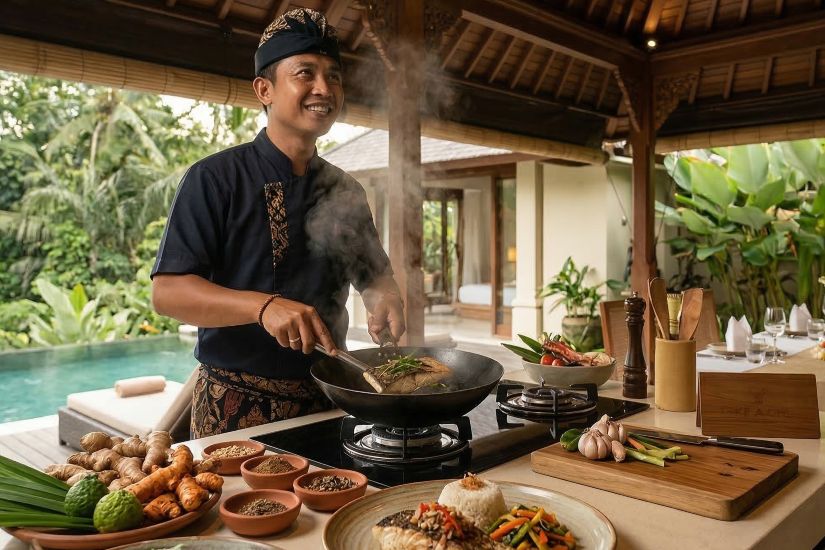
Private chef experience in Bali
For travelers who want a truly memorable culinary moment without the guesswork of navigating unfamiliar menus or inconsistent restaurant quality, a private chef experience brings the best of Balinese and international cuisine directly to your villa.
Take a Chef can connect you with professional chefs in Bali who design fully customized menus using fresh, locally sourced ingredients. Whether you are celebrating a special occasion, hosting a group dinner, or simply want an evening of restaurant-quality food in the comfort of your accommodation, the service handles everything from shopping to cooking to cleaning up.
It is one of the most convenient and personal ways to plan a trip to Bali and experience the island’s culinary richness.
Final tips to plan a trip to Bali
Getting around Bali efficiently requires some planning. Hiring a private driver for day trips is one of the most comfortable options, and many drivers double as informal guides. Ride-hailing apps such as Gojek and Grab are widely used for shorter journeys, and reputable metered taxis, particularly Blue Bird, are a reliable fallback.
Resist the temptation to pack too many activities into a single day. Bali’s roads are narrow and often congested, so travel times can be longer than expected. A slower pace allows you to absorb the island’s atmosphere.
Finally, travel responsibly. Support local businesses, reduce single-use plastic, and follow posted guidelines at natural sites. Bali’s beauty depends on visitors who treat it with care.
With the right preparation, Bali rewards you with experiences that stay with you long after the trip ends, from sunrise over a volcanic ridge to a candlelit dinner prepared by a professional chef in your own villa garden. The island is waiting. Planning a beach escape instead? Discover how to enjoy a Perfect vacation in Cancun.