Key Takeaways
TL;DR: An afternoon tea at home follows the three-tier tradition begun by Anna, Duchess of Bedford, in the 1840s: finger sandwiches at the bottom, scones with clotted cream and jam in the middle and small sweets on top, served with Earl Grey, Assam or Darjeeling.
- Origins: Anna, Duchess of Bedford, began taking tea, bread and butter and small cakes in the late afternoon in the 1840s to bridge the long gap before an eight o’clock dinner, and Queen Victoria’s tea parties made the custom a pillar of British culture.
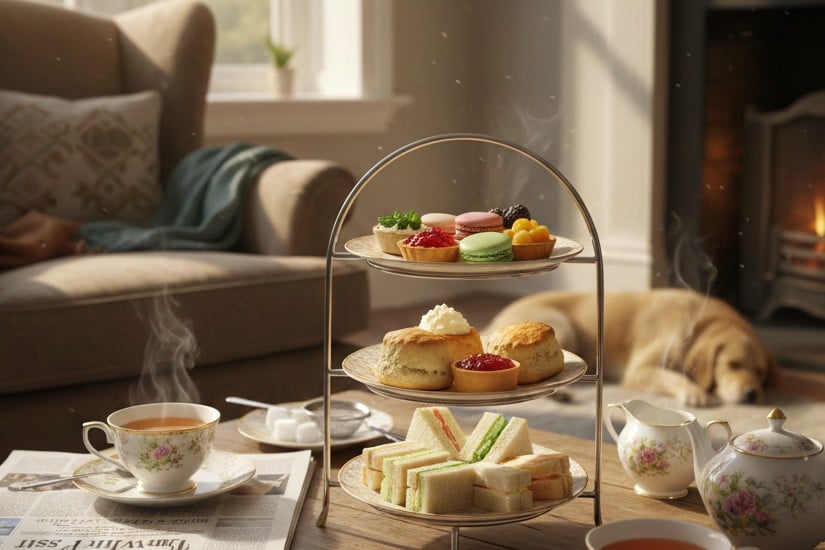
- The three tiers: Savoury finger sandwiches go on the bottom tier, scones in the middle and sweet treats on top, and guests work upwards from savoury to sweet; four guests suit conversation, while eight to twelve bring livelier energy.
- Tea sandwiches: Remove the crusts, spread softened butter edge to edge so the bread doesn’t go soggy, and serve classics such as paper-thin salted cucumber on white bread and smoked salmon with dill and lemon cream cheese on brown bread.
- Scones: Rub cold butter into self-raising flour with a pinch of salt and a tablespoon of caster sugar, add chilled buttermilk, handle the dough minimally, pat it to two centimetres and bake at 200 degrees until risen, then serve warm with clotted cream and strawberry jam.
- Sweets and a chef: Five or six small sweets, such as Victoria sponge, lemon tarts, macarons and Bakewell slices, impress more than an excessive spread, and a private chef can prepare the whole tea so the host stays with the guests.
There is something wonderfully indulgent about the ritual of afternoon tea. The delicate clink of fine china, the tiered stand laden with scones and finger sandwiches, the quiet anticipation as the pot steeps to perfection.
This British tradition has enchanted generations, and bringing it into your own home creates an experience that feels timeless and deeply personal.
Whether you are celebrating a milestone, hosting loved ones, or simply treating yourself to an afternoon of refinement, creating an authentic afternoon tea at home is entirely within reach.
Índice
The charming origins of afternoon tea
The tradition we cherish today began in the 1840s with Anna, Duchess of Bedford. Dinner was fashionably served at eight o’clock, leaving a lengthy gap after the midday meal.
The Duchess found herself experiencing what she described as a sinking feeling during late afternoon hours. Her solution was elegantly simple: she requested tea, bread and butter, and small cakes be brought to her private quarters.
What started as a private indulgence soon became a social occasion. The Duchess began inviting friends to join her, and the practice quickly spread through aristocratic circles.
Queen Victoria herself embraced the custom, hosting grand tea parties that cemented afternoon tea as an essential element of British culture. By the 1880s, ladies of high society would change into flowing gowns, don gloves and hats, and gather in drawing rooms between four and five o’clock for this most civilised of rituals.
Transform your culinary dreams into reality
From interactive cooking lessons to exotic cuisine adventures, our expert chefs transform your kitchen into a world-class culinary experience.
Planning your afternoon tea at home
Creating an authentic afternoon tea requires thoughtful preparation, though the rewards are immeasurable.
Begin by considering your guest list and atmosphere you wish to create. An intimate gathering of four allows for meaningful conversation, whilst a larger party of eight to twelve brings livelier energy to proceedings. Planning something grander? Our guide to Hosting formal dinners can help.
The traditional presentation follows a three-tiered structure.
- The bottom tier holds savoury finger sandwiches
- The middle displays scones with accompaniments
- the top showcases sweet treats.
Guests are encouraged to work their way upward, moving from savoury to sweet in a deliberate progression that mirrors the evolution of appetite throughout the experience.
Setting the scene
Your table setting speaks volumes before a single bite is taken.
Fine china teacups, though not strictly necessary, add unmistakable elegance. A crisp white tablecloth provides the perfect backdrop, whilst fresh flowers in a small vase introduce colour and fragrance. Consider placing individual napkins at each setting, folded simply and perhaps adorned with a sprig of lavender.
The tea itself deserves careful attention. Traditional choices include Earl Grey with its distinctive bergamot notes, robust Assam for those preferring a stronger brew, and delicate Darjeeling for a lighter touch. Warming the teapot before adding leaves ensures proper steeping, whilst a tea cosy maintains temperature throughout.
Classic tea sandwiches: Recipes and techniques
The foundation of any afternoon tea lies in its sandwiches. These dainty morsels should be small enough to consume in two or three bites, with crusts removed and fillings that complement rather than overwhelm. Softened butter spread edge to edge prevents bread from becoming soggy and adds subtle richness.
The quintessential cucumber sandwich
Nothing epitomises British afternoon tea quite like the cucumber sandwich.
- Use a mandoline to slice cucumber paper-thin, then sprinkle lightly with salt and allow to rest on kitchen paper for fifteen minutes.
- Spread white bread with softened butter, layer cucumber slices, and add a whisper of white pepper.
- Cut into elegant fingers or triangles.
Smoked salmon and cream cheese
- Combine cream cheese with freshly chopped dill and a squeeze of lemon.
- Spread generously onto brown bread, top with quality smoked salmon
- Cut into neat rectangles.
Perfect British scones: The heart of afternoon
Tea Scones occupy a position of honour in any afternoon tea. Light, crumbly, and barely sweet, they serve as the canvas upon which clotted cream and jam create their magic. The debate between Devon and Cornwall regarding which to spread first remains gloriously unresolved, and guests may choose their own allegiance.
For featherlight results, handle the dough minimally. Combine self-raising flour with a pinch of salt and a tablespoon of caster sugar. Rub cold butter into the mixture until it resembles fine breadcrumbs.
Add chilled buttermilk gradually, bringing the dough together with a knife rather than your hands. Pat gently to two centimetres thick, cut with a sharp cutter pressed straight down, and bake at two hundred degrees until golden and well risen.
Serve warm with bowls of clotted cream and strawberry jam. Fruit scones studded with sultanas offer a lovely variation, whilst cheese scones provide a savoury alternative for those who prefer.
Sweet treats to complete your spread
The uppermost tier presents an opportunity for indulgence. Victoria sponge, named for the Queen who so loved afternoon tea, remains essential. Miniature lemon tarts with their bright citrus curd provide palate-cleansing freshness. Macarons in pastel shades add continental sophistication, whilst Bakewell slices honour British baking traditions.
Portion sizes matter enormously here. Each sweet should be small enough to enjoy in a few bites, allowing guests to sample variety without overwhelming themselves.
A well-curated selection of five or six options proves more impressive than an excessive spread that leaves guests defeated.
The effortless alternative: A private chef experience
Whilst preparing afternoon tea yourself brings genuine satisfaction, the reality of juggling timing, presentation, and hosting duties can prove challenging. Imagine greeting your guests relaxed and refreshed, knowing every element has been crafted by professional hands.
Take a Chef connects you with talented private chefs who bring restaurant-quality experiences directly to your home. From perfectly risen scones to intricate patisserie, a skilled chef handles everything whilst you savour the company of those you love.
Whether celebrating a birthday, hosting a bridal shower, or gathering friends for an afternoon of refined pleasure, a private chef ensures every detail receives expert attention. The scones emerge impossibly light, the sandwiches appear as though from a magazine, and you remain present throughout, unhurried and engaged.
The perfect afternoon tea
Afternoon tea at home offers something increasingly rare in our hurried world: permission to slow down. The ritual encourages lingering conversation, unhurried enjoyment, and genuine connection over shared plates and steaming cups. For more communal spreads, explore our Dinner ideas for sharing.
Whether you craft every element yourself or entrust preparation to expert hands, the result is an afternoon of elegance, warmth, and quiet celebration.
Browse for a chef at Take a Chef and discover how effortless entertaining can truly be.