Key Takeaways
TL;DR: Bali’s must-try dishes are babi guling, sate lilit, lawar, ayam betutu and nasi campur, all built on bumbu spice paste and sambal, and the best places to eat like a local are the warungs of Ubud, Denpasar and Sanur, Jimbaran Bay’s seafood grills and the Gianyar night market.
- The flavors of Balinese cooking: Rice is at the center of every meal, bumbu is a fresh paste of turmeric, galangal, ginger, garlic, shallots, lemongrass, candlenuts and chilies, and sambal matah, a raw mix of shallots, lemongrass, chilies and coconut oil, is unique to Bali.
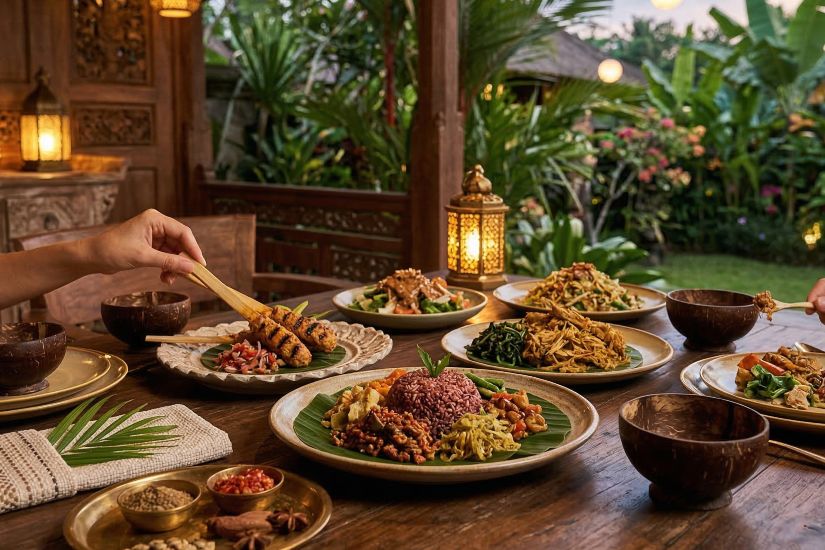
- Signature dishes: Babi guling is spit-roasted suckling pig rubbed with turmeric and spices, sate lilit is minced fish, chicken or pork mixed with coconut and molded around lemongrass, lawar is a chopped salad with coconut and minced meat, ayam betutu is spiced chicken steamed in banana leaves, and nasi campur is rice with mixed sides.
- Street food: Nasi goreng and mie goreng come with a fried egg and prawn crackers, pisang goreng are banana fritters, klepon are rice cakes filled with liquid palm sugar, martabak comes sweet or savory, and gado gado, a peanut-sauce salad, is essential for plant-based travelers.
- Where to eat in Ubud: Ibu Oka is the most famous babi guling warung, championed by Anthony Bourdain, Bu Ari in Peliatan is a less crowded alternative, Warung Teges has served nasi campur on banana leaves for over 40 years, and Siboghana Warung is a find for vegetarians.
- Beyond Ubud: Warung Melati and Kaum at Potato Head in Seminyak, Warung Dandelion in Canggu, Men Weti for babi guling and Mak Beng in Sanur, serving fried fish and fish head soup since 1941, plus Badung Market, Jimbaran Bay’s beach grills and the Gianyar night market.
Bali is far more than golden beaches and terraced rice fields. Beneath the island’s postcard beauty lies a culinary tradition shaped by centuries of Hindu ceremony, spice trade heritage, and a deep respect for fresh, locally grown ingredients. Every village market, roadside cart, and family kitchen tells a story through food.
From slow roasted ceremonial meats to fiery sambals pounded by hand, Balinese cuisine rewards the curious traveler with bold, layered flavors unlike anything else in Southeast Asia.
This guide is a Bali local food guide for tourists that covers the dishes you need to taste, the street food worth queuing for, and the best spots to experience it all. Before you go, our Trip planning for Bali guide covers the essentials.
Índice
The flavours that define Balinese cuisine
Rice is the centerpiece of virtually every Balinese meal. Alongside it, you will encounter bumbu, the aromatic spice paste made from turmeric, galangal, ginger, garlic, shallots, lemongrass, candlenuts, and chilies. Pounded fresh for each dish, bumbu gives Balinese cooking its signature depth.
Sambal, the chili condiment found on nearly every table, adds bright heat to grilled fish, chicken, and rice. Sambal matah, a raw combination of sliced shallots, lemongrass, chilies, and coconut oil, is unique to Bali and a must try for anyone exploring the island’s food scene.
Palm sugar contributes caramel sweetness to desserts and sauces, while fermented fish paste adds a rich umami character to savory preparations.
Bring local flavors to your kitchen
From market-fresh ingredients to traditional recipes, a private chef turns your home into a true local experience.
Must-try traditional Balinese dishes
Babi guling
No Bali food guide is complete without babi guling, the island’s legendary spit-roasted suckling pig. Rubbed with turmeric, coriander, lemongrass, and local spices, the pig is slow roasted over an open fire until the skin turns shatteringly crisp.
Traditionally reserved for ceremonies, babi guling is now widely available at warungs across the island, served with rice, lawar, crackling, and sambal.
Sate lilit
Bali’s take on satay uses minced fish, chicken, or pork blended with grated coconut, lime leaves, and spices. The mixture is molded around lemongrass stalks and grilled over charcoal, infusing the meat with a subtle citrus fragrance that makes sate lilit entirely different from satay found elsewhere in the region.
Lawar and ayam betutu
Lawar is a finely chopped salad of vegetables, grated coconut, minced meat, and robust spices. Often served during ceremonial occasions, it pairs beautifully with steamed rice.
Ayam betutu is equally impressive: a whole chicken stuffed with a complex spice mixture, wrapped in banana leaves, and slowly steamed until extraordinarily tender. The duck version, bebek betutu, is equally prized.
Nasi campur
Translating to “mixed rice,” nasi campur is the everyday meal that best represents traditional Balinese food. A mound of rice is surrounded by shredded chicken, satay, fried tempeh, vegetables, peanuts, and sambal. Each warung assembles its own version, so no two plates are ever quite alike.
Street food staples worth seeking out
Nasi goreng (fried rice) and mie goreng (fried noodles) are staples found at every turn, typically served with a fried egg and prawn crackers. Simple yet satisfying, they offer a reliable meal at any hour.
For something sweet, look for pisang goreng, golden fried banana fritters with a crispy exterior and warm center. Street vendors also sell klepon, small green rice cakes filled with liquid palm sugar and rolled in grated coconut.
Martabak is another favorite, available as a sweet pancake stuffed with chocolate or as a savory crepe filled with eggs, onions, and spiced meat.
For plant-based travelers, gado gado is essential. This popular Indonesian salad combines steamed vegetables, tofu, tempeh, and a hard boiled egg beneath a rich peanut sauce. It is widely available and incredibly affordable.
Where to eat like a local across Bali
Ubud: the cultural heartland
Ubud is arguably the best place on the island for authentic Balinese dishes. Ibu Oka remains the most famous warung for babi guling, championed by the late Anthony Bourdain.
For a less crowded alternative, head to Bu Ari in Peliatan for succulent roast pork and bone soup. Warung Teges, also in Peliatan, has been serving superb nasi campur on banana leaves for over 40 years.
Vegetarian travelers will find outstanding choices at Siboghana Warung, a hidden gem set within a family garden.
Seminyak, Canggu, and the southern coast
Seminyak blends traditional and modern dining seamlessly. Warung Melati draws a loyal local crowd for its clean, fresh Indonesian staples prepared from market ingredients each morning, while Kaum at Potato Head offers a refined take on native dishes with sambal tasting platters and braised pork cheek. In Canggu, Warung Dandelion serves hearty local fare in a relaxed beachside setting.
Denpasar and Sanur: off the tourist trail
Bali’s capital rewards the adventurous eater. Men Weti is a local institution for babi guling, and Mak Beng in Sanur has been serving the same legendary crispy fried fish and fish head soup since 1941. Badung Market in Denpasar is ideal for browsing stalls with freshly made Balinese sweets, from bubur injin (black rice pudding with coconut cream) to colorful jaje Bali wrapped in banana leaves.
Regional specialties and hidden gems
Beyond the main tourist hubs, each region offers its own culinary identity. The northwest coast is known for exceptional ikan bakar (charcoal grilled fish) served fresh from the morning catch. Jimbaran Bay is famous for its beachfront seafood grills, where prawns, squid, and snapper are cooked over coconut husks at sunset.
The Gianyar night market, not far from Ubud, offers one of the most immersive street food experiences in Bali, with dozens of stalls serving everything from sate to bubur sumsum, a warm rice flour porridge with palm sugar syrup.
Bring Bali’s flavours to your table with a private chef
Navigating Bali’s food scene is thrilling, but it can also be overwhelming. Crowded markets, language barriers, and unfamiliar menus sometimes make it difficult to find the most authentic flavors, especially if you have dietary requirements or are traveling with a group.
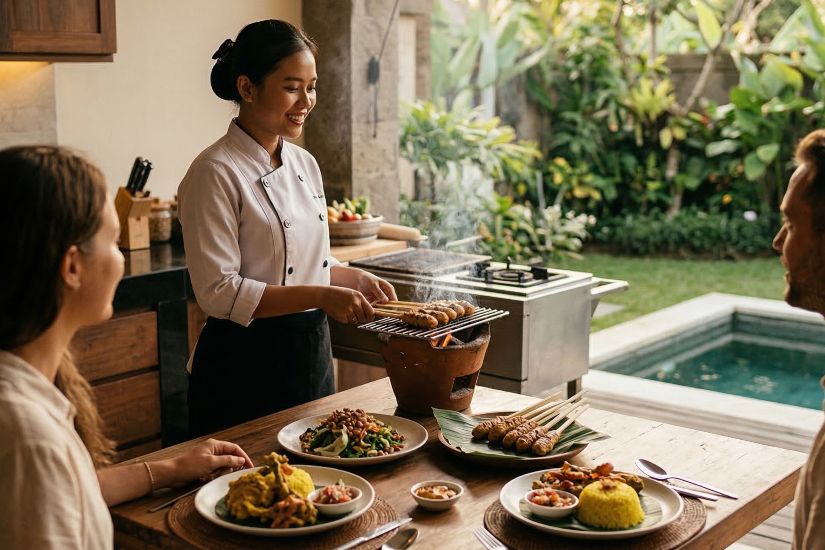
This is where Take a Chef offers an exceptional alternative. Through the platform, you can book a professional private chef in Bali who sources the freshest local ingredients and prepares a fully customized Balinese menu in the comfort of your villa. Every dish is tailored to your preferences, whether you want a traditional feast, a vegetarian spread, or a modern interpretation of island classics.
A private chef experience in Bali gives you direct access to local culinary knowledge that only a professional with deep roots in Balinese cooking can provide. It is the most relaxed and personal way to enjoy the island’s cuisine, with every flavor crafted for your palate.
Your Bali food journey starts here
Bali’s culinary landscape is as rich and layered as its famed spice pastes. From the ceremonial splendor of babi guling and the fragrant simplicity of sate lilit to the bustling energy of a Gianyar night market stall, every meal on this island tells a story of tradition and creativity.
Use our local Bali food guide for tourists and approach your food journey with curiosity. Step into the warungs that locals love, try the sambal that makes your eyes water, and let every bite draw you deeper into the culture. And if your travels take you further afield, Discover Dominican flavors in the Caribbean too.
Whether you explore independently or enjoy a bespoke dining experience with a private chef from Take a Chef, Bali will leave you with flavors that linger long after you leave.