Key Takeaways
TL;DR: An Indian vegetarian dinner changes by region, from paneer, dal makhani and breads in the north to sambar, rasam and coconut in the south, panch phoron in the east and Gujarati thalis in the west, and it is balanced with a dal or paneer, a vegetable, a grain, a cooling raita and something crunchy.
- North India: Punjab and Uttar Pradesh cook hearty curries on an onion and tomato masala with ghee, such as paneer butter masala, palak paneer, rajma chawal and dal makhani, served with naan, parathas or chapatis.
- South India: Rice replaces wheat and coconut, curry leaves, tamarind and mustard seeds lead: sambar, rasam, poriyal and curd rice in Tamil Nadu or Karnataka, bisi bele bath as a one-pot dinner and avial from Kerala’s Onam feast.
- East and west: Bengal and Odisha build on panch phoron (fenugreek, nigella, cumin, black mustard and fennel seeds) in dishes like shukto and cholar dal, while Gujarat offers undhiyu, handvo and the thali, Maharashtra pav bhaji and Rajasthan dal baati churma.
- Spice technique: Toast whole spices before grinding masalas such as garam masala, and master the tadka, blooming mustard seeds, cumin, curry leaves, dried chilies and asafoetida in hot oil or ghee for seconds, since a little too long turns them bitter.
- Balance and a chef: Pair a dal or paneer dish with a vegetable, rice or bread, raita or curd and papadum or salad, or book a private Indian chef who handles the sourcing, cooking and cleanup and shows the tadka in real time.
Few culinary traditions celebrate plant-based cooking with the depth found across India. From the north to the tropical coasts of Kerala, every region has shaped its own evening meal traditions around vegetables, legumes, grains and an extraordinary palette of spices.
An Indian vegetarian dinner is never a compromise. It is a fully realized cuisine, layered with technique, history and an intuitive understanding of how flavor, texture and nutrition come together.
Whether you grew up with these dishes or are exploring them for the first time, this guide walks through the regional specialties, essential techniques and modern interpretations that make an Indian vegetarian dinner one of the most exciting meals you can prepare at home.
Índice
A journey through regional vegetarian traditions
Indian vegetarian dinner cooking is not monolithic. North, south, east and west each bring a distinct culinary identity to the dinner table, shaped by climate, agriculture and centuries of cultural exchange.
North India: comfort, richness and wheat-based breads
Punjab and Uttar Pradesh set the tone with hearty curries built around dairy, tomatoes and aromatic spice blends. Paneer butter masala, palak paneer and rajma chawal (kidney bean curry with steamed rice) are evening meal staples. Breads dominate the carbohydrate side: fluffy naan, layered parathas stuffed with spiced potatoes, or simple whole-wheat chapatis rolled fresh for each meal.
The signature flavor base is a slow-cooked onion and tomato masala enriched with ghee, cumin, coriander and garam masala. Dal makhani, simmered overnight with black lentils, kidney beans and cream, remains one of the most beloved Indian vegetarian dinner dishes worldwide.
Transform your culinary dreams into reality
From interactive cooking lessons to exotic cuisine adventures, our expert chefs transform your kitchen into a world-class culinary experience.
South India: lightness, tang and coconut
Move south and the flavor architecture shifts dramatically. Rice replaces wheat as the foundation grain. Coconut, curry leaves, tamarind and mustard seeds define the aromatic profile. A traditional dinner in Tamil Nadu or Karnataka might feature sambar (a lentil-vegetable stew soured with tamarind), rasam (a peppery broth), a dry vegetable poriyal, curd rice and a crisp papadum.
Bisi bele bath from Karnataka is a remarkable one-pot dinner: rice, lentils and seasonal vegetables simmered with a spice powder that varies from household to household. Avial, a mixed vegetable dish bound with coconut and yoghurt, is a centerpiece of Kerala’s Onam feast and works beautifully as an everyday dinner.
East India: subtle sweetness and the five-spice blend
Bengal and Odisha bring a quieter elegance to the Indian vegetarian dinner. Panch phoron, a five-spice mix of fenugreek, nigella, cumin, black mustard and fennel seeds, provides the aromatic base.
Begun bhaja (fried aubergine slices), shukto (a mildly bitter mixed vegetable stew) and cholar dal (Bengal gram with coconut) demonstrate a palate that values subtlety over heat. If that fried aubergine tempts you, explore our Creative aubergine recipes for more ways to cook it.
West India: sweet-sour contrasts and street food flair
Gujarat’s vegetarian cooking is arguably India’s most inventive. Undhiyu (a slow-cooked medley of winter vegetables and fenugreek dumplings) and handvo (a savory lentil cake) blur the line between snack and main course.
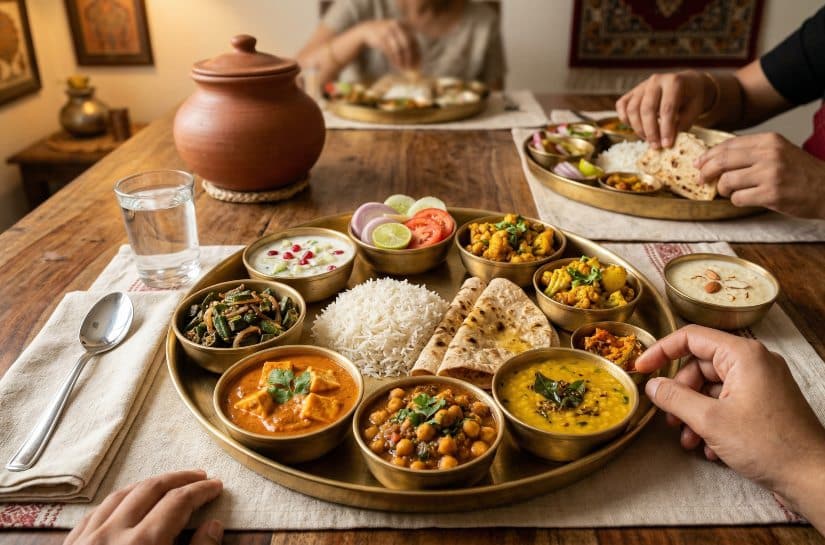
The Gujarati thali, offering dal, kadhi, sabzi, rice, roti, pickle and a touch of sweetness, is the ideal format for an Indian vegetarian dinner that wants for nothing.
In Maharashtra, pav bhaji (a spiced vegetable mash served with buttered bread rolls) has graduated from street food to a proper dinner, while Rajasthan contributes dal baati churma, a trio of baked wheat balls, spiced lentils and sweetened crumbled wheat.
The art of Indian spice blending
Spices are the engine of Indian vegetarian cooking, and understanding how they work is the difference between a flat dish and a memorable one. Two techniques sit at the heart of Indian spice craft: the dry spice blend and the tadka.
Dry spice blends, or masalas, are usually ground fresh for maximum potency. Garam masala, the most widely recognized, combines cardamom, cinnamon, cloves, black pepper and bay leaves, though every household adjusts the ratios.
South Indian sambar powder adds coriander, cumin, fenugreek and dried chilies for a warmer profile. The key principle is that spices should be toasted whole before grinding to activate their volatile oils.
Tadka, also known as tempering, is the technique of blooming whole spices in hot oil or ghee for a brief, precisely timed moment. Mustard seeds go in first and pop; cumin seeds follow and crackle; curry leaves, dried chilies, and asafoetida are added last, releasing aroma that transforms a simple lentil soup into something extraordinary. Regional tadka styles function like a culinary fingerprint: mustard seeds and curry leaves in coconut oil signal South India; cumin and garlic in ghee mean Punjab.
Mastering these two techniques unlocks virtually every dish in the Indian vegetarian repertoire. Yet they demand practice and an understanding of timing that comes only with repetition. A few seconds too long on a tadka, and the spices burn bitter. The wrong masala ratio can tip the balance from aromatic to harsh.
Modern interpretations for the contemporary table
Indian vegetarian dinner traditions are evolving. Home cooks and chefs alike are rethinking classic recipes with global ingredients and contemporary plating.
Cauliflower steaks rubbed with tandoori spices, jackfruit kofta in cashew gravy, and millet-based khichdi served with microgreens all honor tradition while speaking a modern culinary language.
Fermented foods are also gaining ground. Dosa batter, traditionally made from rice and urad dal, is being reimagined with quinoa and buckwheat. Pickled vegetables inspired by Indian achaar techniques are finding their way onto fusion menus worldwide.
Balancing an Indian vegetarian dinner is intuitive once you understand the framework: one protein-rich dish (dal or paneer), one vegetable preparation, a grain (rice or bread), a cooling element (raita or curd) and something with crunch (papadum or fresh salad). This structure ensures variety without overcomplicating the meal.

Bringing authentic Indian flavours home with a private chef
The complexity of Indian spice blending is precisely what makes these dishes so rewarding, but it can also hold home cooks back. Sourcing the right spices, nailing the timing on a tadka, and understanding how regional techniques differ is knowledge that takes years to build. A private chef becomes invaluable in this situation.
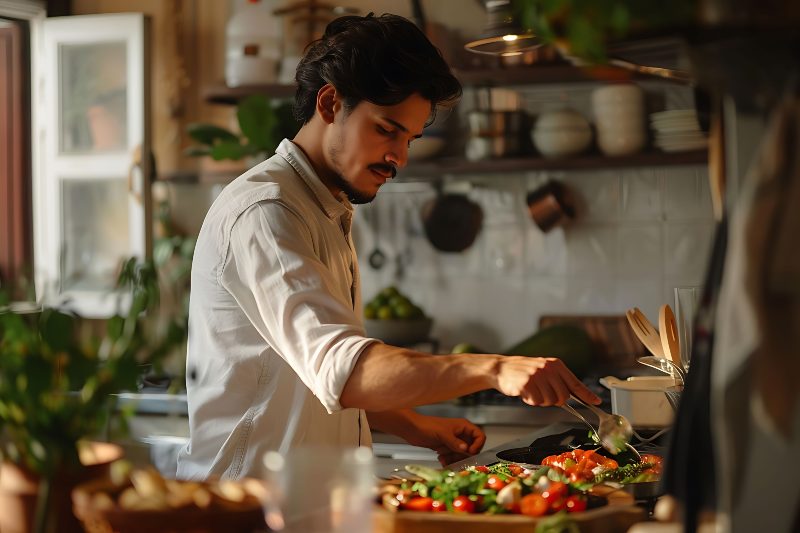
With Take a Chef, you can invite a professional indian food chef into your home to prepare an authentic Indian vegetarian dinner tailored to your preferences. The platform connects you with chefs who bring deep expertise in regional Indian cuisines. Every menu is fully customizable: specify your favorite dishes, flag dietary requirements, and let the chef handle sourcing, cooking and cleanup.
A private chef dinner is also an opportunity to learn. Watch the tadka come together in real time, ask about spice ratios and discover techniques that would take months to develop on your own. It transforms a meal into an experience that is personal, educational and delicious.
Your evening meal, elevated
An Indian vegetarian dinner is one of the most generous, flavourful and nutritionally complete meals any cuisine can offer. It rewards curiosity and unfolds differently depending on the region, the season and the cook. Whether you start with a simple dal and rice or dive into a multi-dish thali, this tradition has something for every palate. And for lighter midday meals, our Vegetarian lunch ideas carry the same spirit into daytime.
If you want to experience these flavors at their very best without the guesswork, consider booking a private chef dinner and let an expert bring the full richness of Indian vegetarian cooking to your table.