Key Takeaways
TL;DR: Planning a barbecue dinner comes down to a headcount set two to three weeks ahead, a grill checked days before, two or three proteins at about half a pound of raw meat per person, cold sides made ahead and a grilling schedule that works backward from serving time.
- Guests and invitations: Set the date and guest list two to three weeks ahead for a casual gathering and longer for a large event, ask about allergies and vegetarian preferences with the invitation, and assign categories if it’s a potluck.
- Equipment: Charcoal gives classic smoky flavor, gas heats quickly and evenly, and ceramic cookers and pellet smokers handle both grilling and smoking. Clean the grates, check the fuel and test the ignition a few days before, and have long tongs, a spatula, a digital thermometer, foil, gloves and a spray bottle for flare-ups.
- Proteins and sides: Choose two or three proteins, such as burgers, chicken thighs, ribs or sausages, or flank steak and butterflied lamb for a more elevated spread, at roughly half a pound of raw meat per person, and balance them with coleslaw, potato salad, grilled corn and a green salad made the morning of or the day before.
- Timeline: Start low-and-slow cuts early in the afternoon, light the grill about 45 minutes before cooking, put quick-cooking proteins on once guests have a drink, and build resting times into the schedule.
- Food safety and help: Keep raw meat refrigerated until it goes on the grill, never put cooked meat on a plate that held raw meat, check internal temperatures with a thermometer and don’t leave perishable sides out more than two hours in warm weather. A private barbecue chef can handle the grilling, serving and cleanup.
Few things bring people together quite like the smell of charcoal and sizzling meat on a warm evening. A barbecue dinner is more than a meal. It is a shared ritual, a reason to gather outdoors, and one of the most rewarding ways to entertain at home.
Yet anyone who has hosted a cookout knows the truth: there is a surprising amount of planning behind that relaxed atmosphere. Between choosing cuts, coordinating guests, and managing grill temperatures, the host often spends the entire evening behind a wall of smoke instead of enjoying the company they invited.
This guide walks you through every essential and shows how to plan a barbecue dinner that runs smoothly from first invitation to final bite.
Índice
Start with your guest list and invitations
Good barbecue planning begins well before you light the grill. Please settle on a date and build your guest list early, ideally two to three weeks in advance for a casual gathering and longer for a larger event.
Knowing your headcount shapes every decision that follows, from how much food to buy to how many seats you need.
When you send invitations, include the start time and a note about dietary information you need. A quick digital poll asking about allergies or vegetarian preferences saves uncomfortable surprises on the day. If you plan a potluck-style affair, assign categories so guests do not all arrive with the same dish.
Transform your culinary dreams into reality
From interactive cooking lessons to exotic cuisine adventures, our expert chefs transform your kitchen into a world-class culinary experience.
Choose and prepare your equipment
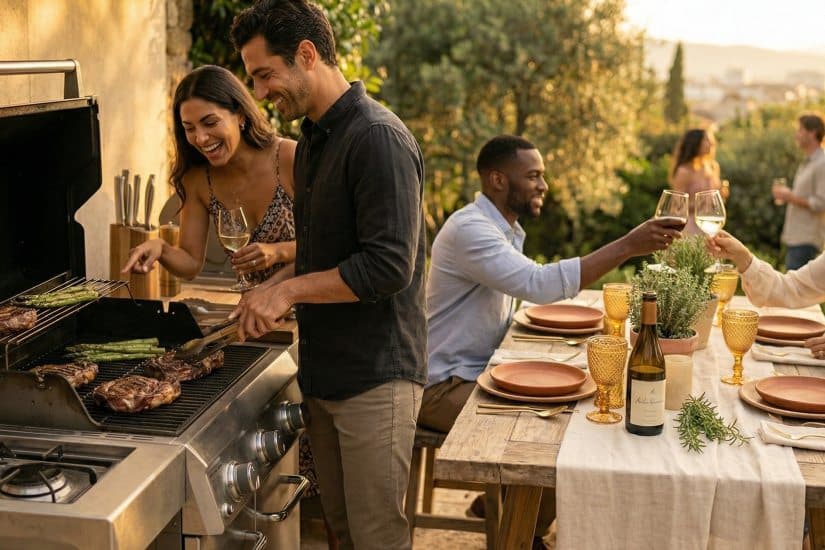
A reliable grill is the centerpiece of any barbecue dinner. Charcoal grills deliver that classic smoky flavor but require more attention to temperature control. Gas grills heat up quickly and offer consistent, adjustable heat. Ceramic cookers and pellet smokers give you versatility for both grilling and low-and-slow smoking.
Whichever grill you own, inspect it a few days before the event. Clean the grates, check fuel levels, and test ignition. Running out of propane mid-cook is a common and entirely preventable mistake.
Beyond the grill itself, gather the essentials: long-handled tongs, a sturdy spatula, a digital meat thermometer, aluminum foil, heat-resistant gloves, and a spray bottle for flare-ups. Set up a prep station nearby so everything is easy to reach.
Plan your barbecue dinner menu
Selecting the right proteins
The golden rule for a stress-free cookout is simplicity. Choose two or three proteins rather than trying to grill everything under the sun. Classic options include beef burgers, chicken thighs, pork ribs, and sausages. For an elevated spread, consider marinated flank steak, butterflied leg of lamb, or spatchcocked chicken. If you are firing up the grill for a summer holiday, our 4th of July dinner menu offers plenty more crowd-pleasing ideas.
Budget roughly half a pound of raw meat per person, then adjust upward if your crowd skews hungry. Buy your proteins a day or two ahead and start marinades the night before to let flavors develop.
Building your side dishes
Side dishes should complement rather than compete with the smoky flavors off the grill. A balance of creamy, crunchy, and acidic elements keeps plates interesting: coleslaw with a tangy vinaigrette, classic potato salad, grilled corn with herb butter, and a fresh green salad with seasonal vegetables. For more seasonal cookout inspiration, browse our Juneteenth dinner ideas.
Prepare cold sides the morning of or even the day before. Bean salads, pasta salads, and marinated vegetable platters actually taste better after resting overnight, and making them early frees your attention for the grill work that demands it.
Drinks and dessert
Keep your drink station simple and self-serve. A cooler with ice, a selection of beers, a pitcher of lemonade or sangria, and plenty of water will cover most tastes. For dessert, lean into the outdoor setting with grilled peaches drizzled with honey, a fruit crumble, or classic brownies.
Master the timeline and grilling logistics for your barbecue dinner
Timing is where most backyard cooks stumble. Large cuts need hours of slow cooking, while burgers cook in minutes. Map out a grilling schedule that works backward from your planned serving time, accounting for resting periods.
Start any low-and-slow items early in the afternoon. Refrigerate all cold sides well before guests arrive. Light the grill roughly forty-five minutes ahead so it reaches the right temperature. Quick-cooking proteins go on once guests have settled in with a drink and a few appetizers.
Here is the reality many hosts discover too late: managing a live fire while greeting guests, refilling drinks, and keeping conversation going is genuinely difficult. The person behind the grill becomes isolated from their own party, monitoring temperatures instead of relaxing. Professional chefs are trained to solve this common frustration and challenge.
A skilled grill chef who perfectly knows how to plan a barbecue dinner understands heat zones, resting times, and the precise moment to pull each protein. They handle the intensive work so you can spend the evening with your guests.
Set the scene for your guests
Atmosphere turns a meal into a memory. Arrange seating in clusters to encourage conversation and set up a separate snack-and-drinks area away from the grill so guests are not crowding the cook.
String lights or lanterns add warmth once the sun sets, and a curated playlist keeps the mood lively.
Keep practical comforts in mind too. Provide sunscreen and insect repellent during the summer, offer blankets if the evening turns cool, and have a contingency plan for rain.
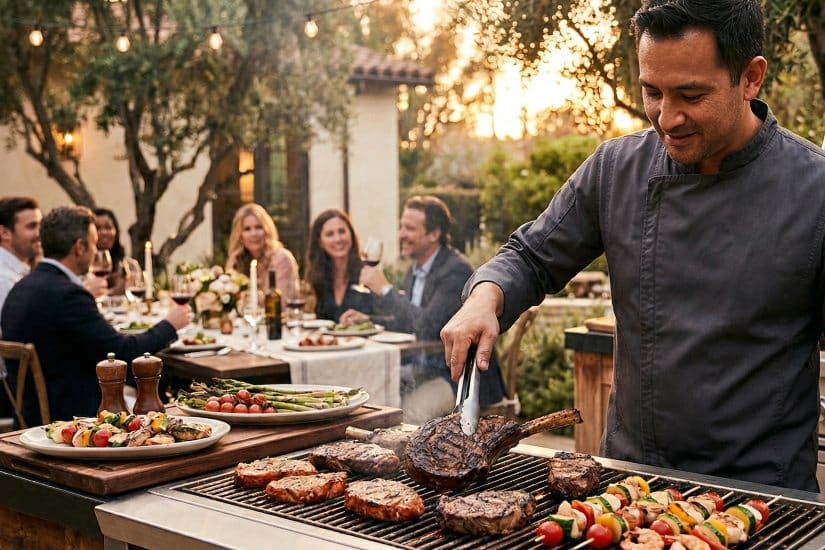
Let a private chef turn your barbecue dinner into an effortless celebration
If the greatest obstacle between you and a memorable cookout is the grill itself, there is a straightforward solution. Take a Chef connects you with experienced private barbecue chefs, bringing professional heat management and culinary expertise directly to your backyard.
You share your date, guest count, and preferences on the Take a Chef platform, and within hours you receive customized menu proposals from qualified chefs near you. Once you confirm, they handle everything: sourcing fresh ingredients, prepping, grilling, serving, and cleaning up. You focus entirely on your guests and the evening itself.
Whether you want slow-smoked brisket, charred lamb chops, or a creative vegetable-forward spread, your chef tailors the menu to your tastes and dietary needs. For groups of any size, from an intimate dinner for four to a lively party of twenty, the experience stays personal and interactive.
Food safety essentials for outdoor cooking
Outdoor cooking introduces food safety considerations that indoor kitchens handle more easily. Keep raw proteins refrigerated until you are ready to grill, and never place cooked meat on a plate that has held raw meat. Use a thermometer to confirm safe internal temperatures: 165°F (74°C) for poultry, 160°F (71°C) for ground meats, and 145°F (63°C) for whole cuts of beef or lamb with a three-minute rest.
In warm weather, perishable sides should not sit out for more than two hours. Place ice trays beneath serving bowls or rotate dishes between the table and the fridge.
Knowing how to plan a barbecue dinner is one of the most generous forms of hospitality you can offer. With the right planning, the right cuts, and the right help around the grill, it becomes an evening your guests remember long after the last ember fades. And if you would rather trade the tongs for a cold drink and good conversation, a private chef from Take a Chef can make that happen.