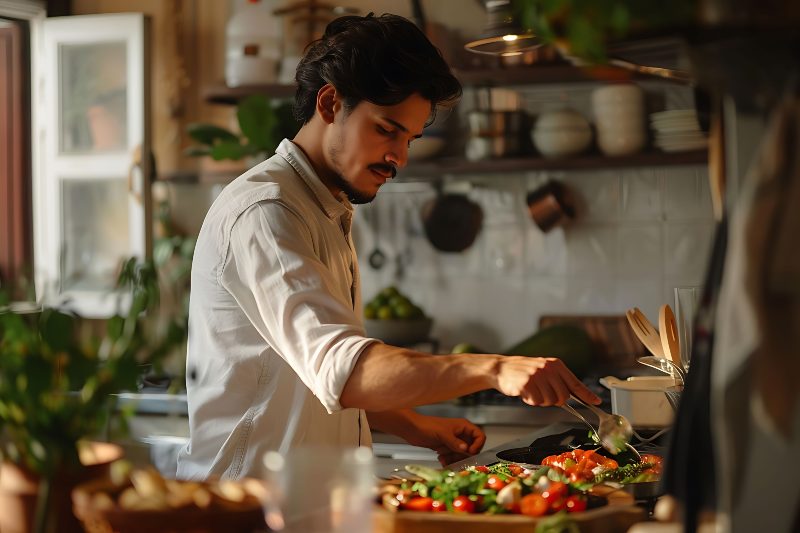
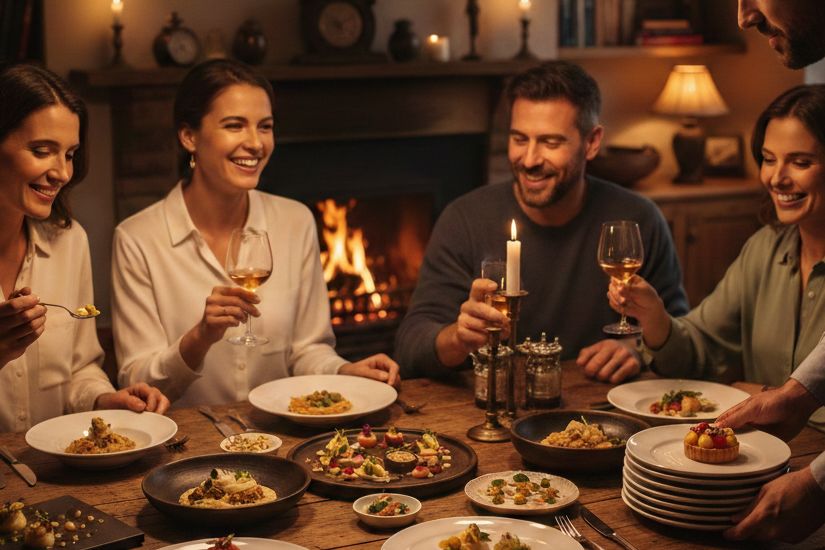
A multi-course tasting menu can be an opportunity for a perfect experience. Each plate arrives as a small, perfectly composed revelation. Flavors build and contrast while conversation flows naturally between bites.
By the final course, you’ve experienced a culinary journey that transforms an ordinary evening into something truly memorable.
The idea sounds romantic until reality sets in: managing timing for multiple dishes, keeping early courses warm while finishing later ones, playing host while racing back to a smoking pan. What should feel elegant quickly becomes exhausting.
Whether you tackle the challenge yourself or consider professional help, understanding tasting menu architecture helps you appreciate and execute these experiences.
Índice
Understanding the tasting menu structure
A tasting menu isn’t simply several small portions served consecutively. It’s a carefully orchestrated progression designed to take your palate on a journey. The French term dégustation captures this perfectly, emphasizing thoughtful appreciation of flavors rather than mere consumption.
Most successful home tasting menus range from five to seven courses. A typical five-course structure includes: For another multi-course format, see our Progressive dinner party ideas.
- Amuse-bouche to awaken the palate
- Seafood course offering delicate flavors,
- Substantial main course
- Cheese selection
- Dessert.
Seven-course menus add soup after the appetizer and a palate cleanser before the main.
The golden rule is progression from light to rich, then back to light. Begin with delicate, palate-awakening bites and build toward substantial flavors at the meal’s center. Cheese and dessert then ease diners toward the conclusion.
Mastering course pacing
Professional kitchens follow a guideline of ten to fifteen minutes between courses. A five-course meal typically spans two to two and a half hours, while seven-course experiences extend to three hours.
The challenge at home lies in maintaining rhythm while cooking. Restaurant kitchens operate with brigade systems where different stations work simultaneously.
Your home kitchen has one chef, likely four burners, and one oven. Design your menu around these constraints rather than hoping to execute professional-level complexity.
Consider heat sources as your primary constraint. Map out which courses require stovetop cooking, oven finishing, or no heat at all. Cold courses strategically placed throughout, such as chilled seafood or composed salads, give breathing room to focus on hot preparations.
Transform your culinary dreams into reality
From interactive cooking lessons to exotic cuisine adventures, our expert chefs transform your kitchen into a world-class culinary experience.
Selecting ingredients that tell a story
The best tasting menus have cohesion. This doesn’t mean every dish tastes similar, but rather that the meal feels intentional.
Seasonal themes work beautifully. An autumn menu might thread butternut squash through preparations, from velvety soup to candied dessert garnish. Spring could celebrate asparagus, peas, and fresh herbs.
Regional cuisines offer another organizing principle. A Mediterranean evening might begin with Spanish-style olives, progress through Italian seafood, feature Moroccan-spiced lamb, and conclude with French cheese.
Prioritize quality over quantity. Tasting portions are naturally small, often just two or three bites, making premium ingredients financially feasible. Serve that beautiful wild-caught halibut or perfectly aged cheese that would break the budget in full portions.
The prep work that ensures success
Successful tasting menus are won or lost in preparation hours before service. Professional chefs call this mise en place. For home cooks, complete as much work as possible the day before.
Sauces, vinaigrettes, and purees can be made in advance. Proteins should be trimmed and seasoned. Vegetables can be cleaned and cut.
Dessert components benefit from overnight rest. Minimize active cooking during service to brief, focused bursts.
Create a detailed timeline working backward from your first course. Note when each component starts cooking and when it should be plated. This production schedule becomes your roadmap, keeping you organized as multiple dishes demand attention.
Let a professional handle the details
After understanding everything involved in executing a multi-course tasting menu, many hosts reach the same conclusion: the experience is worth having, but perhaps not worth the stress of producing it yourself. This is where Take a Chef transforms the equation.
Private chef services bring restaurant-caliber expertise directly to your home. Your chef arrives with ingredients prepped, handles every detail of cooking and plating, and manages the precise timing that makes tasting menus feel effortless. You spend the evening fully present for conversations and connections.
With pricing starting from $138 per person, a private chef tasting menu costs less than comparable restaurant experiences while offering complete customization. Dietary restrictions, flavor preferences, and special occasions are all accommodated.
Presentation that elevates every course
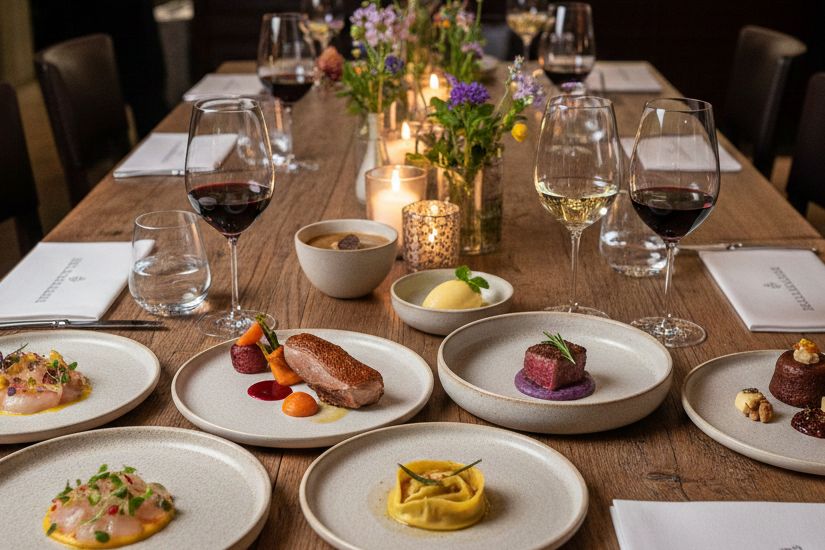
Visual presentation significantly impacts how guests perceive flavors. Research confirms that artfully plated food actually tastes better. For tasting menus where portions are small, presentation becomes essential rather than optional.
- Use white plates as your canvas.
- Odd-numbered elements naturally please the eye.
- Height adds drama through strategic stacking or upright garnishes.
- Sauces painted on the plate before food arrives create restaurant-style sophistication.
- Clean plate edges before serving.
Creating the complete atmosphere
Tasting menus deserve thoughtful table settings. Fresh flowers that don’t overpower, candles at appropriate heights, and quality linens signal this evening is special. Soft instrumental background music works well without competing with conversation. To round out the evening, explore our Wine pairing dinner at home guide.
Brief course descriptions add polish. As each plate arrives, share a sentence about what guests are enjoying. Plan for longer evenings.
Ensure comfortable seating. Keep water glasses full. Build in natural pauses where guests can step away without missing courses.
Making it memorable
The most successful tasting menus balance ambition with execution. Start with fewer courses than you think you can handle, then build complexity over time. A flawlessly executed five-course meal impresses far more than a stressful seven-course attempt.
Whether you master multi-course dining yourself or browse for a professional chef through Take a Chef, the goal remains the same: creating moments of connection around the table. The food is the vehicle, but the destination is always the shared experience with people who matter most.
A well-executed tasting menu turns an ordinary evening into a memory. Every course tells part of a larger story, building anticipation and leaving guests talking about the experience for months. That transformation is entirely within reach.