Key Takeaways
TL;DR: A 5-course meal runs amuse-bouche, appetizer or soup, palate cleanser, main course, dessert — in that order. Portions stay small on purpose: around 60 to 90 grams of protein for the main and about half that for the appetizer. End to end it takes two and a half to three hours.
- The five courses in order: An amuse-bouche served standing with welcome drinks, a soup or appetizer, a sorbet palate cleanser in a small glass, the main course at the table, and dessert with a digestif.
- Timing each course: Allow 20 to 30 minutes for the amuse-bouche, 25 for the appetizer, 10 for the palate cleanser, 40 to 45 for the main and 30 for dessert. That adds up to a leisurely evening of roughly two and a half to three hours.
- Keep portions modest: Think tasting portions for the first three courses, with roughly 60 to 90 grams of protein per person for the main and about half that for the appetizer. Five courses only work if nobody is full by the third.
- A progressive dinner is a variation, not a synonym: It serves those same five courses in a different area of the house for each one — cocktails in the living room, mains at the dining table, dessert in a lounge — instead of keeping everyone at one table all night.
- Lighting does most of the work: Start with soft, warm ambient light, brighten slightly for starters so guests can appreciate the plating, dim for the main course, and switch to candlelight alone for dessert. Table settings and music should shift with each course too.
Have you ever wanted to host an elegant, multi-course dinner that feels like a fine dining experience, without leaving your own home?
Five courses is the sweet spot. It is long enough to feel like an occasion and short enough that one person can actually cook it. This guide covers what the five courses are, the order they go in, how long each one takes, how much food to put on the plate, and a full menu you can cook — plus how to turn the whole thing into a progressive dinner that moves around your house.
Índice
What is a 5-course meal?
A 5-course meal is a dinner served in five separate, plated stages, each brought out and cleared before the next arrives. It follows the sequence used in classic fine dining: something small to wake up the palate, a lighter savory course, a cleanser, the main event, and something sweet to close.
The point is not quantity. A five-course dinner usually serves less total food than a big two-course family meal, because every portion is scaled down. What you are buying with the extra courses is pacing — the meal unfolds over hours instead of minutes.
The five courses in order
| Course | What it is | Portion | Time |
|---|---|---|---|
| 1. Amuse-bouche | A single bite from the chef, served with the welcome drinks. Not ordered, not chosen — it sets the tone. | One or two bites | 20–30 min |
| 2. Appetizer or soup | The first seated course. A soup, a salad or a small plated starter. | 30–45 g protein, or a small bowl | 25 min |
| 3. Palate cleanser | A sorbet or granita, usually citrus or herb. Resets the mouth between the starter and the main. | A small scoop | 10 min |
| 4. Main course | The centerpiece: a protein with a starch and a vegetable. | 60–90 g protein | 40–45 min |
| 5. Dessert | Something sweet, usually with coffee or a digestif. | Small — people are nearly full | 30 min |
Some kitchens swap course two for a fish course and push the salad later, and a few slide a cheese plate in before dessert — that is a six-course meal. Five is the version most people mean, and the one below is built to be cooked by one host.
Transform your culinary dreams into reality
From interactive cooking lessons to exotic cuisine adventures, our expert chefs transform your kitchen into a world-class culinary experience.
A 5-course menu you can cook at home
The key to a successful five-course dinner is building a menu where each course complements and elevates the next. Think of it as a story with a beginning, a middle and a satisfying conclusion. For more on structuring courses that flow into one another, see our multi-course meal guide.
Course one: amuse-bouche and welcome drinks. Start small, elegant and packed with flavor. A smoked salmon blini with dill crème fraîche works beautifully alongside a sparkling wine or a craft cocktail. Serve it standing, so people mingle before they sit.
Course two: soup or appetizer. A butternut squash bisque with brown butter and crisp sage is the easy win here, because it can be made entirely the day before. If you want something more refined, a seared scallop with apple and celery root purée plates beautifully and takes three minutes in the pan.
Course three: palate cleanser. A simple sorbet — pear, lemon or wild berry — refreshes the palate and gives everyone a pause before the main event. Serve it in small glasses with a sprig of mint. Store-bought sorbet is completely acceptable and nobody has ever noticed.
Course four: the main event. Beef tenderloin with a red wine reduction, roasted root vegetables and a herbed potato gratin is the classic, and the gratin can go in the oven before guests arrive. For seafood, cedar-planked salmon with a citrus glaze is a show-stopping alternative that is genuinely hard to overcook.
Course five: dessert and digestif. End with something indulgent but small. A dark chocolate fondant with salted caramel is a crowd-pleaser, or a vanilla bean crème brûlée with a toasted hazelnut crumble if you want to torch something at the table. Pair with coffee, a dessert wine or a digestif.
Mastering the timing
Timing is the hardest part of a five-course dinner, and it is where most home cooks come unstuck. Allow:
- 20 to 30 minutes for the amuse-bouche
- 25 minutes for the appetizer
- 10 minutes for the palate cleanser
- 40 to 45 minutes for the main course
- 30 minutes for dessert
That gives you a leisurely evening of roughly two and a half to three hours. The numbers include the gaps, not just the eating — the pause between courses is the part that makes it feel like a restaurant rather than a rush.
Turning it into a progressive dinner
A progressive dinner traditionally moves guests between homes, with each stop serving a different course. The at-home version keeps the same idea but uses one house, giving each course its own room.
Your living room hosts the amuse-bouche and cocktails, a side table or kitchen island handles the starter, the dining table takes the main, and a lounge or a spot by the fire becomes the dessert room. Nothing about the menu changes — only where people are standing when they eat it.
The advantage over the between-houses version is control. You set the pace, choose the mood for each course, and lose none of the evening to coats, cars and front doors. It is also the only version that works in bad weather.
Creating atmosphere for each course
The progression is not just about food. It is about shifting the experience through lighting, table settings and sound.
Lighting is your most powerful tool. Start with soft, warm ambient light for cocktails. Brighten slightly for the starter so guests can appreciate the plating. Dim for the main course, and use candlelight alone for dessert.
Table settings should evolve. Small plates and cocktail napkins for the amuse-bouche, elegant bowls for the soup, your best china for the main. Changing the setting is what makes the progression read as deliberate rather than accidental.
Music should move with the mood — upbeat jazz during cocktails, softer instrumentals for the main, something mellow for dessert. Seasonal touches on the centerpieces help too: pinecones and dried citrus in winter, herbs and stone fruit in summer.
Practical tips for a flawless evening
Send invitations two to three weeks ahead and say it is a five-course evening, so guests expect a long dinner and can pace themselves. Include a rough outline of the courses so they can flag dietary needs before you shop. For more hosting essentials, browse our formal dinner party guide.
Prep everything you can ahead of time. Sauces, desserts, soups and garnishes can all be made the day before. Set the tables and arrange the decor that morning, so the only jobs left on the night are cooking and plating.
Handle dietary needs at the menu stage. With five courses there is plenty of room to accommodate an allergy without rebuilding the whole dinner — usually the swap only touches one or two courses. Print a menu card for each guest; it manages expectations and doubles as a keepsake.
Keep portions intentionally modest: tasting portions for the first three courses, then a generous but balanced main at roughly 60 to 90 grams of protein per person, and about half that for the appetizer. Five courses only work if nobody is full by the third.
Finally, stock extra glassware and designate a staging area out of sight for used dishes and clean plates. Five courses means five rounds of clearing, and that is what turns a kitchen into a disaster zone by course four.
What a real tasting menu looks like
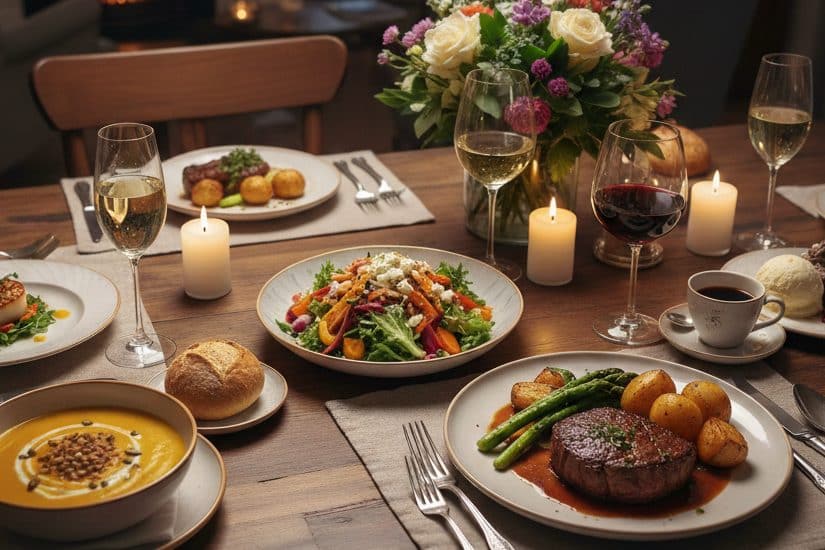
If you want a sense of how a professional builds a multi-course progression, this is one of the tasting menus our chefs actually cook in guests’ homes — note how each course changes both the protein and the technique, which is what keeps five plates from blurring into one.
Let a private chef handle the hard part
If managing five courses, five timings and five rounds of plating while also hosting sounds like too much, that is the honest reaction. Take a Chef connects you with professional private chefs who specialize in multi-course home dining.
You browse chef profiles, pick a culinary style, and build a custom menu together. Your chef handles the grocery shopping, arrives prepared, cooks and plates each course on time, and cleans up afterwards. You welcome your guests and stay at the table — which, for a five-course dinner, is the whole point.
Making it your own
Build the menu around what is in season where you live. Spring and early summer bring asparagus, peas, soft herbs and shellfish. Late summer is stone fruit, tomatoes and corn. Autumn hands you duck, wild mushrooms and root vegetables. Winter is the season for braised and roasted meats, citrus, and warming spiced soups. Seasonal shopping is also the cheapest way to make five courses feel expensive.
Pair each course with wine, or build a signature cocktail for the welcome drinks and keep the rest simple. A short flight of dessert wine alongside course five is the kind of finale guests bring up months later.
A five-course dinner at home is more than a meal. It is a few hours built around beautiful food, deliberate presentation and a table nobody is in a hurry to leave — whether you cook it yourself or hand the timing to someone else.
5-course meals: frequently asked questions
What does a 5-course meal consist of?
Five plated courses served in sequence: an amuse-bouche, an appetizer or soup, a palate cleanser, the main course, and dessert. Each one is cleared before the next arrives, and each is smaller than a normal restaurant portion — the total amount of food is often less than a hearty two-course dinner, spread over two and a half to three hours instead.
What are the 5 courses in order?
Amuse-bouche first, served standing with the welcome drinks. Then the appetizer or soup, the first seated course. Then the palate cleanser, almost always a small sorbet. Then the main course, the centerpiece of the meal. Dessert closes it, usually with coffee or a digestif. The order matters because it moves from light to rich and back to light.
How long does a 5-course meal take?
Two and a half to three hours from the first drink to the last coffee. A workable breakdown is 20 to 30 minutes for the amuse-bouche, 25 for the appetizer, 10 for the palate cleanser, 40 to 45 for the main and 30 for dessert. Those figures include the gaps between courses, which are doing real work: rushing them is what makes a five-course dinner feel like a conveyor belt.
How much food should you serve per person?
Around 60 to 90 grams (2 to 3 oz) of protein for the main course, and about half that for the appetizer. The amuse-bouche is one or two bites, the palate cleanser is a small scoop, and dessert should be smaller than you would serve on its own. The most common mistake by far is plating normal-sized portions, which leaves everyone full by course three and unable to enjoy the main.
What is the difference between a 5-course meal and a progressive dinner?
A 5-course meal describes the food. A progressive dinner describes where you eat it: each course is served in a different place. Traditionally that meant moving between different houses, one course per host. The at-home version keeps everyone in one house and moves them between rooms — cocktails in the living room, main at the dining table, dessert in a lounge. You can serve a five-course menu either way.
Can one person cook a 5-course meal alone?
Yes, but only with a menu designed for it. The rule is that no more than two courses can need live cooking. Make the soup, the sorbet, the sauces and the dessert the day before, so on the night you are only searing the main and plating. If three or more courses need last-minute attention, you will spend the evening in the kitchen instead of at the table.
What wine do you serve with five courses?
You do not need five wines. A sparkling wine for the welcome drinks, one white that carries the appetizer, one red for the main and a dessert wine at the end covers it comfortably — four bottles’ worth of decisions rather than five pairings. If you would rather simplify further, pick one versatile white and one medium-bodied red and pour those throughout.
How much does a private chef cost for a 5-course dinner at home?
It depends on group size, ingredients and city, and the price per person falls as the group grows. A multi-course tasting menu sits at the higher end of private chef pricing, because it means more plates, more prep and more time on site than a single-main dinner. Our private chef pricing guide breaks down what people actually pay by country and group size.