
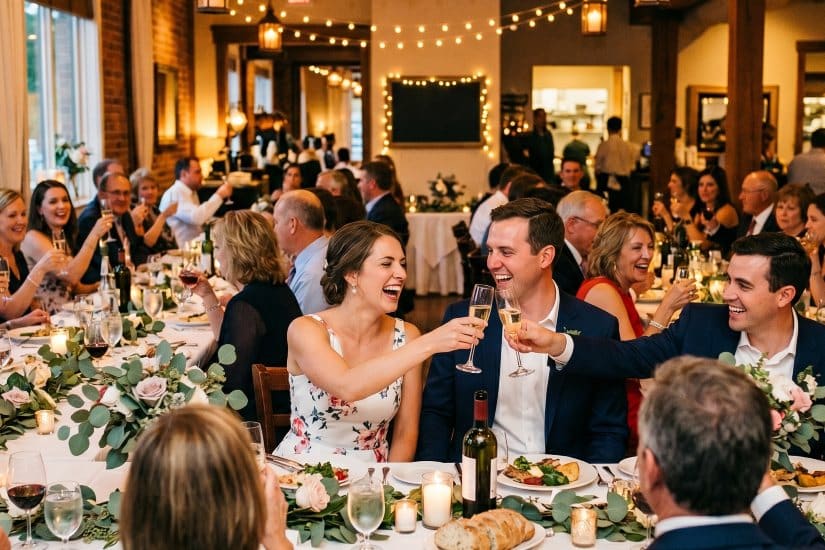
The night before a wedding carries its own kind of magic. The ceremony rehearsal is done, the nerves are settling, and the people who matter most have gathered in one place.
A rehearsal dinner is where that energy gets to breathe, where families meet, toasts flow, and the couple has one last quiet evening before the whirlwind of their wedding day.
Planning it well, though, takes more than choosing a nice restaurant and sending a few texts. A truly seamless rehearsal dinner requires the same structured approach you’d bring to the wedding itself. Here’s how to plan a rehearsal dinner from the ground up.
Índice
Understand what a rehearsal dinner actually is
A rehearsal dinner is a hosted meal, typically the evening before the wedding, following the ceremony rehearsal. Traditionally, it’s organized and paid for by the groom’s family, though modern couples frequently handle it themselves or split costs between families.
The tone ranges widely. Some rehearsal dinners are black-tie affairs at fine-dining restaurants. Others are relaxed backyard gatherings or intimate dinners at a family home. What matters is that the gathering feels intentional and suits the couple’s style, not that it follows a prescribed format. For the bride’s own pre-wedding send-off, see our How to host hen dinner guide.
The guest list is typically more intimate than the wedding itself: the wedding party, immediate family, out-of-town guests who’ve traveled for the occasion, and a handful of close friends.
A typical rehearsal dinner ranges from 20 to 50 guests, though smaller gatherings of 10 to 15 are perfectly common for couples who want a more private evening. For another intimate pre-wedding gathering, our Bachelorette dinner planning guide walks through every detail.
Unforgettable moments with gourmet touches
From intimate dinners to special celebrations, our private chefs create memorable experiences that turn any event into something extraordinary.
Build your timeline early
The single biggest planning mistake is starting too late. Ideally, planning begins three to six months before the wedding date, earlier if the dinner falls during peak season (May through October) or in a destination city.
A practical planning timeline looks like this:
- 4–6 months out: Set the date, confirm the ceremony rehearsal time, and define your budget
- 3–4 months out: Lock in the venue and send save-the-dates to out-of-town guests
- 6–8 weeks out: Finalize the guest list, confirm RSVPs, and book catering or a restaurant
- 2–3 weeks out: Confirm all vendors, share final headcount, and plan any speeches or toasts
- 1 week out: Send a schedule to the wedding party so everyone knows where to be and when
Building buffer time into this schedule matters because rehearsal dinners happen during the same window as final wedding preparations. Reducing decision-making pressure in the weeks before the wedding is one of the most valuable things thorough early planning can do.
Choose a venue that fits your vision
Venue selection is where a rehearsal dinner’s character takes shape. The right setting supports the tone, whether that’s a sophisticated private dining room, a sun-drenched terrace, or a warmly decorated home.
Common rehearsal dinner venue types include:
- Private dining rooms at restaurants, which offer convenience and professional service
- Event spaces such as galleries, rooftop terraces, or club rooms
- Outdoor settings like gardens, vineyards, or lakefront properties
- Private residences, which offer the most personal atmosphere
When evaluating venues, consider proximity to the rehearsal location, parking and accessibility, capacity for your group size, and noise levels. If you’re leaning toward a non-traditional space, bear in mind that most don’t come with built-in catering, which makes your food and service decisions especially important.
Craft a menu that reflects the couple
Food is the centerpiece of any dinner gathering, and the rehearsal dinner menu deserves real thought. The meal should feel like a preview of the couple’s taste, not a generic catering package.
Consider dietary restrictions early. With a guest list that spans extended family, out-of-town relatives, and a full wedding party, there will almost certainly be vegetarians, guests with allergies, and those with specific dietary needs. A well-planned menu accounts for all of this upfront.
For multi-course dinners, a three-course structure works well for groups between 10 and 40. For larger gatherings, passed appetizers followed by family-style service keeps things relaxed and social. A curated wine pairing or signature cocktail adds a personal touch without overcomplicating service.
How Take a Chef transforms rehearsal dinner planning
One of the most consistent frustrations couples face is finding a restaurant that can accommodate a private group, deliver the right atmosphere, and offer a flexible menu all at once.
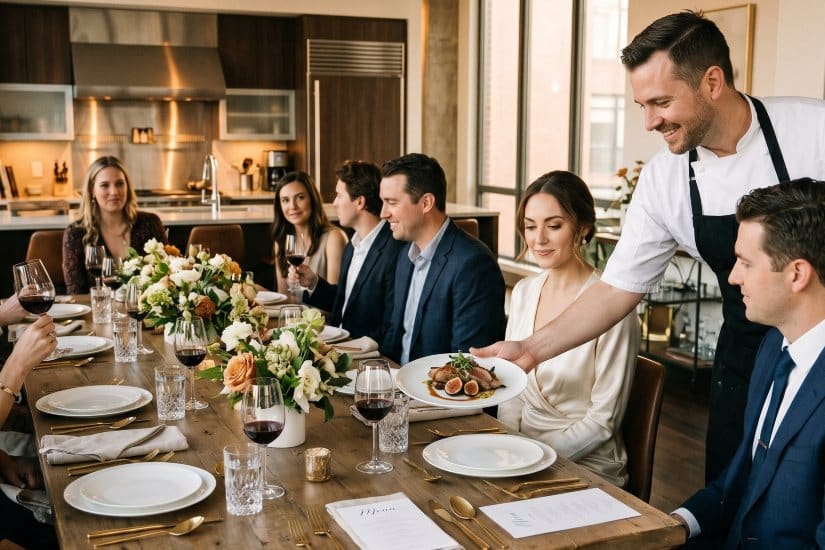
The search is time-consuming and the compromises add up. Take a Chef offers a different approach entirely. Instead of fitting your event into a restaurant’s schedule, Take a Chef brings a professional private wedding chef to your chosen venue.
Whether that’s a rented villa, a vacation rental, a family home, or a private garden, the chef arrives, sets up, and delivers a fully customized dining experience on-site. Every menu is built around the couple’s preferences, dietary needs, and the occasion’s tone.
Guests consistently describe the experience as more intimate and more memorable than a restaurant dinner, the chef adds an element of theater, and the food is genuinely tailored rather than pulled from a set menu.
Every booking includes shopping, preparation, service, and cleanup.
Plan your program and personal touches
A rehearsal dinner doesn’t need a rigid itinerary, but having a loose flow keeps the evening on track. A typical structure runs drinks and mingling for 30 to 45 minutes upon arrival, followed by dinner over 90 minutes to two hours, with toasts and remarks at dessert.
Speeches at rehearsal dinners tend to be more personal and less polished than wedding toasts and that’s exactly right. This is the space for parents to speak honestly, for childhood friends to tell the embarrassing story, and for the couple to express gratitude. Keep speakers to four or five, and ask each to stay under three minutes.
Small personal details leave lasting impressions: a custom playlist that tells the couple’s story, a framed photo timeline on the welcome table, or a handwritten menu card at each place setting. None of these require a significant budget, just intention.
Manage your budget wisely
Set your maximum budget before approaching venues or caterers, and build in a 10 to 15 percent contingency for unexpected costs. Prioritize spending on food and the guest experience; these are what people remember, and look for savings in décor and printed materials.
Knowing how to plan a rehearsal dinner means that not everything has to be expensive to be meaningful. The evenings guests remember most are the ones where the food was excellent, the atmosphere felt personal, and the people around the table were genuinely glad to be there. With the right planning structure, your rehearsal dinner can be exactly that kind of night.