Key Takeaways
TL;DR: In a client’s home a private chef can’t rely on the kitchen’s equipment or layout, so allergen safety depends on a portable protocol: a structured allergy brief at booking, allergen-free components prepared first, dedicated color-coded boards and utensils, and the chef’s own oils and pans.
- Why home kitchens are riskier: Standard dishwashing, even with hot water and detergent, doesn’t reliably remove allergen residue from porous materials such as wooden boards and unglazed ceramic, and protein has been detected after multiple wash cycles.
- The Big Nine: Milk, eggs, fish, shellfish, tree nuts, peanuts, wheat, soybeans and sesame cause the overwhelming majority of IgE-mediated reactions, and for sensitized clients the threshold dose can be measured in micrograms, well below anything visible.
- Intake at booking: Start the allergy conversation at booking, not on the day: record diagnosed allergies versus intolerances and their severity, check the planned ingredients against them, and remember that “may contain” warnings are not the same as certified allergen-free labels.
- Prep order and equipment: Prepare every allergen-free component first, use your own color-coded boards and dedicated knives, tongs, ladles and containers kept apart until plating, and bring sealed, labeled oils: oil used for breaded protein carries wheat proteins no matter how hot it gets.
- Airborne risk and labels: Fish, shellfish and peanuts can become airborne during high-heat cooking, so for clients with airborne sensitivity cook the allergen-free dishes first and keep the kitchen ventilated. Read the label on the specific lot in your hand, since manufacturers change facilities and recipes without notice.
Allergen management is no longer a niche specialty; it is a core competency for any chef working private events, in-home dining, or bespoke catering. Food allergy safety is not a courtesy; it is a non-negotiable part of service execution.
Yet the private kitchen presents a fundamentally different set of cross-contamination prevention challenges than the brigade environment. You arrive to a space you did not design, using equipment you did not select, in a layout never built for allergen segregation.
Building a portable, scalable allergen management protocol is now as essential to your professional kit as your knife roll.
Índice
The science behind cross-contamination in uncontrolled kitchens
Cross-contamination occurs when allergenic proteins migrate from one surface, utensil, or food to another through direct contact, shared cookware, or airborne transfer. In a commercial setting, HACCP-aligned protocols, dedicated equipment zones, and trained staff provide layered control. In a private home, none of those systems exist by default; you are building them from scratch on every engagement.
Research confirms that standard dishwashing, even with hot water and detergent, does not reliably eliminate allergen residue from porous materials including wooden cutting boards and unglazed ceramic.
Protein transfer studies have detected residual allergens after multiple wash cycles, a finding with direct implications for any chef relying on household equipment.
The Big Nine allergens (milk, eggs, fish, shellfish, tree nuts, peanuts, wheat, soybeans, and sesame) account for the overwhelming majority of IgE-mediated reactions. For clients with confirmed sensitization, threshold doses can be measured in micrograms, well below what is visible on any surface.
This is the foundational data that should drive every decision in your pre-service allergen protocol.
Building a field-deployable food allergy safety system
The most reliable cross-contamination prevention approach in a private setting is treating the engagement as a controlled operation from intake to plating. That requires establishing allergen management at three stages: sourcing, prep, and service.
Client intake and ingredient verification
Begin the allergen conversation at booking, not on the day of the event. A structured allergy brief should capture diagnosed allergens versus intolerances, confirmed severity levels, and any reactive packaged products the client has identified.
Cross-reference your planned ingredient list against the brief and flag shared-facility risks on every packaged item. Advisory statements such as “may contain” are categorically different from certified allergen-free designations; understanding that distinction and communicating it clearly is part of your professional obligation.
Prep sequencing and dedicated field equipment
Without a dedicated allergen-free prep station, sequencing becomes your primary control mechanism. Execute all allergen-free components first, before any allergenic ingredients contact work surfaces.
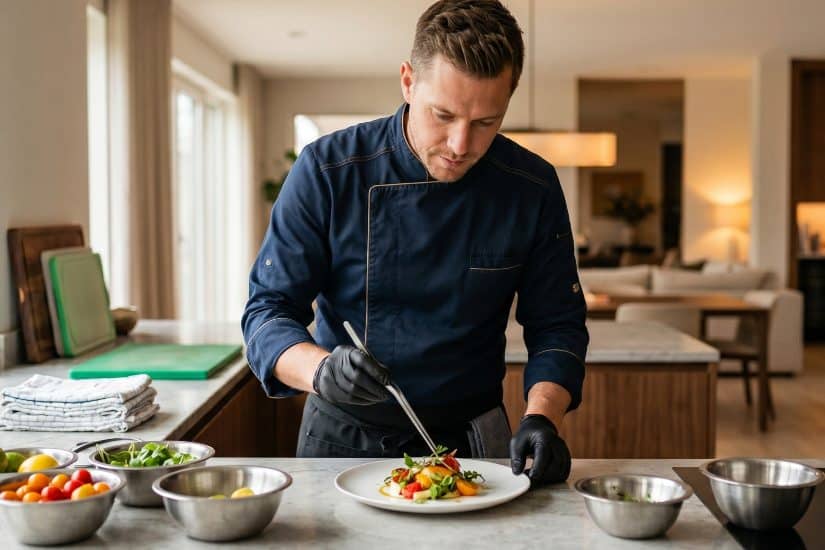
Bring your own color-coded board system and assign dedicated knives, tongs, ladles, and storage containers exclusively to the allergen-free portion of the menu. Keep them physically segregated until plating.
Allergen-free cooking tips drawn from food service best practices also include single-use paper towels for surface preparation, personally labeled cooking oils brought in your kit, and a clean-glove protocol before handling allergen-safe components.
Document your prep sequence as part of your engagement notes; it protects the client and establishes a professional record for your own quality standards.
Heat, oil, and airborne vectors in private kitchen environments
Professional-grade cross-contamination prevention must account for contamination vectors that household cooking rarely addresses. Shared cooking fats represent a high-risk category: oil used for breaded protein carries wheat proteins regardless of heat treatment and cannot be safely repurposed for allergen-free preparation. Bring your own oils in sealed, labeled bottles, and remove them from the client kitchen when service is complete.
Cookware provenance is equally important. A pan with an allergen history, even after standard washing, may retain trace protein. When working with clients managing severe fish, shellfish, or peanut allergies, bring your own sauté pans and saucepots for allergen-free preparations rather than relying on the client household set. This is not excessive; it is defensible professional practice.
Airborne allergen transmission is most relevant with aerosolizing proteins from fish, shellfish, and peanuts during high-heat cooking. For clients with documented airborne sensitivity, sequence all allergen-free preparations before any allergenic cooking begins in the same space, and confirm with the client that the kitchen will be well ventilated throughout service.
Label literacy and sourcing discipline
Your cross-contamination prevention system extends upstream to ingredient sourcing. Spice blends, cooking sprays, stocks, and specialty sauces frequently carry shared-facility allergen risk that standard label scanning will miss.
Build a verified ingredient library for your core allergen-free menu components and update it regularly, manufacturers change facilities and reformulate without fanfare. Always read the label on the specific lot in your hand, regardless of prior experience with that product.
Take a Chef: a platform that values allergen-management expertise
As client expectations around food allergy safety grow more sophisticated, private chefs who have invested in rigorous allergen protocols are increasingly in demand. The challenge is reaching those clients efficiently. Take a Chef is built precisely for this professional match. If you are still building that career, our guides on the Path to culinary freedom and making the move from Restaurant to private chef walk through what the transition involves.
Take a Chef is the world’s leading private chef booking platform, connecting professional chefs with clients who are seeking personalized, high-standard in-home dining experiences. The platform enables chefs to feature dietary specializations, including allergen management, as a visible credential on their professional profile.
Clients navigating complex allergy requirements actively seek verified professionals capable of executing at that level. You can register at Take a Chef and explore chef opportunities on the platform, establishing allergen-conscious cooking as a differentiating capability in your profile.
For chefs who have developed genuine field competency in cross-contamination prevention, Take a Chef provides a structured pipeline to clients who recognize and compensate for that expertise. Pre-event briefing tools, menu customization workflows, and client communication features are built to support the kind of thorough allergen intake that professional-standard execution demands.
Cross-contamination management: frequently asked questions
What is cross-contamination in a kitchen?
Cross-contamination is the transfer of allergenic proteins from one surface, utensil, or food to another through direct contact, shared cookware, or airborne transfer. For a guest with a confirmed food allergy, even trace amounts left behind after cooking can be enough to trigger a reaction, which is why chefs treat it as a safety issue rather than a cleaning one.
How do private chefs prevent cross-contamination in a client’s home?
Because a private kitchen has no dedicated allergen zones, the chef builds control on every engagement: a structured allergy brief at booking, prep sequencing that cooks all allergen-free components first, a colour-coded board and dedicated utensils kept segregated until plating, and personal oils and pans brought in a portable kit. The whole engagement is run as a controlled operation from intake to plating.
What are the Big Nine allergens?
The Big Nine are milk, eggs, fish, shellfish, tree nuts, peanuts, wheat, soybeans, and sesame. They account for the overwhelming majority of IgE-mediated reactions, and for sensitised clients the threshold dose can be measured in micrograms, well below what is visible on any surface.
Does washing equipment remove all allergen residue?
Not reliably. Research shows that standard dishwashing, even with hot water and detergent, does not fully eliminate allergen residue from porous materials such as wooden cutting boards and unglazed ceramic, and protein has been detected after multiple wash cycles. For severe fish, shellfish, or peanut allergies, chefs bring their own boards, pans, and saucepots rather than trusting the household set.
What should be in a chef’s portable allergen kit?
A field-deployable kit includes dedicated colour-coded cutting boards, personal cooking oils in sealed labelled bottles, dedicated knives, tongs, ladles and storage containers, single-use surface prep materials, and a standardised client intake form. Reviewing the full kit before every engagement is what makes the protocol scalable across different kitchens.
What is the difference between “may contain” and “allergen-free” labels?
Advisory statements such as “may contain” flag a shared-facility risk and are categorically different from a certified allergen-free designation. Spice blends, cooking sprays, stocks, and specialty sauces frequently carry this risk, so chefs read the label on the specific lot in hand every time, since manufacturers change facilities and reformulate without notice.
How can chefs get hired for allergen-conscious cooking?
Clients navigating complex allergy requirements actively look for verified professionals. On Take a Chef, the world’s leading private chef booking platform, chefs can feature allergen management as a visible credential on their profile and reach clients who recognise and compensate for that expertise, supported by pre-event briefing and menu customization tools.
Making allergen protocol a professional standard, not an add-on
The chefs who will define the next generation of private dining are those who treat food allergy safety with the same rigor they apply to technique and sourcing.
That means documenting your allergen protocols in writing, refining them systematically after every engagement, and approaching cross-contamination prevention as an evolving professional standard rather than a situational checklist you only reach for when a client flags an allergy.
Build a portable allergen kit: dedicated color-coded boards, personal cooking oils in sealed labeled bottles, single-use surface prep materials, and a standardized client intake form. Review the full kit before every engagement.
Brief any assisting team members on allergen-free sequencing before mise en place begins, and confirm that every person handling food understands the prep order. These habits scale reliably whether you are cooking for two guests or twenty-two.
Chefs who demonstrate verifiable competency in cross-contamination prevention will be the professionals clients return to and recommend. Take a Chef gives you the platform to turn that competency into a sustainable, high-value professional practice.